
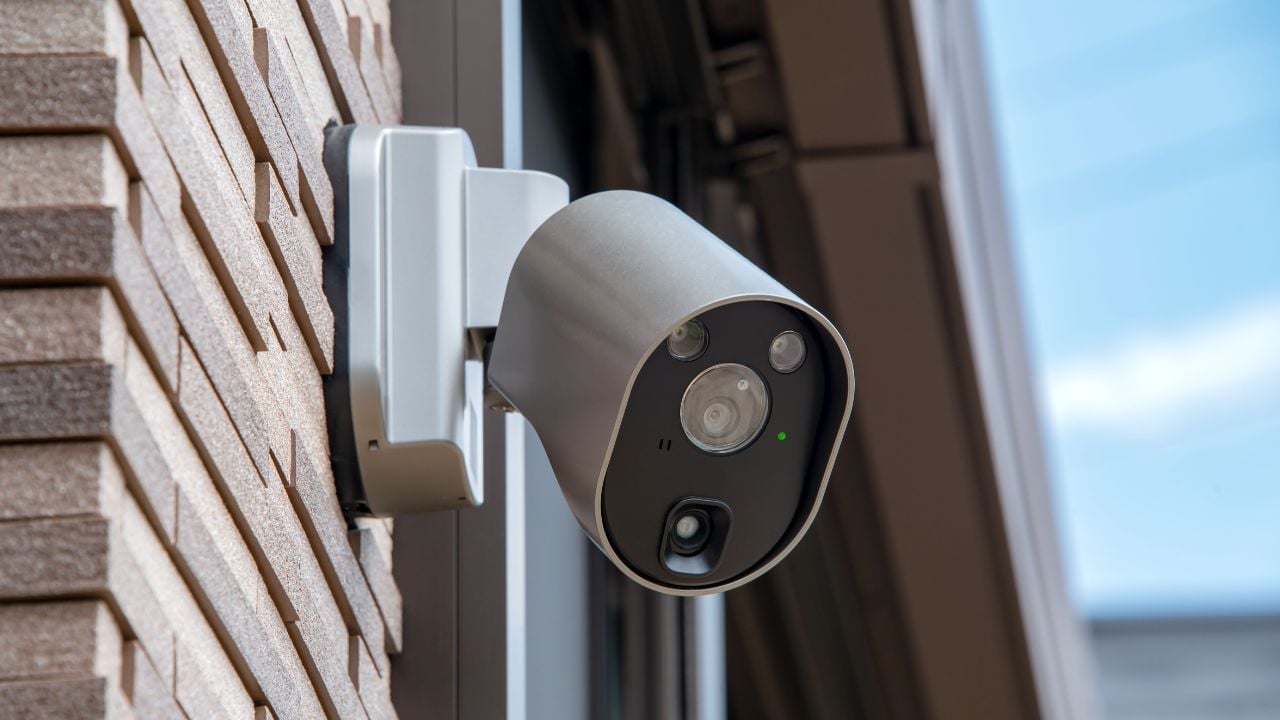
7 Places Texas Homeowners May Not Be Allowed to Point a Security Camera

Texas election law bars recording images or sound within 100 feet of a voting station, measured from the station itself and not from anybody’s property line.
Even a doorbell camera counts.
These are the places Texas homeowners may not be allowed to point a security camera.
Note: This is general information, not legal advice. Texas privacy, camera, and homeowners association rules are subject to change.
1. Over the Fence Into a Neighbor’s Backyard
Texas homeowners who aim a security camera over the fence and into a neighbor’s private backyard are stepping into a legal fight that predates the security camera by decades.
The Texas Supreme Court recognized invasion of privacy as a legal injury by itself, back in 1973.
Billings v. Atkinson held that an unwarranted intrusion into someone’s private activities creates damages on its own.
That case grew out of a bugged phone line, not a lens.
But the doctrine isn’t picky about the tool.
No bruise required.
A camera that holds a steady, lingering view of a neighbor’s pool or patio for weeks can trigger the same kind of claim.
Nobody needs a photo to leak out for that claim to land.
2. Bedroom or Bathroom Windows
Texas law gets far more direct once a security camera points through a neighbor’s bedroom or bathroom window.
Penal Code 21.15 makes it a state jail felony to photograph or record someone without consent and with intent to invade their privacy.
The law singles out a bathroom, bedroom, or changing room, defined as anywhere a person can reasonably expect to undress without anyone watching.
A state jail felony.
That’s a criminal record, not a slap on the wrist.
Both consent and intent decide whether a charge sticks.
A camera doesn’t have to peek through the glass on purpose for a neighbor to get nervous, but the felony turns on intent, not accident.
Many Texas subdivisions build homes close enough together that the wrong angle is one bracket adjustment away.
3. Within 100 Feet of a Polling Place
Texas homeowners run into a completely different kind of restriction on election day.
It has nothing to do with a neighbor’s yard.
Election Code Section 61.014 bars using a mechanical or electronic device to record images or sound within 100 feet of a voting station.
Section 81.002 carries that same 100-foot rule into early voting.
A camera doesn’t have to sit inside the polling place to break it.
A hundred feet reaches a front porch, a carport, or a yard across the street from wherever the voting equipment sits.
Small and rural Texas counties often set up a polling place inside someone’s garage or carport rather than a school gym.
The Texas Secretary of State’s guidance to a homeowner in that spot is direct: Turn off any existing security camera during voting hours whenever that’s possible.
The camera shouldn’t view the voting equipment at all.
No exceptions for good intentions.
What the 100-Foot Camera Rule Covers
The 100 feet in Section 61.014 is measured from the voting station itself, not from the property line.
A homeowner’s camera can end up inside that zone without the camera, or the homeowner, ever moving.
The presiding election judge decides whether a camera crosses the line.
The judge can order the device turned off, or ask the owner to leave, without a separate call to police.
4. HOA Ground That Isn’t Yours
A Texas homeowners association (HOA) can’t stop an owner from putting a security camera on their house, no matter what the deed restrictions say.
Property Code Section 202.023 blocks an HOA from adopting a covenant that prevents installing security measures, including a security camera, on the owner’s private property.
Not the homeowner’s call.
That protection stops at the property line.
The same law lets an HOA prohibit a homeowner from installing a camera anywhere except their private property.
Think a shared fence, a greenbelt, an entrance monument, or a retention pond.
None of that belongs to the homeowner, so the HOA’s rulebook still applies there.
Mount a camera on HOA property to watch a common area, and the association can make a homeowner take it down.
5. Condo Balconies and Doorways
Texas condo owners get less protection than a homeowner in a typical single-family subdivision.
Property Code Section 202.023 excludes condominiums by name, citing the definitions in Sections 81.002 and 82.003.
Check the declaration first.
That carve-out matters more than it sounds.
Many Texas townhome developments are legally organized as condominium regimes, even though they look like an ordinary subdivision from the street.
The paperwork decides which rule applies, not the architecture.
A Texas condo declaration typically labels a balcony or a front doorway a “limited common element” under Section 82.003, a piece of the building the association still owns even though only one resident gets to use it.
Bolting a security camera to that railing or doorframe counts as an exterior alteration, not a private repair.
Many Texas condo associations require board approval before any exterior fixture goes up, cameras included.
Skipping that approval can mean losing the camera, at the owner’s expense.
Inside a condo regime, the association’s declaration decides what a resident can install on a balcony or a front door, not the statewide guarantee that protects a single-family homeowner.
6. The Vegetation Line on Gulf Coast Beaches
Texas homeowners along the Gulf Coast run into a boundary problem that has nothing to do with a survey stake.
Texas’s Open Beaches Act creates a public easement across the dry sand, running from the mean low tide line up to the line of vegetation.
Everything on the public side of that line belongs to every Texan, not just the family whose deed touches the sand.
Putting up even a small obstruction there, like a camera mounted on a post or a deck rail, is an offense under state law.
The tricky part is that the line itself moves.
The sand doesn’t care.
The Texas Supreme Court ruled in Severance v. Patterson that the public easement shifts gradually as the vegetation line naturally retreats.
A single hurricane doesn’t move it all at once, even when the storm redraws the beach overnight.
A camera that stood on dry, private beach the day it went up can end up standing on public easement years later, without anyone touching it.
At that point, the state can go to court and force its removal, same as any other structure in its way.
7. Fences and Posts That Aren’t Yours
Texas puts the entire cost of a boundary fence on whoever builds it.
That catches many homeowners off guard because they assume the split is automatic.
A Texas landowner has no legal obligation to help pay for a fence a neighbor built on the property line, unless they agreed to it in advance.
No single state statute sets that rule.
Texas courts have built it case by case instead.
Attaching a camera bracket to that fence without asking is a separate problem.
A Texas appeals court ruled in Wilen v. Falkenstein that trespassing on someone’s land doesn’t require setting foot on it.
Entry happens the moment a homeowner causes a thing to cross the boundary of a property that isn’t theirs.
A screw driven into a neighbor’s fence post is exactly that kind of thing.
One wrong screw.
That’s enough to start a property dispute that has nothing to do with what the camera ever recorded.
Psst! How much do you know about Texas security camera law? Play myth or fact and see how many you get right.
Once a Clip Goes Public
Texas homeowners who post a camera clip to a neighborhood app or social media pick up one more layer of exposure once a neighbor is recognizable in it.
Texas courts recognize a public disclosure of private facts claim, a doctrine the Texas Supreme Court applied in a 1995 case involving a newspaper and a sexual assault victim’s identity.
Star-Telegram v. Doe tests whether a fact is private, whether publicizing it would be highly offensive to a reasonable person, and whether it serves any legitimate public concern.
Accuracy isn’t a shield.
A clip of a genuine porch theft reported to police is one thing.
A clip that lingers on a neighbor’s private moment, with their face clearly visible, is a different story.
No safety angle, no legitimate concern, just the kind of publicity the claim was built to punish.
Star-Telegram v. Doe didn’t reach the Texas Supreme Court as a clean win for the assault victim.
A trial court sided with the newspaper first, granting summary judgment before an appeals court ever weighed in.
9 Texas Home Insurance Add-Ons Owners Pay For and Never Use
The average Texas homeowner paid $3,291 for a base home insurance policy in 2024, according to the state’s insurance regulator.
Insurers pile a long menu of optional add-ons on top of that number, and not every one earns back what a homeowner pays for it.
9 Texas Home Insurance Add-Ons Owners Pay For and Never Use
8 Texas Dance Hall Rules Newcomers Break Their First Night

Gruene Hall didn’t get any air-cooling system until this year, and even now it only chills the room to about 85 degrees.
Nobody explains that at the door, or much else about how a Texas dance hall runs on a newcomer’s first night.
