
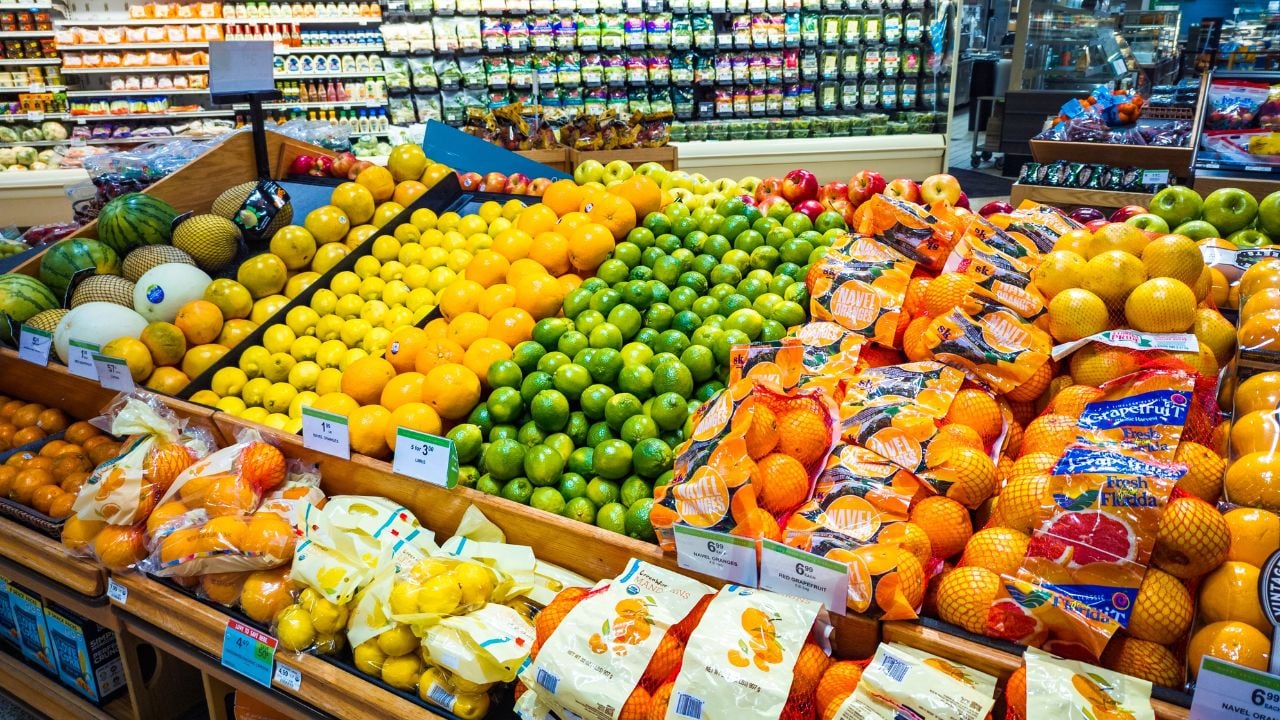
7 Publix Rules Tennesseans Get Wrong in the Produce Section

A trip through the Publix produce section in Tennessee runs on rules nobody hands out at the door.
Many shoppers never learn them.
These are the Publix rules Tennesseans get wrong in the produce section.
1. Half-Price BOGO Rule
Publix runs its produce BOGO deals on a weekly cycle, and shoppers reach for two items out of habit.
That habit comes from Florida’s version of the same tag, where the first item scans at full price and the second item scans at zero.
Publix’s savings FAQ doesn’t name a single state.
It says that in some states a shopper can buy one promotional item at half price, and that in others both items have to go in the cart.
Tennessee is a half-price state.
Grabbing a second cauliflower or a second bag of grapes just because the tag says BOGO adds a cost that Tennessee’s version of the deal never asked for.
Habit costs extra.
The Math on a Publix BOGO Tag
The math behind a Publix BOGO tag on a $4 pint of blueberries changes depending on the state.
A Tennessee shopper buys one pint and pays $2.
A Florida shopper has to buy two pints to unlock the same tag, and each pint still works out to $2, the identical per-item price.
Buying a second item in Tennessee just to match a Florida-style BOGO habit means paying for a pint of blueberries that was never part of the deal.
2. Publix’s Promise on a Wrong Price
A bag of Publix grapes that rings up above its shelf price triggers a policy with a name many shoppers have never heard.
Publix calls it the Publix Promise, and produce is covered the same as anything else on the belt.
If the register’s price comes in higher than the shelf tag or the advertised price, a shopper gets that item free.
Publix charges the correct, lower price on the rest of the order.
Alcohol and tobacco don’t count.
The Publix Promise covers price accuracy and nothing else, and it’s a company policy rather than a state law.
One item comes off free, not the whole quantity on the belt.
Many shoppers never watch the screen closely enough to catch it.
3. Refund Rule for Bad Produce
A soft avocado or a wilted head of lettuce qualifies for a refund at Publix the same as a can of soup.
Publix backs the trip with the Publix Guarantee, and it publishes no product exclusions at all.
Publix’s refund policy takes a return without a receipt too.
It asks for ID or a Club Publix account, then refunds to a Publix gift card instead of the original payment.
A receipt gets the original payment method back.
Either way, money back.
Many shoppers toss bad produce instead of walking it back to customer service.
Psst! How much do you know about Publix and Tennessee grocery history? Take our quiz and see how many you can get right.
Quiz
Tennessee Publix Trivia
Answer these questions on Publix and Tennessee grocery history. We bet you can’t get them all right. Prove us wrong?
Where did Publix borrow its name from?
4. Local Tag, Not Organic
A Publix shelf tag marked "local" promises exactly one thing, and it isn't what many shoppers assume.
Publix's shelf-tag guide defines the local icon as a product grown, harvested, or manufactured in the state where the store sits.
In Tennessee, Publix points to tomatoes and green beans among the produce the state's climate grows well.
The local icon says nothing about pesticides or growing method.
A separate icon marks organic status.
Reading "local" as a pesticide-free promise means reading the wrong tag.
Origin, not method.
5. GreenWise, Not Always Organic
A bag of GreenWise apples carries a green Publix label that looks like a single promise, but it isn't.
Publix's GreenWise page sets out several different standards.
One of them is certification under the U.S. Department of Agriculture's National Organic Program.
Others cover added colors from natural sources, flours that are unbleached and unbromated, meat raised without antibiotics or added hormones, and how seafood is sourced.
None of those four requires organic certification.
A shopper who assumes every GreenWise item on the shelf carries the same organic certification is assuming too much.
Checking which standard applies means reading the individual product, not just the green logo.
Logo, not label.
6. Two Organic Tags, One Case
An organic shelf tag in the Publix produce case can mean two very different things.
One is the USDA Organic icon, which Publix's shelf-tag guide defines as a product made with 95% or more certified organic ingredients.
The other is a separate icon for items made with at least 70% organic ingredients.
USDA rules bar those products from carrying the organic seal at all.
A shopper grabbing a packaged organic salad blend or a mixed fruit cup off the case can be looking at either tag without realizing the standard changed.
The seal is the tell.
7. Clearance Tag, Not a Quality Warning
A clearance tag on a Publix produce item means one particular thing, and it isn't spoiled.
Publix's shelf-tag guide defines the clearance icon as a product that will soon be unavailable, separate from the Save icon marking a temporary price cut.
Publix doesn't tie that icon to a pull date.
The tag flags a product on its way off the shelf, whatever the reason.
A clearance tag on a bag of Publix apples or on a pineapple is a timing signal, not a defect report.
Skipping it over an assumption about quality reads the icon backward.
Timing, not spoilage.
Three New Tennessee Stores
Publix opened three new Tennessee stores between September 2025 and March 2026, in Spring Hill, Nolensville, and Farragut.
That leaves the state with 62 Publix stores in all, according to the company's facts and figures page.
Publix produce cases carry organic and conventionally grown fruits and vegetables side by side, along with the locally grown items the shelf tags flag.
Publix has sold groceries in Tennessee since 2002, and the state is one of seven in the chain's local grower program.
Same shelf tags, newer buildings.
Fruit Cut in the Store Daily
Publix cuts fruit fresh in-store every day, and says so on its produce page.
Watermelon, cantaloupe, pineapple and mixed fruit go into the ready-to-eat fruit salads and bowls in the case.
Cut that day.
The same page says the produce itself arrives from the farm every day.
Publix also lists organic strawberries, organic bananas and organic carrots among the certified organic produce it stocks.
Those carry the 95% USDA Organic tag, not the 70% one.
8 Tennessee Gym Contracts That Keep Charging Long After Members Quit

A canceled Tennessee gym membership doesn't always stop billing the moment a member says so.
One Knoxville contract keeps charging for 30 more days after the cancellation goes in, and federal regulators say many gyms nationwide pull the same move.
8 Tennessee Gym Contracts That Keep Charging Long After Members Quit
7 Tennessee Scenic Drives Locals Refuse to Take on a Weekend

Tennessee's mountain roads are worth driving with the windows down and nowhere else to be.
On a Saturday, though, many drivers spend more time watching the bumper ahead of them than the view outside, which is exactly why locals wait for a weekday instead.
7 Tennessee Scenic Drives Locals Refuse to Take on a Weekend
