
7 Reasons Market Basket Still Won’t Ask New Hampshire Shoppers for a Loyalty Card

You load your cart at Market Basket, reach the register, and wait for the loyalty-card question.
It never comes, and that’s by design.
These are the reasons Market Basket still won’t ask New Hampshire shoppers for a loyalty card.
1. Everyday Low Prices
Market Basket prices everything the same way every day, instead of marking an item up and then using a card to hand part of that markup back at checkout.
You don’t need to scan anything to see the number on the shelf.
A 2025 price check by the Boston Globe rang up the same ten-item cart at five New England chains.
Market Basket came out cheapest at $38.28, ahead of Wegmans, Stop & Shop, and Whole Foods.
A loyalty card exists to create a second, lower price behind a sign-up wall.
Market Basket skips that step.
That single-price model runs at all 33 of the chain’s New Hampshire stores, a little more than a third of the roughly 90 Market Basket stores across New England.
2. No Account or App
Like other big grocery chains in the state, Market Basket runs a weekly flyer, with a new round of sale prices every week.
The difference sits at checkout.
Ring up a flyer item at Market Basket, and the sale price applies with no account, no app, and no card scan first.
Hannaford asks shoppers to join My Hannaford Rewards for cash back on its store brand.
Shaw’s built its for U program around an app download.
Signing up isn’t required to shop at either store, but skipping it means missing the extra cash back and coupons the app or card unlocks.
A shopper can walk into Market Basket cold, with no account anywhere, and still get every flyer price on the shelf.
Market Basket never built an account to skip.
What a Rewards Card Collects
Market Basket skips a step every card-based program builds in somewhere else: The sign-up.
A typical grocery rewards program asks for a phone number or an email address up front.
From there, it logs which items a shopper buys and how often.
That history can shape which coupons or personalized deals show up next.
None of that exists on a Market Basket receipt because there’s no account attached to it.
3. Skipping the Tech Overhead
A trade-press profile of Market Basket found it avoids costly technology, spending on wages and shelf prices instead of a marketing database.
Market Basket has never built the toolkit a loyalty program runs on: A mobile app account, a digital coupon vault, an email marketing list.
That toolkit runs a bill every month whether shoppers use it or not.
Every month, not some.
Market Basket already routes that kind of spending into the wages the same trade profile credited for its reputation, not into a customer database.
A loyalty app needs engineers to keep it patched and a support line for shoppers locked out of an account.
Someone still has to decide what that account’s data is worth to advertisers.
Neither a card nor an app lowers a single shelf price on its own.
4. In-House Trucking
Market Basket runs its own warehouses and truck fleet, cutting out the outside distributor that many chains pay to move groceries onto the shelf.
That markup would otherwise land somewhere on the receipt.
Supermarket analyst Kevin Griffin told Boston.com in 2014 that Market Basket handles much of its own distribution, and that the efficiency shows up in the company’s finances.
A shopper never sees that saving split into a member price and a regular price because Market Basket prints one price to begin with.
One price, every time.
Building a trucking network that size takes decades, and Market Basket built its fleet long before any competitor’s rewards app existed.
5. Debt-Free Balance Sheet
Unlike many grocery chains answering to lenders or shareholders every quarter, Market Basket has run for decades without taking on long-term debt, according to the same 2014 Boston.com analysis that credited its trucking operation.
That freedom removes a pressure other chains feel: The push to raise a shelf price and hand part of it back only to shoppers carrying a rewards card.
Family ownership adds another layer to that freedom.
There’s no shareholder pushing for a splashy card program to headline the next earnings call because Market Basket, privately held by the Demoulas family, doesn’t hold earnings calls.
Fewer lenders to satisfy means fewer people asking for a marketing database instead of a lower price.
Nobody upstairs asks.
6. Bonuses Instead of Points
Market Basket pays eligible employees a share of the company’s profits, plus a yearly bonus, on top of regular wages.
In 2013, the company’s board voted to keep funding that profit-sharing program and to pay a bonus that year, at a level consistent with recent years.
Supermarket News reported the vote at the time.
That money leaves the payroll budget before a marketing department ever sees it.
Staff comes first.
A loyalty program at another chain funds cash back and coupons for shoppers who sign up.
Market Basket’s profit-sharing funds a bonus for its own staff instead, whether a shopper downloads an app or not.
Cutting into that fund to launch a rewards app would come straight out of paychecks instead.
That trade has never made sense at Market Basket.
Psst! How much do you know about the loyalty programs other grocery chains run? Take our quiz and see how many you can get right.
Quiz
Grocery Rewards IQ
Answer these questions on grocery loyalty programs and supermarket history. We bet you can’t get them all right. Prove us wrong?
Shaw’s and Star Market eliminated their rewards cards in what year, shifting to permanent lower shelf prices instead?
7. Reputation Over Rewards
Some of Market Basket's shoppers don't shop anywhere else, and they'll say so unprompted.
That kind of loyalty isn't manufactured with a punch card or a point balance; it's built trip by trip, over years, sometimes generations.
A 2025 profile of the chain, published by Cambridge Day, captured shoppers describing exactly that devotion.
Market Basket earns that pull on repeat trips passed between generations of the same New England families, not a database tracking who bought what.
People already come back on their own.
That kind of pull can't be bought with a sign-up bonus or a welcome coupon.
That devotion isn't new.
A 2014 walkout by employees and a shopper boycott across New England emptied stores for weeks that summer, after the board pushed out Arthur T. Demoulas, the executive running the company at the time.
Shoppers refused to buy groceries anywhere else until he came back.
7 Reasons New Hampshirites Drive Past Two Stores to Reach Market Basket
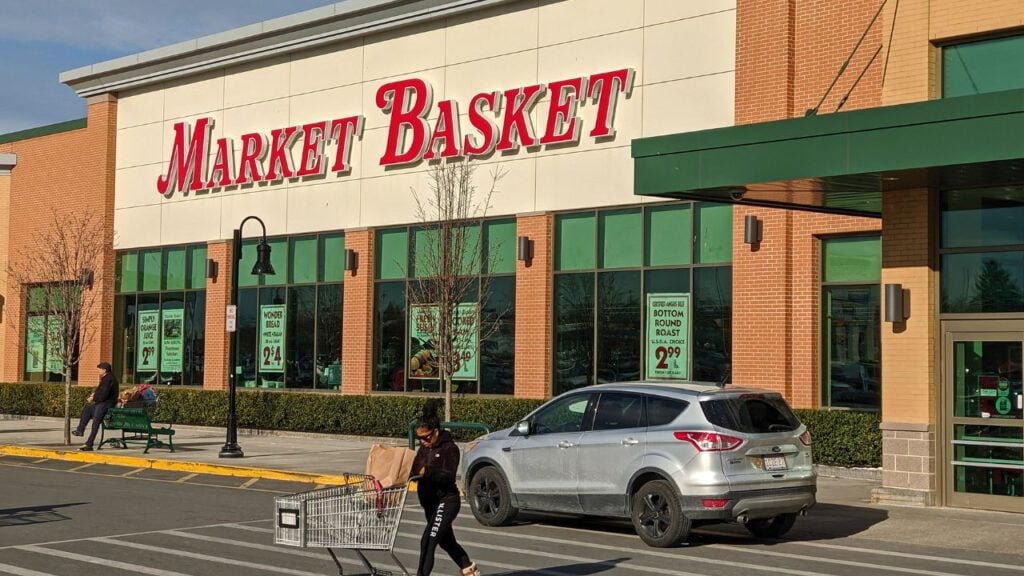
A Patch reporter once ran the same grocery list through a Shaw's and a Market Basket on the same day, then added up both receipts side by side. Market Basket came out lower, and the gap holds up week after week.
Hannaford and Shaw's now save their best prices for shoppers who open an app and clip a digital coupon first. Market Basket still puts its lowest price right on the shelf tag.
7 Reasons New Hampshirites Drive Past Two Stores to Reach Market Basket
8 Market Basket Deals New Hampshire Shoppers Plan Their Week Around
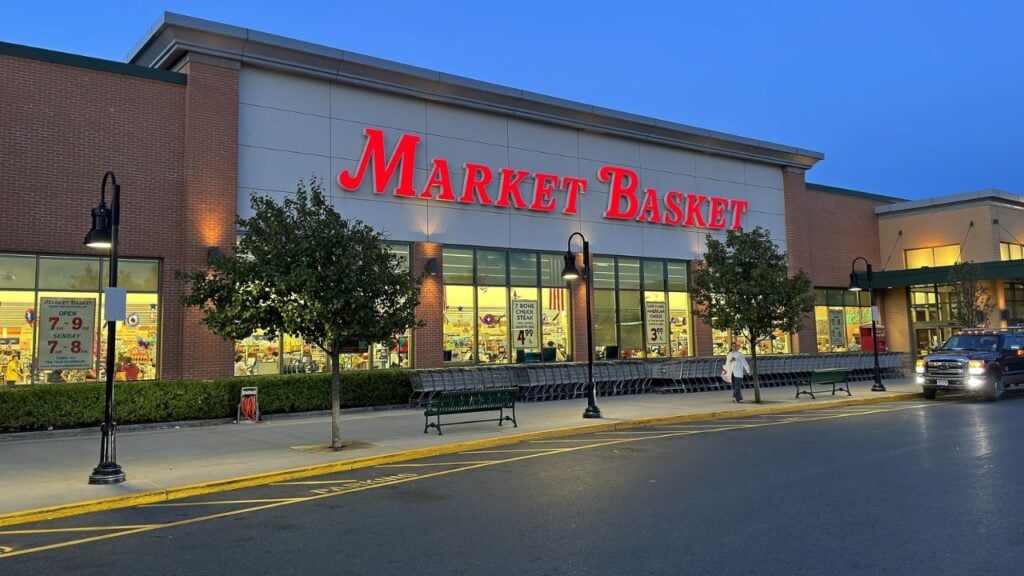
A Nashua shopper can fill a cart at Market Basket and skip the loyalty-card swipe another chain wants at the register. The bill still comes in lower than the pricier store across the highway.
Family packs at the meat case and a Wednesday flyer full of loss-leader produce are two of the deals shoppers plan around. Both help keep the parking lot along Route 3 packed from open to close.
8 Market Basket Deals New Hampshire Shoppers Plan Their Week Around
