
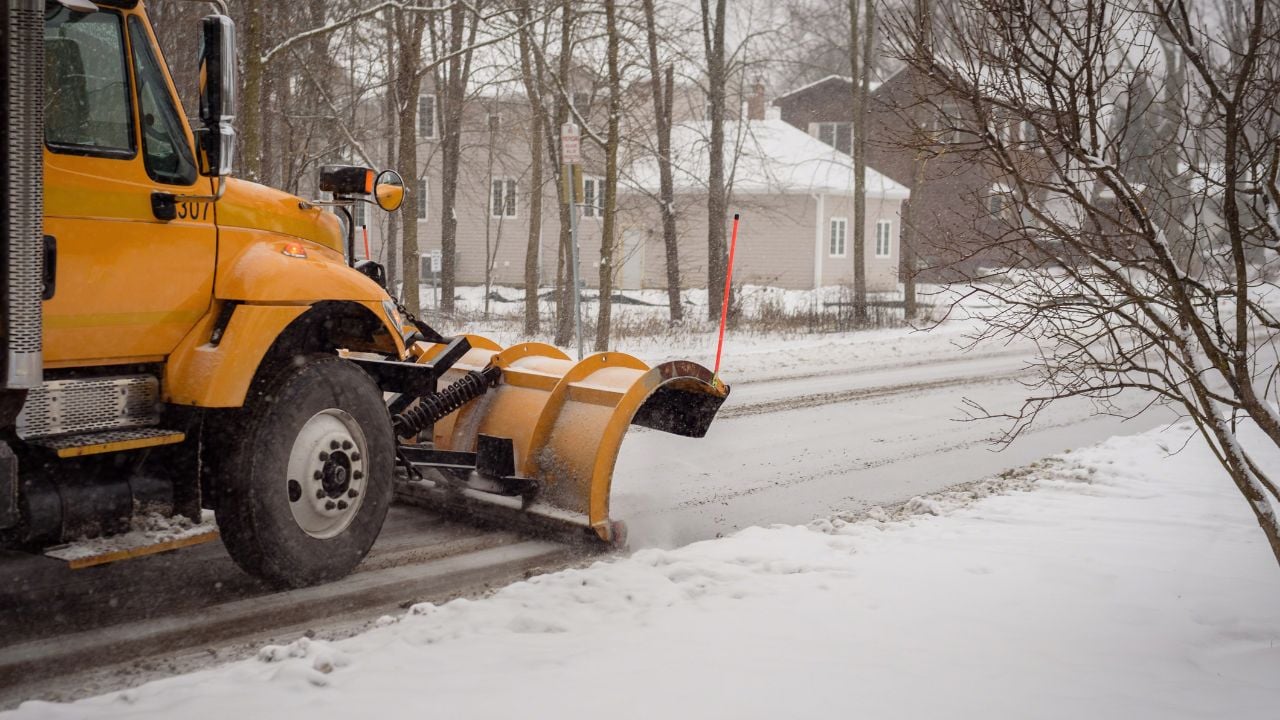
7 Reasons Wisconsin Snowplows Skip Your Street for Hours After a Storm

After a big snowfall, it can feel like the plow has forgotten your street.
Wisconsinites may feel overlooked, but crews often work from a plan, and some cities and towns post theirs online.
Here’s why the plow can take so long to reach your street.
1. Priority Routes
Wausau’s snowplow operators work the Priority Snowplow Route first, a network of arterial and collector streets.
The route reaches into residential areas so most residents have to travel a maximum of three blocks to a plowed street.
If you live off that route, operators return to the rest of their regular route after the priority route is completed.
Appleton’s snowplows follow four priority levels, and low-volume residential streets land in the third.
Arterials, bridges and hills come first, then collector streets.
If you live on a low-volume residential street there, the policy says the plow may not reach you until the storm ends.
Hudson plows its arterial and collector streets first, which its page calls priority streets.
2. Three-Inch Trigger
How much snow does it take to bring Madison’s snowplows down your street?
Madison’s salt routes cover about half of the city’s traffic lanes, according to its plowing page.
Residential streets make up the other half, and the city doesn’t salt them or plow them every time snow accumulates.
Citywide plowing usually begins once three or more inches of snow have accumulated and the storm is at or near its end.
On days without a plow, the Streets Division spreads a sand mix on those streets where needed for traction.
If you live in Wausau, the bar is lower.
Its snow plan says plowing may begin on all residential streets once two or more inches accumulate from a single snowfall or successive snowfalls.
3. Next-Morning Starts
When a storm starts in the afternoon or early evening, Richland Center’s snowplows hold off on citywide plowing until early the next morning.
Until then, the main arterial streets are kept open.
Priority 3 in the plan covers local streets and cul-de-sacs, so if you live on either, your street ranks behind arterials and collectors.
The city’s goal is to have all city-maintained streets plowed and cleared within 24 hours after a snow event ends, conditions permitting.
4. 12-to-16-Hour Plow Run
Madison’s snowplows need between 12 and 16 hours to plow every traffic lane, from thoroughfares to cul-de-sacs, the city’s plowing page says.
The city divides Madison into more than 60 sub-areas and deploys 150 pieces of equipment to plow every street.
Crews begin at the same time in all of them.
If you live in Madison, your street is among the traffic lanes in that run.
That’s 12 hours or more.
Psst! How much do you know about Wisconsin winters? Take our quiz and see if you can ace it.
Quiz
Wisconsin Winter IQ
Answer nine questions on Wisconsin winters, plows and highways. We bet you can’t get them all right. Prove us wrong?
In WisDOT’s 2024-25 winter report, the highest snowfall in the state fell in Iron County. About how many inches was it?
5. Milwaukee's 24-to-48-Hour Goal
Milwaukee's Department of Public Works has a target for its snowplows once the snow stops.
The goal is to have all main and residential streets safe and passable 24 to 48 hours after the snow stops falling.
If the snow stops at 8 p.m., the goal for your street lands somewhere between 8 p.m. the next day and 8 p.m. the day after.
If you've wondered why your street was plowed first last year and last this year, the department's FAQ has an answer.
The plows switch which part of the route they start on for residential streets each year.
6. Cul-de-Sacs and Dead Ends
If your street is a cul-de-sac in West Bend, the city's snowplows get to it last.
The city's plowing FAQ gives the reason: Cul-de-sacs have the lowest volume of traffic and the lowest speeds.
Appleton puts dead ends, cul-de-sacs and alleys in the fourth of its four priority levels.
Crews will typically plow only to the center of your cul-de-sac.
City crews haul the snow pile away as time permits.
7. Town Crew Start Times
The Town of Washburn's snowplow crew typically starts its day at 6:00 a.m., the town's snowplow policy says.
The crew may start earlier when the snowfall is heavy.
The goal is to get roads cleared before people head out to work and then again before they return.
Main pass-through roads such as Church Corner, Wannebo and Ondossagon Roads are the first priority, with secondary roads next.
Dead-end roads and crossroads, such as Hove Lane, are the third priority.
If you live on a dead-end road there, your road comes after the main and secondary roads on the crew's list.
School bus routes are also a high priority during the school term.
Second-Night Plowing
Appleton's policy calls parked and abandoned vehicles obstacles for snowplows trying to get as close to the curb as possible.
Crews regularly plow again the night after a snow event to reach spots where vehicles had been parked and to plow corners back to the curb.
Plowing around parked cars can also sometimes leave snow in your driveway apron after you've already shoveled.
West Bend sends plow drivers back the next day to plow areas that held parked cars during the prior day's plowing.
The city normally schedules that second-night plowing during its 11 p.m. to 6 a.m. parking restriction.
If you park on the street in either city, your car can be the reason a stretch of curb waits for a second night.
Milwaukee Snow Emergency Parking Rules
If you're in Milwaukee during a Snow Emergency, parking isn't allowed on highways and mass transit routes.
You also have to use alternate side parking from 10 p.m. to 6 a.m. during that Snow Emergency.
Milwaukee's page invites you to sign up for text notifications of Snow Emergencies.
State vs. City Plowing
The snowplows you see on Wisconsin's state highways, US-numbered highways and the Interstate system come from 72 county highway departments under contract with the Wisconsin Department of Transportation (WisDOT).
In many communities, agreements between WisDOT and your city give the city full maintenance responsibility, including snow and ice removal, on state highways passing through.
Marquette County's highway department says the city, the villages and the Town of Mecan are responsible for their plowing.
8 Aldi Mistakes Wisconsinites Repeat Every Week
Some Aldi mistakes are easy to make, and not all of them are obvious.
A few can cost you more than the rest.
8 Aldi Mistakes Wisconsinites Repeat Every Week
9 Things Wisconsinites Put Away the Week the Boats Come Out of the Water
Lake Mendota's ice usually doesn't lock in until December 20, according to the Wisconsin State Climatology Office.
These are the things Wisconsinites put away the week the boats come out of the water.
9 Things Wisconsinites Put Away the Week the Boats Come Out of the Water
