
7 Small-Town Oklahoma Traditions Out-of-Staters Assume Are Made Up

A volunteer in Mangum hands a first-time visitor a pair of snake tongs and points at a pit of live rattlesnakes.
Nobody at the derby blinks.
These are the small-town Oklahoma traditions out-of-staters assume are made up.
1. Cow Chip Contest
Beaver, Oklahoma builds a summer competition entirely around dried cow manure, and the town names it exactly what it is.
The World Championship Cow Chip Throw.
Shape beats size.
Competitors dig through a sorted pile looking for a chip that will hold together in the air. Official rules require every chip to measure more than six inches across, and the sharpest throwers still hunt for a chip that’s dry, dense, and round.
A bigger, drier chip just shatters mid-throw.
The contest goes back to 1970, when Beaver’s Chamber of Commerce needed a reason to pull visitors into a Panhandle town many people just drove past.
They found a reason in a leftover pioneer habit. Settlers on that treeless plain burned dried buffalo and cow chips for fuel long before anyone thought to throw them for sport.
Around 100 competitors show up nearly every year, split into men’s, women’s, and team divisions, with a round set aside for whichever local officials are game enough to throw.
Throwers lose more matches to wind than to bad aim.
Beaver folded the throw into its county fair this year, running both together for two weeks every August instead of on two separate weekends.
2. Fried Onion Burger Day
El Reno cooks one burger every May that wouldn’t fit through the door of most kitchens.
Volunteers build it on custom equipment right on Main Street, and by the time it’s done, the finished patty weighs in at 850 pounds.
Then the crowd eats it.
El Reno calls itself the birthplace of the fried onion burger, a Depression-era recipe born out of necessity.
Cooks back then pressed a handful of shaved onions straight into the patty while it hit the griddle.
Stretching the meat with onion kept a diner fed for less, and the onions caramelized into the beef instead of sitting on top of it.
That’s still how El Reno builds the burger today.
The festival wraps the giant burger in a full downtown block party, with a classic car show, more than 20 food vendors, and live music running for hours.
By dark, there’s nothing left of the 850-pound burger but the griddle it cooked on.
3. Rattlesnake Derby
Mangum turns its courthouse square into a public rattlesnake pit every April, and thousands of people drive in to watch.
Hunters register at headquarters first, then join daily caravans onto private ranchland to search for western diamondbacks.
Prizes go to the longest snake, the most snakes caught, and the heaviest total weight.
Nobody hunts alone.
Handlers dump the catch into the Snake Pit, where hundreds of live rattlesnakes pile up for the crowd to see up close.
The catch doesn’t stop at counting. Vendors butcher the snakes on-site for meat, boot leather, and rattle keychains, and gallbladders go to overseas buyers.
The festival still crowns a Derby Princess, a pageant once nicknamed Miss Fang.
Mangum’s derby formalized what farmers already did: Depression-era families left failing homesteads behind, the empty houses drew rodents, and the rodents drew rattlesnakes onto land neighbors still worked. Greer County turned the hunt into an organized contest by the mid-1960s, and Mangum has run it every spring since.
The on-site café serves fried rattlesnake meat, right alongside the funnel cakes and corn dogs at the flea market.
Organizers still project close to 30,000 visitors this year, and admission is free.
4. World’s Largest Calf Fry
Vinita has cooked and served calf fries by the ton every September since 1979.
Ranching families already know exactly what that means.
Everybody else asks twice.
Vinita’s cook-off teams work through roughly 2,000 pounds of them in one afternoon, sliced thin, breaded, and dropped into hot oil for a judged panel and a People’s Choice vote.
Live music and a round of cowboy games fill the rest of the day, but the fryers are the main event.
Around 1,500 people turn out nearly every year, in a town of roughly 5,000.
What Vinita’s Calf Fries Are
Vinita’s calf fries, the food behind one of small-town Oklahoma’s most talked-about traditions, are testicles from young bull calves, sliced thin, breaded, and fried.
Ranch country has other names for the same dish, like Rocky Mountain oysters or prairie oysters.
Cattle operations remove them anyway when they castrate young bulls headed for beef instead of breeding, so frying them up turns a routine byproduct into food instead of waste.
5. A Cheese Festival, No Factory
Watonga throws a cheese festival every October for a cheese factory that hasn’t made cheese since 2007.
The factory shut down.
The celebration never stopped.
Watonga started the celebration back in 1976, when the Watonga Cheese Factory was the only cheese factory in Oklahoma.
The town’s chamber of commerce figured cheese was the logical thing to build a festival around.
Over 200 craft booths, a flea market, quilt shows, and a full parade now fill two days downtown, alongside a 5K nicknamed the Rat Race and a shorter Mouse Walk.
Even without a working factory behind it, the festival still draws the same crowds it always did, and cheese samples still show up on nearly every table.
The Rat Race and Mouse Walk still open both mornings of the festival.
Psst! How much do you know about Oklahoma beyond its small-town festivals? Tap through and see what holds up.
6. The Hourglass Crystal Dig
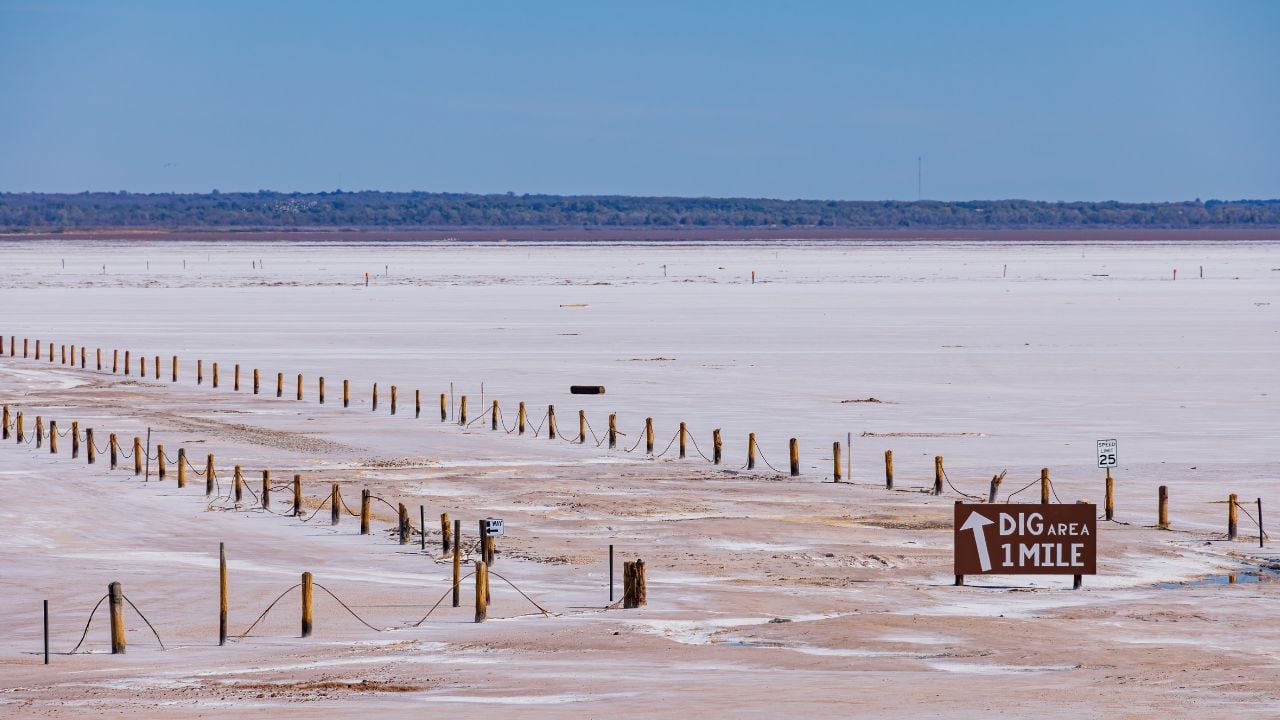
Near Jet, families walk out onto a dry salt lakebed every spring and dig crystals out of the mud with their bare hands.
The draw is the shape. Selenite crystals form in this one stretch of ground with an hourglass shape not found the same way anywhere else.
That’s the whole appeal.
The Salt Plains National Wildlife Refuge opens the site to public digging every year from April 1 through October 15.
Diggers scoop a shallow hole, pour in water, and feel through the mud for crystals that can grow past seven inches long and weigh close to 40 pounds.
Iron oxide in the soil gives many of them a light chocolate-brown tint.
The refuge caps each visitor at ten pounds of crystals and one large cluster a day, a limit set after the practice was formalized in the 1970s.
Refuge staff say roughly 80 percent of visitors now travel there to dig, not just pass through.
No two diggers walk away with the same hourglass twice.
7. Circus City, USA
Hugo still calls itself Circus City, USA, even though the traveling shows that earned the name are mostly long gone.
Nobody performs there anymore.
Hugo’s mild climate once made it a winter home for circus performers between tours.
Their headstones still fill a section of the local cemetery called Showmen’s Rest, carved with elephants and big-top scenes instead of crosses.
Hugo kept one piece of that circus life running.
A retirement ranch on the edge of town, the Endangered Ark Foundation, is home to a herd of 15 elephants, most retired from circus life.
The foundation says that’s among the largest Asian elephant herds in the country.
Visitors can book a public tour on weekends and walk right up to animals that used to perform under a big top three states away.
A diner downtown still papers its walls with circus photos.
The old Frisco Depot keeps circus wagons and posters on display a few blocks from where the trains used to unload them.
Almost nobody in Hugo has worked a single show, and many residents have never set foot under a big top at all.
The elephants next door do the job without a single local ever running away to join a circus.
11 Classic ’40s Tunes Americans Still Adore
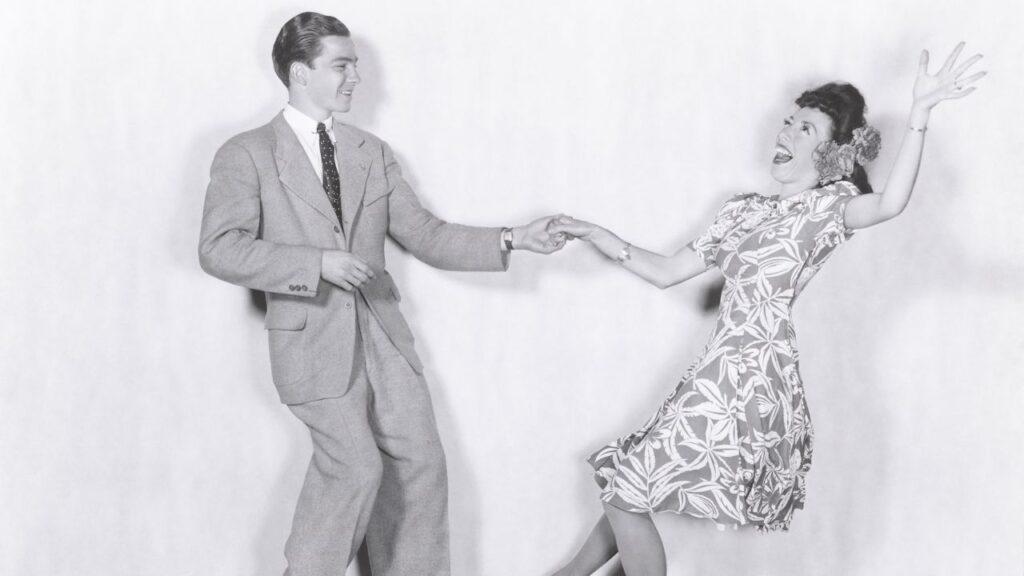
The radio wasn’t just background noise in the 1940s. It was the heart of the American home, playing the songs families gathered around every night.
Some of those tunes have outlasted the radios they first played on, and a few of them still beat whatever’s on the charts today.
