
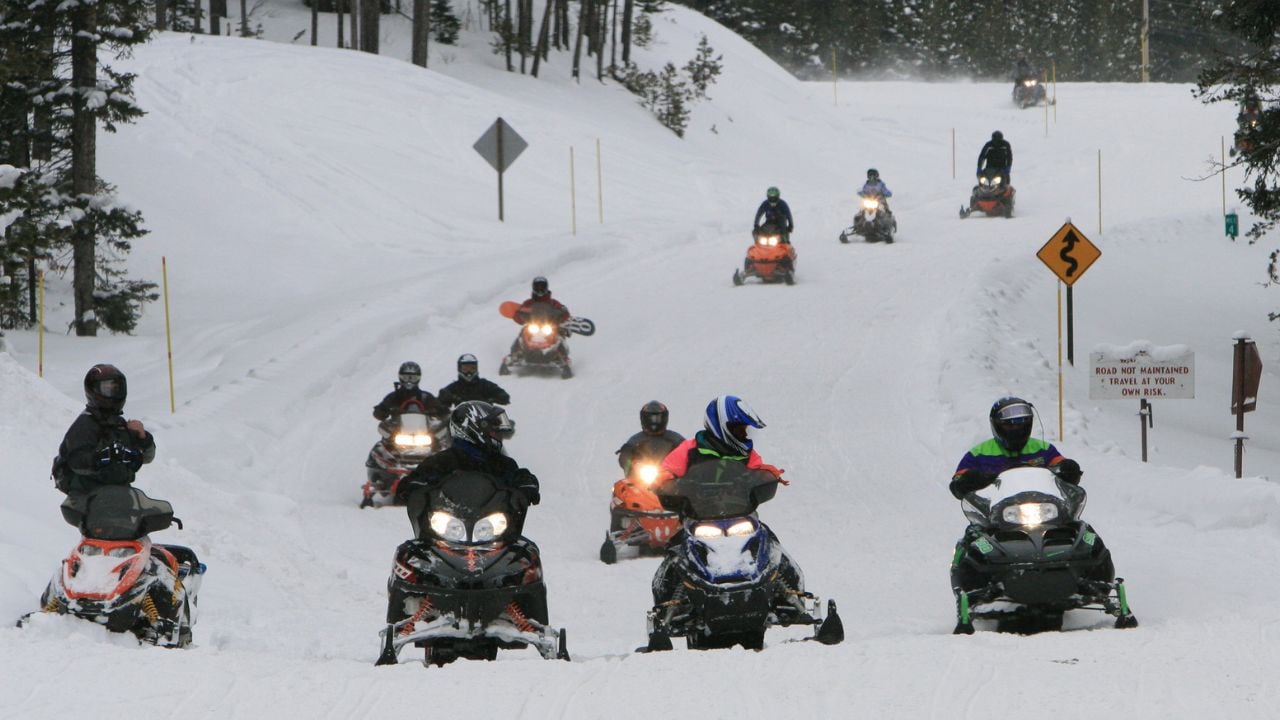
7 Snowmobile Rules Wisconsinites Should Know Before the Trails Open

A moonlit ride might already be on your list the minute the forecast mentions snow.
Riding after dark comes with rules of its own, though.
Before the trails open, these are the snowmobile rules Wisconsinites should know.
Note: This is general information, not legal advice. Snowmobile rules and fees are subject to change, so confirm the current requirements with the DNR.
1. Registration Within 10 Days
Wisconsin gives you 10 days from the day you buy a snowmobile to register it.
The clock starts on the date of purchase, so a used sled you buy from a neighbor is on the same 10-day timer as one from a dealer.
A public-use registration costs $30 and lasts up to three years, expiring on a June 30.
Registration decals go on both sides of the cowling.
If you ride only on land that you or an immediate family member owns or leases, a private-use registration costs $0 and doesn’t expire.
2. Annual Trail Pass
A snowmobile trail pass is a one-season purchase, and it lapses on June 30.
What does a pass cost?
Your Wisconsin-registered snowmobile needs a $30 pass, or a $10 pass if you belong to a club affiliated with the Association of Wisconsin Snowmobile Clubs.
A snowmobile registered in another state, province or country needs a $50 nonresident pass instead.
You don’t need to display a pass when the sled runs only on private property, on a snowmobile route or on frozen water, as long as the area isn’t a marked snowmobile trail or corridor. The sled still has to be registered.
Until the mail delivers your pass, carry the receipt; the pass then goes on the windshield.
Out-of-State Sleds
If a friend trailers a sled over from another state, that snowmobile can ride in Wisconsin on its home registration with a nonresident trail pass, as long as the home-state decal or proof of registration is prominently displayed.
Once the sled has been in Wisconsin for more than 15 consecutive days, it has to be registered in Wisconsin.
3. Safety Certificate Requirement
Anyone at least 12 years old who was born on or after Jan. 1, 1985 needs a snowmobile safety certificate to operate a snowmobile in Wisconsin.
A rider enrolled in an approved safety class can operate in the area the instructor designates.
The requirement doesn’t apply when the operator rides on land that the operator’s parent or guardian owns or leases.
4. After-Dark Speed Limit
After dark, a Wisconsin snowmobile tops out at 55 mph.
The limit doesn’t apply to a rider competing in a sanctioned race or derby.
Near homes, the limit drops to 10 mph within 150 feet of a dwelling between 10:30 p.m. and 7 a.m.
Ride past a house at 11 p.m., and you slow to 10 mph 150 feet out.
The DNR’s January 2024 safety release puts the advice simply: slow down when traveling at night.
5. Alcohol Limits and Crash Reports
Wisconsin bars you from operating a snowmobile with an alcohol concentration of 0.08 or more.
For riders under 19, any alcohol concentration above 0.0 is enough.
The catch?
The law also bars riding under the influence of an intoxicant to a degree that makes safe operation impossible, and that offense doesn’t depend on a 0.08 reading.
A crash that kills someone or injures someone badly enough to need a physician’s treatment is reportable, no matter how many snowmobiles are involved. The operator has to tell law enforcement without delay and send the DNR a written report within 10 days.
According to the DNR’s crash page, state law bars using that report as evidence in a trial.
6. Highway Roadway Ban
Your snowmobile typically can’t use the roadway portion of a state highway, according to the Wisconsin Department of Transportation (WisDOT).
Crossing is the exception, and you cross only after stopping and yielding to approaching vehicles.
Next to U.S. numbered and state highways, you can ride beside the roadway if you stay at least 10 feet away. On a two-lane rural highway, WisDOT defines the roadway as the area between the white fog lines.
Even beside the roadway, you can’t exceed the posted roadway speed limit.
Two more limits apply there: after dark, you ride in the same direction as traffic in the nearest lane unless you’re on a marked snowmobile trail, and you stay off the median of a divided highway except to cross.
7. Off-Limits Land and Trails
Riding on someone else’s private property takes the consent of the owner or lessee, and failing to post the land doesn’t imply consent. The same consent requirement covers cemeteries, burial grounds, and school or church property.
On tribal lands, consent comes from the tribal governing body or the Indian owner. Airport lands are off limits except to personnel on duty or with consent.
The DNR’s January 2024 release adds that operating a snowmobile off a designated trail is considered trespassing and can damage private property.
A closed snowmobile trail is off limits, and the DNR says operating on a closed trail is illegal. Wisconsin law also bars riding on public property that is posted closed to snowmobiles, and along snowmobile trails you have to obey stop signs, yield signs and other regulatory signs.
Psst! How much do you know about Wisconsin snowmobiling? Take our quiz and see how many you can get right.
Quiz
Snowmobile Trail IQ
Answer nine questions on sleds, trails and registration quirks. We bet you can’t get them all right. Prove us wrong?
A Sayner inventor built the prototype of the modern snowmobile in which year?
Checking Trail and Ice Conditions
For current trail conditions, the DNR's January 2024 release told riders to check ahead of time with their county forestry or parks department, a local snowmobile club or Travel Wisconsin's snow report.
Ice is a separate question. The DNR says it doesn't monitor ice conditions, and its December 2025 release pointed riders to local experts such as outfitters, bait shops and fishing clubs.
That January 2024 release also put numbers behind its warning: in the early months of 2023, Wisconsin had 16 fatal snowmobile crashes, and 10 involved alcohol.
On drinking, the release was direct: if you choose to consume alcohol, wait until after you've safely returned home.
7 Wisconsin Words That Make the Rest of the Midwest Do a Double Take

Ask for directions in Wisconsin, and you might hear a word that sounds strange to a visitor.
Many locals don't think twice about these words, but some other Midwesterners do.
7 Wisconsin Words That Make the Rest of the Midwest Do a Double Take
7 Things Wisconsinites Order at Culver's That Out-of-Staters Never Think to Try
By the time you reach the Culver's counter, you've probably already picked your order.
Many Wisconsinites go off script, though, and out-of-staters often miss what they order.
7 Things Wisconsinites Order at Culver's That Out-of-Staters Never Think to Try
