
7 Southern Sayings Georgians Keep Using Wrong Without Knowing It

A 1998 survey of Oklahoma speakers found that a third of them used “y’all” to address just one person, not a group.
Strict Southern grammar has a blunt word for that move.
A mistake.
These are the Southern sayings Georgians keep using wrong without ever realizing it.
1. Can’t Never Could
Georgians who grew up hearing “can’t never could” often think about it backwards.
Said with a sigh, it sounds like a verdict: You’ve never managed it, so don’t bother trying again.
Just the opposite.
The saying is a piece of old-school encouragement.
Southern Living readers point out it runs the other way: Tell yourself you can’t, and you probably won’t, but decide you can, and the odds shift.
Southern families used the line to talk kids out of quitting, not into it.
Say it the way it was meant, and a complaint turns into a pep talk.
2. Y’all
Georgians say “y’all” all the time, yet plenty still get it wrong.
Two mistakes show up: Spelling it “ya’ll,” and aiming it at a single person instead of a group.
Wrong on both counts, by the old rule.
The apostrophe stands in for the letters missing between “you” and “all,” so “ya’ll” has never been correct, no matter how often it shows up on a T-shirt.
Something newer has crept in, too.
A 1998 study found that a third of Oklahoma speakers used “y’all” to talk to just one person.
But Southern grammar often treats “y’all” as strictly plural.
3. Put Your Foot in It
Georgians who say they “put their foot in it” usually mean they made a mess of something, said an awkward comment, or burned dinner.
That meaning is borrowed from a different phrase.
Put your foot in your mouth is the phrase about the blunder.
Put your foot in it is the opposite: One of the highest compliments a Southern cook can earn, said about a dish made with obvious care.
Say a cook “put her foot in it” at Sunday dinner, and you’re bragging on the cornbread, not confessing to a mistake.
Southern Living readers flagged this exact mix-up because getting the phrase backwards turns a compliment into an accidental insult.
Compliment, not confession.
4. Acting Ill
Georgians who hear someone described as “acting ill” today almost always picture a fever or a stomach bug.
Older Southern speech never used the word that way.
Dialect researchers have documented the bad-tempered sense of “ill” since the 1300s, and it survived longest in the South and Appalachia after other English speakers dropped it.
An old mountain saying calling a rattlesnake “ill” wasn’t describing a sick snake.
It was mean.
The Old Meaning Behind Georgia’s “Ill”
Georgians today mostly use “ill” the same way the rest of the country does, to mean sick.
The older Southern meaning was bad-tempered or vicious, documented by dialect researchers back to the 1300s.
Puny, not ill, was the traditional Southern word for feeling under the weather.
Psst! How much do you know about Southern sayings and Georgia food history? Take our quiz and see if you can ace it.
Quiz
Georgia Sayings IQ
Answer these on Southern words, food names, and where they came from. We bet you can’t get them all right. Prove us wrong?
“Grits” sounds like it could be a modern acronym. What’s the true origin of the word?
5. Cattywampus
Georgians reach for "cattywampus" to describe two different things, and only one of them is correct.
Plenty use it to mean "diagonally across from," the job that belongs to catty-corner.
Cattywampus's own traditional meaning is crooked or askew, a picture frame knocked sideways or a fence leaning after a storm.
Ask a Georgia native for directions using it, and you'll likely get sent the wrong way entirely.
Wrong way, guaranteed.
Both words trace back to the same old term for moving diagonally, which is likely why Georgians keep swapping their jobs.
6. Fixin' To
Georgians who say they're "fixin' to" do something often use it as a flat stand-in for "about to," a promise that whatever's coming starts within the next few minutes.
That's not what the phrase promises.
Dialect researchers who study "fixin' to" insist it carries its own meaning, separate from "about to" and "going to," even when casual speech treats all three the same.
A study cited by Yale's Grammatical Diversity Project found "fixin' to" is built around what linguists call a preparatory delay, an open stretch of time before the action that even the speaker can't fully pin down.
Told that someone was "fixin' to" start their homework, surveyed Southern speakers didn't land on one answer for when the work would begin.
Some guessed right away, some guessed within the hour, and others guessed within a few hours, all from the identical sentence.
No countdown attached.
Traditionally, "fixin' to" just means the task made the list, with the timing left open on purpose.
7. God Love 'Em
Georgians drop "God love 'em" into conversation like a warm compliment, and plenty mean it that way.
Traditionally, the phrase carries an edge close to "bless your heart."
Southern Living readers describe it as tolerance dressed up as a blessing, the kind of line that covers for someone's shortcomings while sounding gracious.
Kindness with a catch.
Say it about a neighbor who can't parallel park to save his life, "God love him," and Georgians raised on the old usage hear the whole joke, not just the blessing.
The safest test is tone, not words. A sweet-sounding "God love her" aimed at someone's back is doing very different work than the same words said warmly to her face.
Get the tone backwards in Georgia, and the joke lands on the person saying it, not the person it's about.
Georgia Speaks More Than One Southern
Georgia doesn't hand every saying the same meaning from one end of the state to the other.
North Georgia's mountain speech grew out of Appalachian settlement patterns, the same route that carried double modals like "might could" into the region.
The coast tells a different story.
Georgia's Sea Islands and Lowcountry are home to Gullah Geechee, a distinct English-based creole language that grew out of contact between colonial English and West African languages during the region's rice-growing era.
Geechee communities on the mainland and the islands even split their own identity, calling themselves Freshwater Geechee or Saltwater Geechee depending on where they're from.
One state, several dialects.
Congress designated the Gullah Geechee Cultural Heritage Corridor in 2006 to protect this culture and the language that grew out of it.
The corridor runs the coast from North Carolina through Georgia's own Sea Islands and down into Florida, the only stretch of the country where Gullah is spoken.
10 Things That Surprise First-Time Aldi Shoppers in Georgia
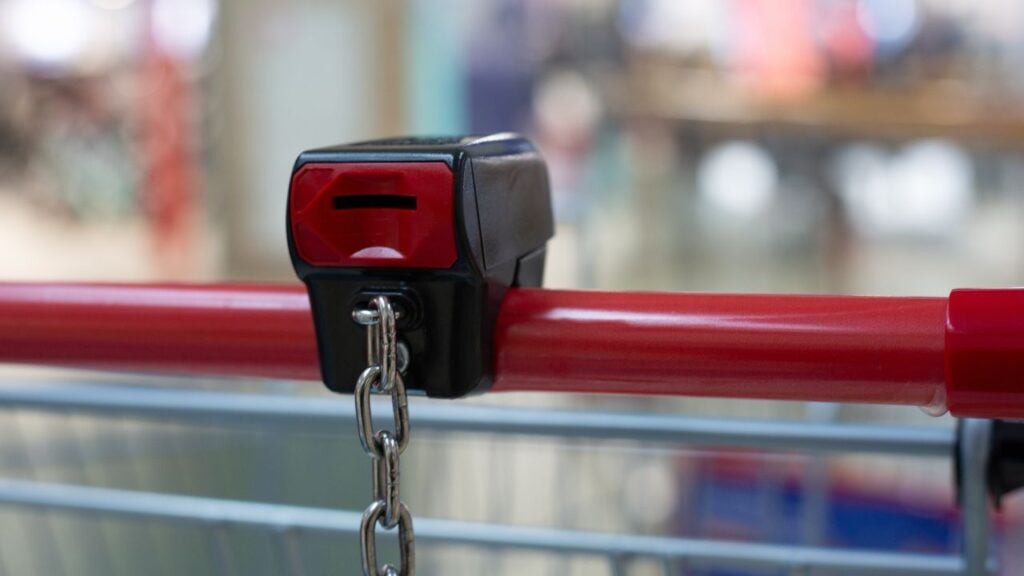
A first Aldi run in Georgia comes with its own learning curve, starting at the cart corral, where a quarter unlocks the cart before anyone even gets inside the store.
Georgia's Aldi stores run leaner than a typical grocery chain, and that trips up many first-timers before they ever reach the register.
10 Things That Surprise First-Time Aldi Shoppers in Georgia
9 Things Georgia Shoppers Should Never Buy Secondhand
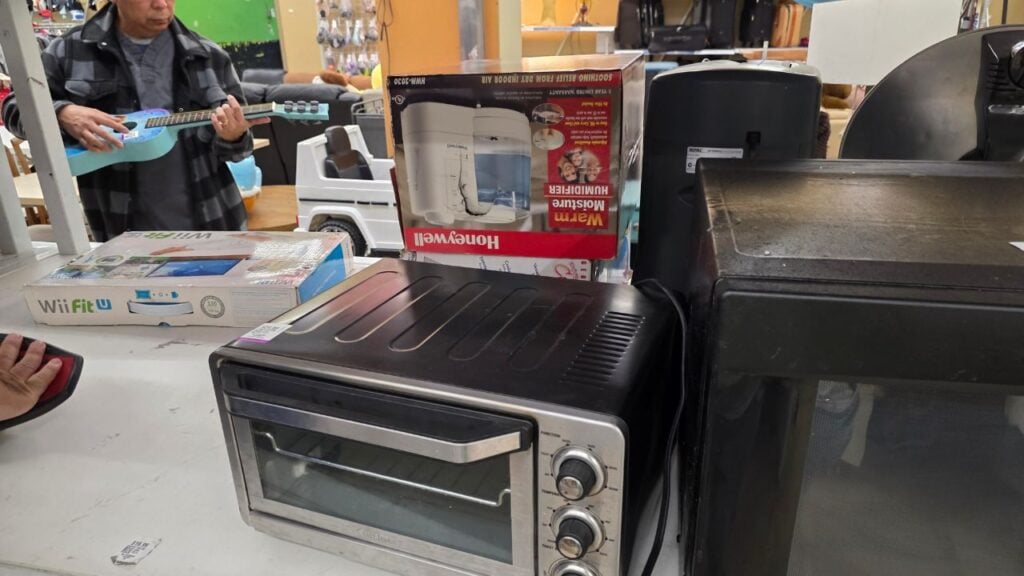
A federal recall doesn't stop applying just because a used item changed hands at a Georgia yard sale or flea market.
Atlanta's Scott Antique Markets alone draws thousands of Georgia shoppers every month, and a handful of items on those tables carry more risk than the bargain is worth.
