
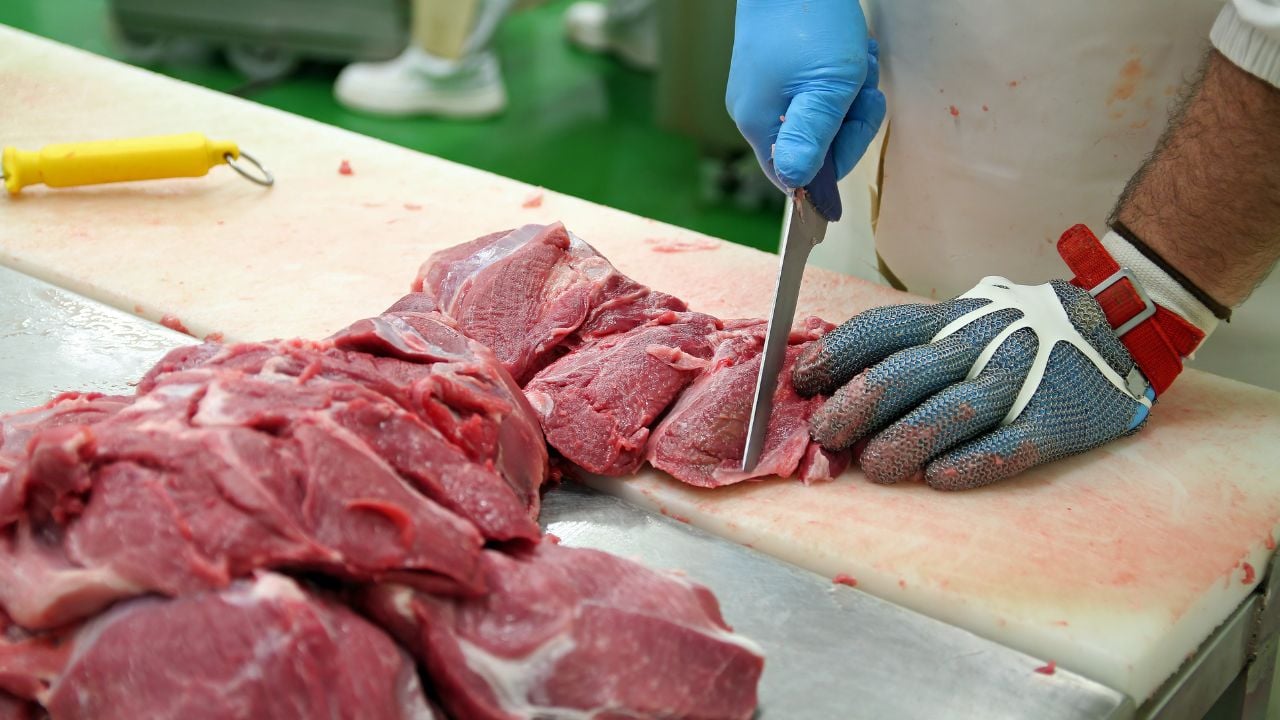
7 Things a South Dakota Meat Locker Asks You to Decide That a Grocery Store Never Will

At a grocery store, someone else has made every decision before you buy meat.
But walk into a South Dakota meat locker with your own animal, and the questions start coming your way.
These are the things a South Dakota meat locker asks you to decide that a grocery store never will.
1. Picking Your Steak’s Thickness
A meat locker’s cut sheet asks how thick you want every steak, right down to the quarter inch.
Midwestern Meat Locker in Newell prints four choices for a ribeye or a T-bone: Three-quarters of an inch, one inch, one and a quarter, or one and a half.
No default exists.
Pork chops and lamb chops get the same treatment, with thickness menus running from five-eighths of an inch up past an inch and a quarter.
Two families splitting the same steer can check different boxes and take home two different steaks off the same animal.
The grocery store already made that call for you, weeks before the package hit the shelf.
2. Your Burger’s Fat Ratio
Your hamburger’s fat ratio is the meat locker’s next question, and it sets that ratio before the grinder ever starts.
Midwestern Meat Locker’s order sheet lists three ratios: A regular 80/20, a leaner 85/15, or a 90/10 for anyone watching fat grams.
You set it once, and the whole batch comes out that way.
No mixing later.
Change your mind after the grind, and the locker logs it as a whole new order, not a tweak to the old one.
3. Naming Every Co-Owner
A meat locker won’t book a shared animal until every co-owner has a name and a phone number on file.
Midwestern Meat Locker asks for a full list of buyers, or a cut list, before it will schedule an animal that’s splitting among more than one buyer.
That’s how the locker knows who to call once each share is ready.
South Dakota State University Extension’s ownership rule doesn’t bend for a group order, either.
Every co-owner needs a documented share of the live animal, not just a receipt for meat.
No shortcuts exist.
Resell that meat to someone outside the group later, and it breaks the law for everyone who signed on.
South Dakota’s list of licensed custom-exempt establishments, revised in August 2026, includes 58 of them, scattered from Lemmon to Yankton.
What “Hanging Weight” Means
Hanging weight determines your bill at a South Dakota meat locker, not the meat that lands in your cooler.
It’s the carcass’s weight right after slaughter, before any bone, fat, or trim comes off.
A Mississippi State University Extension guide on farm-direct beef puts the take-home weight at roughly 60 to 75 percent of that hanging weight once cutting finishes.
So on Midwestern Meat Locker’s $1.15-a-pound cutting fee, a hypothetical 600-pound hanging half costs $690 in processing alone, before the locker even adds the kill fee.
4. Bone-In or Boneless
Every roast, chop, and ham steak on a meat locker’s cut sheet comes with one more choice: Bone-in or boneless.
Midwestern Meat Locker runs that choice through pork loin chops, ham steaks, and even a whole prime rib roast, cut by cut.
That’s final.
Pick wrong, and a shoulder roast meant for the slow cooker shows up with a bone that changes how long it needs to cook.
The store already decided that choice for you.
Psst! How much do you know about South Dakota ranching? Take our quiz and see how many you can get right.
Quiz
South Dakota Ranch Trivia
Answer these on South Dakota’s cattle, bison, and brands. We bet you can’t get them all right. Prove us wrong?
How many bison do riders drive together on horseback every fall at South Dakota’s Custer State Park?
5. Choosing Your Hang Time
Extra hang time for your beef is another line on the meat locker's order form, and you fill it in yourself.
Midwestern Meat Locker hangs beef a minimum of 10 days by default.
Customers can pay extra for a longer custom aging guarantee, twelve cents for every hanging pound, to pull more tenderness out of the same steer.
You choose the days.
Skip the extra days, and the beef ships out on the locker's standard clock instead.
6. What Becomes Sausage
How many pounds of your animal become sausage, jerky, or snack sticks instead of steaks is the locker's next question for you.
Midwestern Meat Locker won't turn less than 15 pounds of one flavor into jerky or summer sausage, so the customer has to plan the split themselves.
No exceptions.
Ask for too little of one flavor, and the locker bumps the whole batch up to whatever that flavor's minimum requires.
Pick a flavor from a list that runs from plain breakfast sausage to Cajun and maple.
That pick locks in the whole batch, not just one package.
Midwestern Meat Locker files that list with the kill order, and it doesn't change once the animal's on the rail.
7. Booking the Kill Date
Picking an actual date to drop off a live animal is the last call the meat locker makes you handle, months before any meat exists.
Midwestern Meat Locker asks customers to drop off between 7 and 10 in the morning on an assigned day.
Anyone who can't make that day has to call at least 48 hours ahead.
Midwestern Meat Locker holds every customer to that same window.
The locker warns on its site that its schedule runs tight, with little room for a late drop-off.
Midwestern Meat Locker won't finalize an order until it calls back to confirm every detail, from the kill date down to the cut sheet.
That call is binding.
If you miss that window, the animal waits for the next open slot, sometimes weeks out.
Fall bookings fill first, since that's when many South Dakota cattle and hogs come off pasture ready for slaughter.
A grocery store stocks the same cuts no matter what season it is.
The Most Trusted Grocery Store in America in 2026, Kicking Florida-Born Publix Out of #1
More than 35,000 shoppers weighed in on which grocery store they trust most in 2026, and one chain walked away with more trust awards than anyone else in the country.
It wasn't Publix, though the runner-up spot surprised many longtime fans.
The Most Trusted Grocery Store in America in 2026, Kicking Florida-Born Publix Out of #1
