
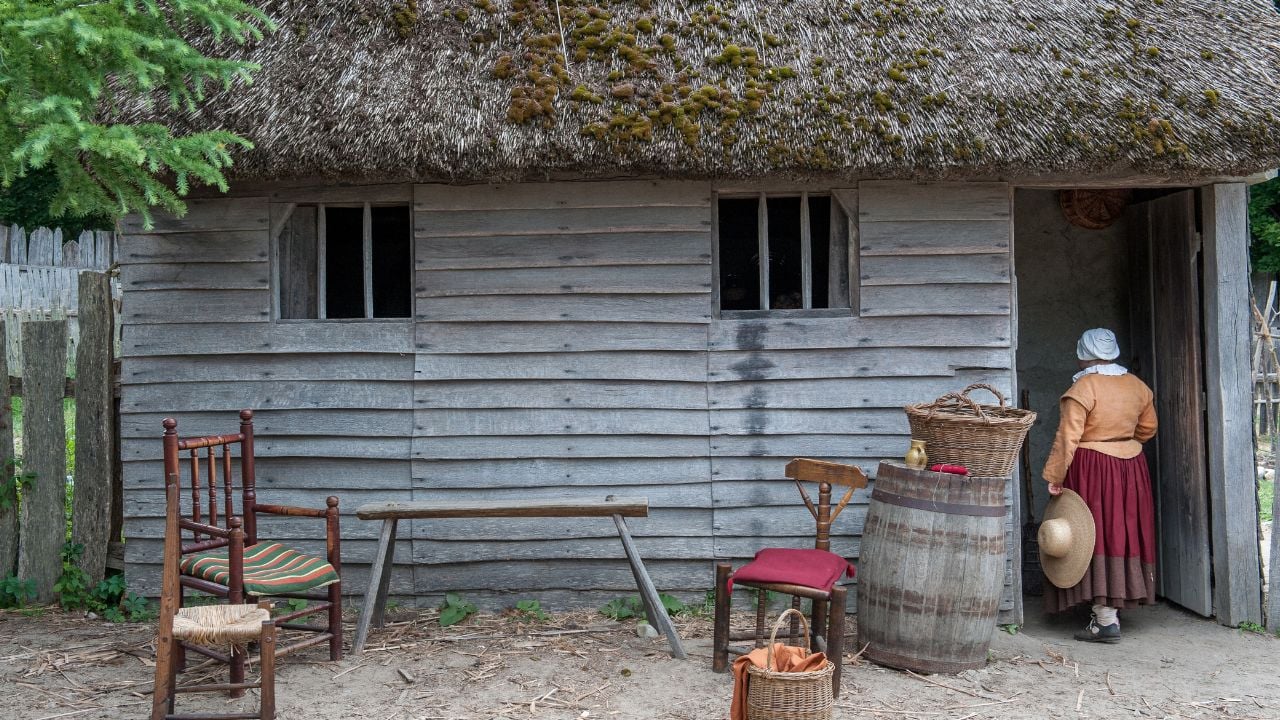
7 Things Bay Staters Know About Thanksgiving That the Rest of America Gets Wrong

Thanksgiving’s two weeks away, and Massachusetts has the history to correct the version a lot of us learned.
Here’s what Bay Staters know about Thanksgiving that the rest of America gets wrong.
1. Harvest Feast of 1621
Thanksgiving’s roots at Plymouth are a harvest feast in the fall of 1621, and just two surviving documents describe it.
One is a 1621 letter from colonist Edward Winslow.
He wrote that after the harvest, the governor sent four men fowling so the colony could rejoice together.
The other is William Bradford’s history of Plymouth Colony.
A lot of people picture one tidy dinner with the holiday’s name already attached.
The Pilgrim Hall Museum in Plymouth says much of what people know about the Pilgrims is myth and memory.
2. Guest List
Thanksgiving’s guest list at Plymouth ran lopsided when Ousamequin, also known as Massasoit, arrived with about 90 men.
Ousamequin was the great sachem, or leader, of the Pokanoket people.
Plymouth had 53 Mayflower survivors to host them.
The guests outnumbered the hosts.
3. Three Days of Feasting
What became Thanksgiving at Plymouth in 1621 ran three days, not one dinner.
Plimoth Patuxet Museums says Ousamequin and his men shared three days of feasting and entertainment with the English.
Winslow’s letter says the colonists entertained and feasted their guests for three days.
Recreations during that visit included the colonists exercising their arms.
4. Menu on Paper
The 1621 documents name far fewer dishes than your Thanksgiving table does.
The 1621 letter mentions fowl and five deer, which Ousamequin’s men killed and brought to the colony’s leaders.
Bradford’s history describes wild turkeys, cod, and bass as winter approached.
Smithsonian magazine reports that a Plimoth Patuxet foodways culinarian suspects goose or duck was the wildfowl of choice.
The colonists didn’t have the butter and wheat flour to make crusts for pies.
About 50 years after the feast, an Englishman wrote about boiling cranberries and sugar into a sauce for meat.
So the pies and cranberry sauce on a modern table were probably later additions.
5. Land Called Patuxet
Thanksgiving’s Plymouth feast took place on land that Indigenous people call Patuxet.
The village of Patuxet, later known as Plymouth, was home to about 2,000 people.
From 1616 to 1619, an epidemic hit the coast from Maine to Narragansett Bay.
Nearly all of the people of Patuxet died when the disease arrived.
The Wampanoag people lost at least 75% and as much as 90% of their entire population, Pilgrim Hall Museum says.
Narragansett leaders pressured Ousamequin, the Wampanoag sachem who later came to the feast, to pay them tribute while his people were in crisis.
6. Days Spent in Church
The first recorded religious day of thanksgiving in Plymouth Colony came in 1623, after a rainfall.
Those days would have been spent in church, with no feasting or amusements.
In 1631, John Winthrop of Massachusetts Bay proclaimed a day of thanksgiving when a ship arrived with food for a starving colony.
7. National Day of Mourning
Thanksgiving has been a National Day of Mourning in Plymouth since 1970.
That year, Frank James, an Aquinnah Wampanoag, was invited to speak in Boston at events marking 350 years since the Pilgrims landed.
He was told his remarks were too inflammatory.
Instead, he gave the speech publicly on Cole’s Hill in Plymouth on Thanksgiving Day.
Native people and others have gathered annually in Plymouth on Thanksgiving since, and some Native people observe the day as a National Day of Mourning.
This year’s gathering falls on Thursday, Nov. 26.
What to Know About the National Day of Mourning
The National Day of Mourning on Thanksgiving starts at noon, with a rally on Cole’s Hill and a march through Plymouth’s historic district.
The United American Indians of New England say the rallies and marches run until about 3 p.m. and are livestreamed, and that only Indigenous people speak at the gathering.
The group welcomes non-Native supporters. Many participants fast, and attendees are asked not to eat at the speak-out.
Sarah Josepha Hale’s Campaign
Thanksgiving became a national holiday after a magazine editor named Sarah Josepha Hale campaigned for it.
Hale took on the editorship of the Ladies’ Magazine of Boston in 1828, and she wrote the first of her Thanksgiving editorials in 1837.
She kept writing Thanksgiving editorials until 1875.
In September 1863, she wrote to President Abraham Lincoln to ask for a national Thanksgiving.
Lincoln’s 1863 proclamation urged Americans to observe the last Thursday of November.
In 1941, Congress settled on the fourth Thursday of November, which is why Thanksgiving lands on that day every year.
Wampanoag Tribes Today
Thanksgiving’s Plymouth story involves the Wampanoag, and Massachusetts is home to two federally recognized Wampanoag tribes.
They’re still here.
The Mashpee Wampanoag Tribe, also called the People of the First Light, was re-acknowledged as a federally recognized tribe in 2007.
The tribe says it has about 3,200 enrolled citizens.
The Wampanoag Tribe of Gay Head (Aquinnah) is a federally recognized tribe on the western end of Martha’s Vineyard.
Plimoth Patuxet Museums describes its Historic Patuxet Homesite as a place to learn from contemporary interpreters.
Psst! How much do you know about Thanksgiving history in New England? Take our quiz and see if you can ace it.
Quiz
Thanksgiving History IQ
Answer these questions on Thanksgiving history and New England. We bet you can’t get them all right. Prove us wrong?
What do Bradford’s history and Mourt’s Relation, the two Pilgrim-era accounts of the landing, say about Plymouth Rock?
Parade Day in Plymouth
Plymouth's Thanksgiving parade is set for Saturday, Nov. 21, the Saturday before the holiday.
America's Hometown Thanksgiving Celebration, a Plymouth nonprofit, runs the parade and describes its Thanksgiving tradition as over 25 years old.
The parade honors local POWs, veterans, and Gold Star families.
7 Signs a Massachusetts Employer Is Going to Cut Your Remote Days, Based on Companies That’ve Already Done It
Some Massachusetts workers may spot the warning signs of a return-to-office push before the memo arrives.
These are the signs a Massachusetts employer is going to cut your remote days.
7 Stop & Shop Habits That Cost Massachusetts Shoppers More Than They Save
Groceries are expensive enough without innocent habits making your bill worse.
If you shop at Stop & Shop, you might be doing one or two of them right now.
7 Stop & Shop Habits That Cost Massachusetts Shoppers More Than They Save
