
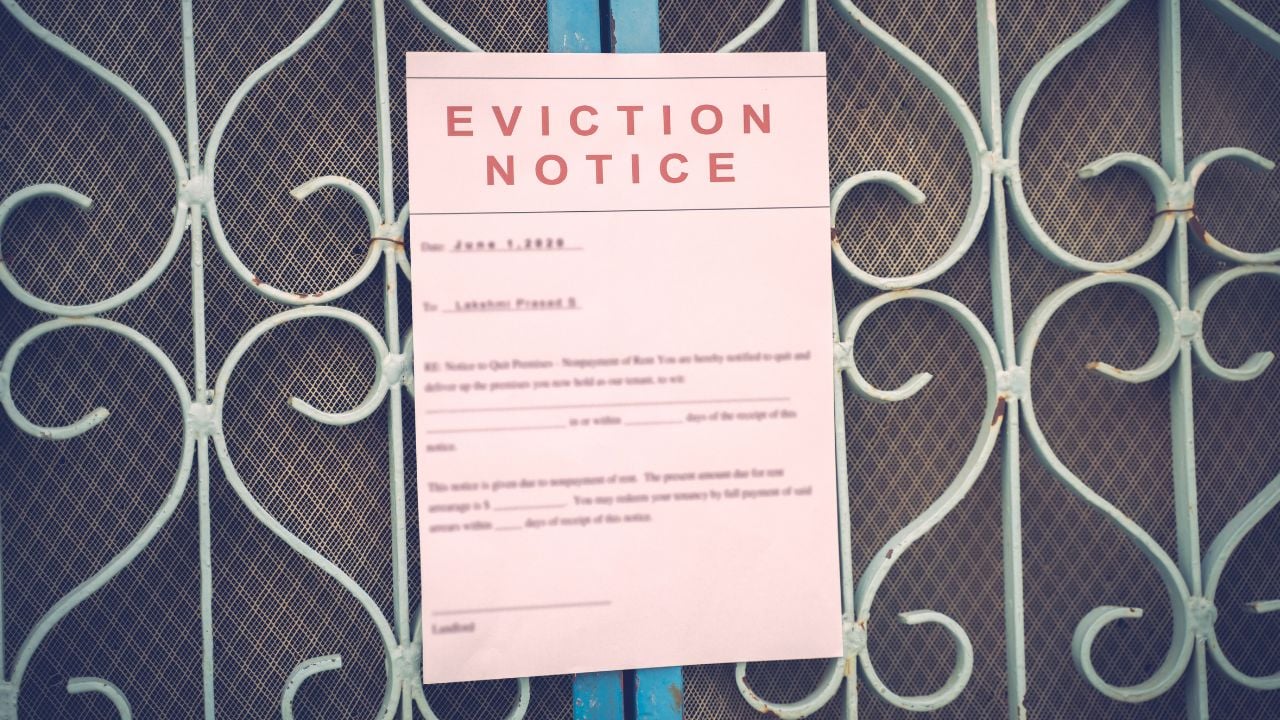
7 Things Indiana Landlords Can’t Legally Do to Renters in 2026

Indiana bars its cities and towns from writing rules on security deposits, lease terms, screening or fees, unless the legislature grants an exception.
The parts that protect a renter are often the ones that nobody at the lease signing reads out loud.
These are the things Indiana landlords can’t legally do to renters in 2026.
Note: This is general information, not legal advice. Rental rules and notice periods are subject to change.
1. Lock Changes and Utility Cutoffs
State law strips every Indiana landlord of the self-help move some assume still works: Changing the locks to force someone out.
Pulling a door off its hinges or shutting off the water, gas or electricity carries that same ban.
A tenant keeps the legal right to get into the unit and to working water, gas and electricity, no matter how frustrated the landlord gets.
The only exceptions are a court order or an emergency repair.
There’s no shortcut around it.
Landlords and tenant attorneys call this move a self-help eviction, and Indiana treats it as illegal no matter how far behind a renter is on rent.
Falling behind on rent gives a landlord grounds to start eviction, not a green light to change the locks first.
A landlord who wants someone out still has to file in court and wait on a judge’s order, the same as anywhere else in the state.
The One Loophole Landlords Sometimes Claim
Indiana landlords do get one legal way back into a unit without a court order, and it only applies when a renter has abandoned the place.
State law defines that narrowly.
A renter has to have stopped paying or offering rent and left in a way that would make a reasonable person conclude the unit is empty for good.
No lease can loosen that definition to make abandonment easier to claim.
2. Entry Without Reasonable Notice
Indiana landlords can’t let themselves into an occupied unit whenever they feel like it.
State law requires a landlord to give a tenant reasonable written or oral notice before entering.
The landlord can show up only at reasonable times, not whenever the mood strikes.
Notice comes first.
The same law also bans using a right of entry to harass a tenant.
A landlord who shows up daily during a dispute breaks the identical rule that governs one routine repair visit.
3. A Deposit With No Itemized List
An Indiana landlord who says nothing about a security deposit ends up owing every dollar of it back.
State law gives a landlord 45 days after a lease ends to mail an itemized list of damages.
That clock starts once the renter has given a forwarding address in writing.
A missing address buys a landlord a short delay, not a reason to skip the letter entirely.
There’s no exception to that clock.
The letter has to spell out the cost of each item, plus a check or money order for whatever’s left of the deposit.
Miss that window, and the landlord forfeits the right to keep any of it.
A renter can then sue for the full deposit back, plus attorney’s fees, turning one skipped letter into a bill many landlords never planned for.
4. Heat or Plumbing Left Unfixed
State law puts habitability squarely on Indiana landlords, not renters left to fix a broken furnace, a dead water heater or exposed wiring on their own.
That means delivering a rental unit in safe, clean and habitable condition before a tenant ever moves in.
The same law keeps the heating, plumbing and electrical systems in good working order for as long as the lease runs.
Indiana winters make that heat requirement more than a formality.
Cold air isn’t heat.
A lease can’t sign that duty away either, since state law voids any clause that tries to waive it.
Psst! How much do you know about Indiana’s housing history? Take our quiz and see how many you can get right.
Quiz
Hoosier Housing IQ
Answer these questions on Indiana homes, renting and real estate history. We bet you can’t get them all right. Prove us wrong?
About what share of Indiana households own the home they live in rather than rent, per the Census Bureau’s latest five-year estimate?
5. A Rent Increase for Reporting a Problem
Indiana landlords can't punish a renter for reporting a problem.
State law bans retaliatory acts like a rent hike, a service cutoff or a sudden eviction filing.
That protection kicks in when a renter has recently complained to code enforcement, put an unsafe-conditions complaint in writing, or joined a tenant group.
Timing gives it away.
None of this stops a landlord from raising rent to match the going rate at lease renewal, only from doing it as payback for a complaint.
A landlord can still evict over unpaid rent or a lease violation.
What changes the case is motive, not the paperwork -- the identical eviction notice reads differently depending on what triggered it.
6. Belongings Tossed at the Curb
An Indiana landlord waits on the court, not the calendar, before clearing out furniture, boxes or family photos a renter leaves behind.
State law requires a landlord to win a court order for possession, then get a further court order before removing whatever's left behind.
The paperwork comes first.
A lease can't redefine abandoned property more loosely than the statute allows, so a landlord can't write a clause that skips the wait.
Once a court signs off, the leftover items go to a warehouse or storage facility instead of a dumpster, giving a renter a chance to claim them back.
7. Ending a Month-to-Month Lease Without Notice
An open-ended lease in Indiana doesn't end on a landlord's whim, since state law sets the clock instead.
Any rental with no fixed term defaults to a month-to-month tenancy under state law.
Ending one takes notice equal to a full rental period, typically a month for renters paying by the month.
A phone call doesn't count.
One Rulebook for Every Indiana City
Indiana landlords answer to the same state statute whether their rental sits in Indianapolis, Fort Wayne, Evansville or a small town along the Ohio River.
State law bars cities and towns from writing landlord-tenant ordinances on security deposits, lease terms, screening or fees, unless the General Assembly grants an exception.
One statute covers all ninety-two counties.
A city council can still pass a nuisance ordinance or a rental registration requirement.
What a city cannot do is rewrite the deposit timeline, the entry-notice rule, or any other landlord obligation the state already set.
The one carve-out is housing that receives government funding to keep rents reduced for low- or moderate-income tenants.
That kind of housing can carry additional federal or state program rules on top of the ordinary landlord-tenant statute.

I need help my landlord ghosted me for 2.5 months while I had NO WATER after a month of no contact I replaced the well as it had broken and made the landlord aware with multiple messages. It’s costing me about 1200 to repair his well system. When he can back into contact he told me I pay him or he is evicting me while I am still paying the repair men for the well. He says he did not authorize it so he doesn’t have to pay but I do
My last three landlords keep my security deposit. I can’t find a lawyer to sue them for my deposit. I have videos and pictures of the walk through with them and I left on good terms. The Bar Association, BBB, Legal Aid and others would not help me.
I would like to know what the statute is. As far as raising, your rent really high\n I have lived here 25 years with maybe six different rent mans but never one that wants to raise my rent to $250 more.Is this legal is