
7 Things Inside a Kansas Grain Elevator Most Farm-Country Visitors Never Get to See

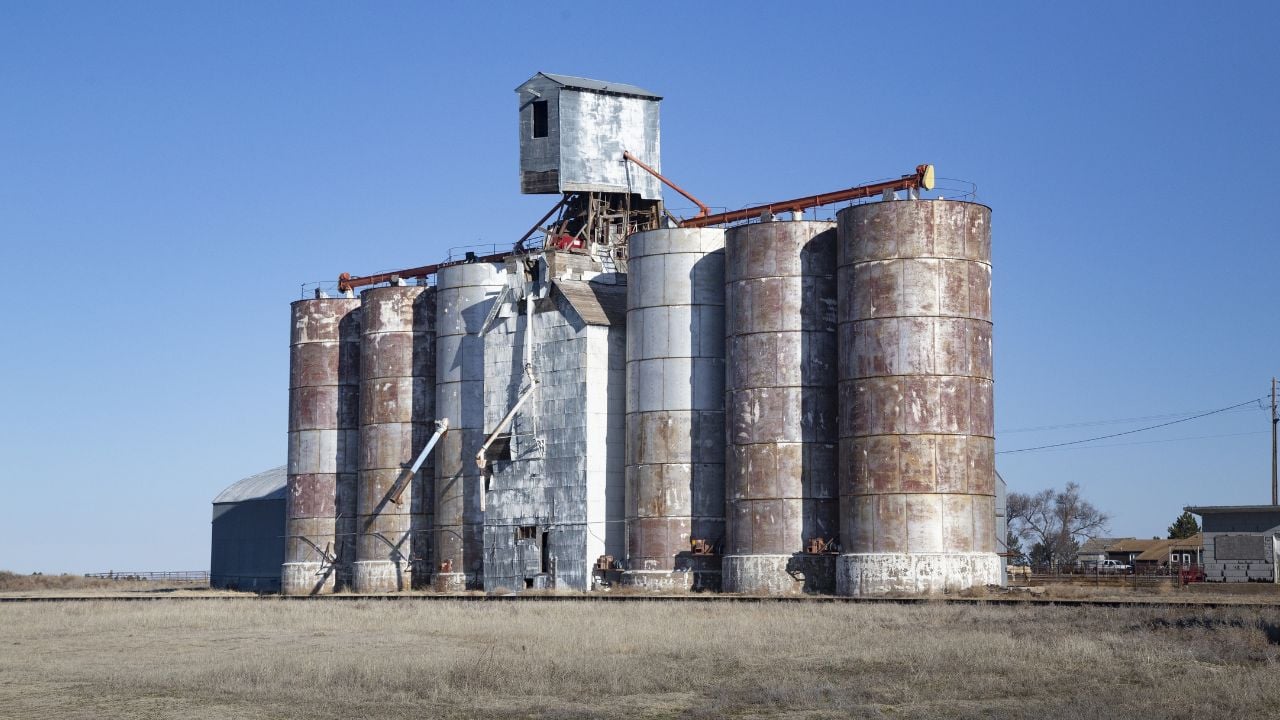
Driving through Kansas farm country, a grain elevator is hard to miss and easy to ignore.
Behind those walls, there’s a lot of equipment at work that visitors don’t get to see.
Here’s a look at what runs inside a grain elevator, from the moment a truck pulls in.
1. Receiving Pit and Bucket Elevator Leg
In the Kansas Department of Revenue’s 2026 appraisal guide, a weighed wheat truck drives off the scales into a grain elevator’s drive-thru opening, onto a huge grate.
The wheat falls through the grate into a big pit and then slides down a sloped concrete path into a lower pit called the boot pit.
The boot sits at the bottom of the bucket elevator leg.
That leg is the part of the grain elevator that picks up the grain and moves it to the top.
Inside the leg, a big belt with steel cups goes up and down from the boot to the top of the leg.
If you’re picturing those cups, each one is about the size of a shoe box.
A leg can sit within the elevator or stand as a free-standing structure, so you may spot one standing apart from the main building.
2. Gravity Cleaner
Grain leaving the head of a grain elevator’s bucket elevator flows over a gravity cleaner, the guide says, to remove pieces of stalk, stones and other foreign material.
If you’re following the grain from there, it may move by gravity or conveyor to drying, among other stops.
3. Grain Dryers
A grain elevator’s dryers include two different operating systems, batch or continuous flow, according to the 2022 edition of the Kansas Department of Revenue’s appraisal guide.
Grain dryers are rated by bushels per hour.
If you see aeration fans on a bin, K-State’s grain storage tips say they deliver small quantities of air but were never intended to dry grain.
4. Aeration Systems
A grain elevator’s storage bins have aeration, fumigation and temperature monitoring systems incorporated for grain quality maintenance, according to the Kansas Department of Revenue’s 2026 appraisal guide.
A 2012 K-State chapter on grain aeration defines aeration as using fans to force outside air through a grain bulk to improve how well it stores.
For concrete silos and tall steel bins, airflow rates of 0.05 to 0.10 cubic feet per minute per bushel are typically used.
If you’re curious how fans know when to run, aeration controllers are electrical devices that start and stop the fans automatically.
Aeration Temperature Targets for Stored Grain
K-State’s grain storage tips say elevator managers and producers with on-farm storage are responsible for the well-being of their investment.
Insects and molds have difficulty reproducing when the grain temperature is below 50 degrees Fahrenheit.
For May-to-August grain, it is beneficial to reduce the temperature to below 70 degrees as soon as possible by running the aeration fans on and off.
If the average grain or air temperature is above 45 degrees, inspect every two weeks.
Once the grain temperature and the outdoor air temperature are both below 45 degrees, monthly monitoring should be adequate.
5. Heat Detection Cables
In the Kansas Department of Revenue’s 2022 appraisal guide, a grain elevator’s heat detection system has a computerized control unit and a system of detection cables.
A typical arrangement may include 8 cables per bin, depending on the bin’s diameter.
If you’re wondering what the cables are for, a 1995 Purdue Extension publication says temperature sensing units in large grain storages help identify hot spots within the grain mass.
At a site with several steel bins, one bin roof may have no snow or frost while the others do.
That is a sign the grain may be heating, according to K-State’s grain storage tips.
Grain that is heating should be cooled, turned or marketed immediately to prevent further damage.
Psst! How much do you know about Kansas grain? Take our quiz and see if you can ace it.
Quiz
Kansas Grain IQ
Answer these questions on Kansas grain, mills, and crops. We bet you can’t get them all right. Prove us wrong?
In 2017, about what share of all the grain sorghum grown in the United States came from Kansas?
6. Dust Collection
In the Kansas Department of Revenue's 2022 appraisal guide, a grain elevator's dust collection systems are typically associated with the movement of grain within the facility.
The Occupational Safety and Health Administration (OSHA) sets dust housekeeping rules in its grain handling standard, which applies to grain elevators.
Under that standard, an employer has to write a housekeeping program to reduce grain dust on ledges, floors, equipment and other exposed surfaces.
If you're wondering what counts as a priority housekeeping area, it includes floor areas within 35 feet of inside bucket elevators.
It also includes floors of enclosed areas that contain grinding equipment or grain dryers located inside the facility.
At those areas, the employer must immediately remove grain dust accumulations whenever they exceed ⅛ inch.
The employer can instead show, through its housekeeping program, that equivalent protection is provided.
OSHA's 2024 news release on grain handling lists fires and explosions, if combustible dust ignites, among the hazards at grain handling facilities.
7. Shipping Scale and Sampler
Grain leaving a grain elevator exits from bin bottoms and moves by gravity or conveyor to a shipping leg, the Kansas Department of Revenue's 2026 appraisal guide says.
The grain then flows from the head of that leg to a surge bin ahead of the shipping scale.
If you're picturing a corn or soybean elevator, those elevators are equipped with a grain scalper that precedes the surge bin.
The scalper removes stalk or cob material that some markets don't allow, to control certain insects.
After weighing, a mechanical sampler takes a sample of the grain before it enters a truck or rail car.
Licensed Storage
Grain storage at an elevator is covered by the Kansas Public Warehouse Law, which the Kansas Department of Agriculture's Grain Warehouse Inspection program administers and enforces.
The program examines state-licensed facilities at least once each year.
Licensed facilities that meet only the minimum financial requirements get more examinations.
Its goals include eliminating fraud in the grain industry and maintaining the percentage of loss to producers at zero.
With the program's approval, a licensed elevator may move open stored grain to another licensed, bonded terminal elevator.
Licensed facilities may also use emergency or conditional storage space during harvest when space is short, with approval.
If you want to file a complaint, fill out the online complaint form.
Bin Entry Rules
A grain elevator's bins, silos and tanks come with a federal permit rule, which OSHA lays out in the same grain handling standard.
An employer has to issue a permit for entering a bin, silo or tank, unless the employer or a representative is present for the entire operation.
OSHA's 2024 news release on a grain handling emphasis program covers Kansas, Missouri and Nebraska.
The agency completed 104 inspections in those states between Oct. 1, 2020, and Sept. 30, 2023, including 68 in Kansas.
If you wonder what danger a bin poses, OSHA's grain handling overview says suffocation can occur when a worker becomes buried (engulfed) by grain.
That can happen as the worker walks on moving grain or tries to clear grain built up on the inside of a bin.
Moving grain can bury a worker in seconds.
If you picture a worker walking on grain to make it flow, the same standard prohibits that practice.
10 Things Kansas Snowbirds Should Do Before Leaving Their House Empty
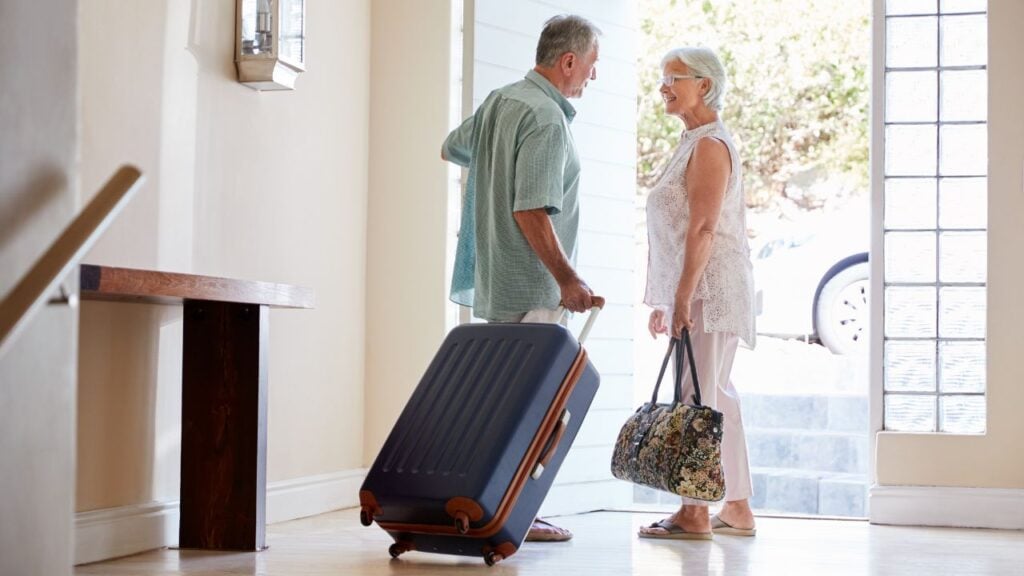
Would one trip to the post office cover your mail until you're back in Kansas?
That's only one thing to settle before a Kansas house sits empty for the winter.
10 Things Kansas Snowbirds Should Do Before Leaving Their House Empty
