
7 Things Montana Ranchers Do Before the First Hard Freeze

Montana has about 2.14 million cattle as of January 1, 2026, according to the U.S. Department of Agriculture (USDA).
That’s a lot of cattle to get through the winter.
And winter doesn’t wait for a calendar date. It can settle into the mountains while ranchers on the eastern plains are still working open range.
These are the things Montana ranchers do before the first hard freeze locks in.
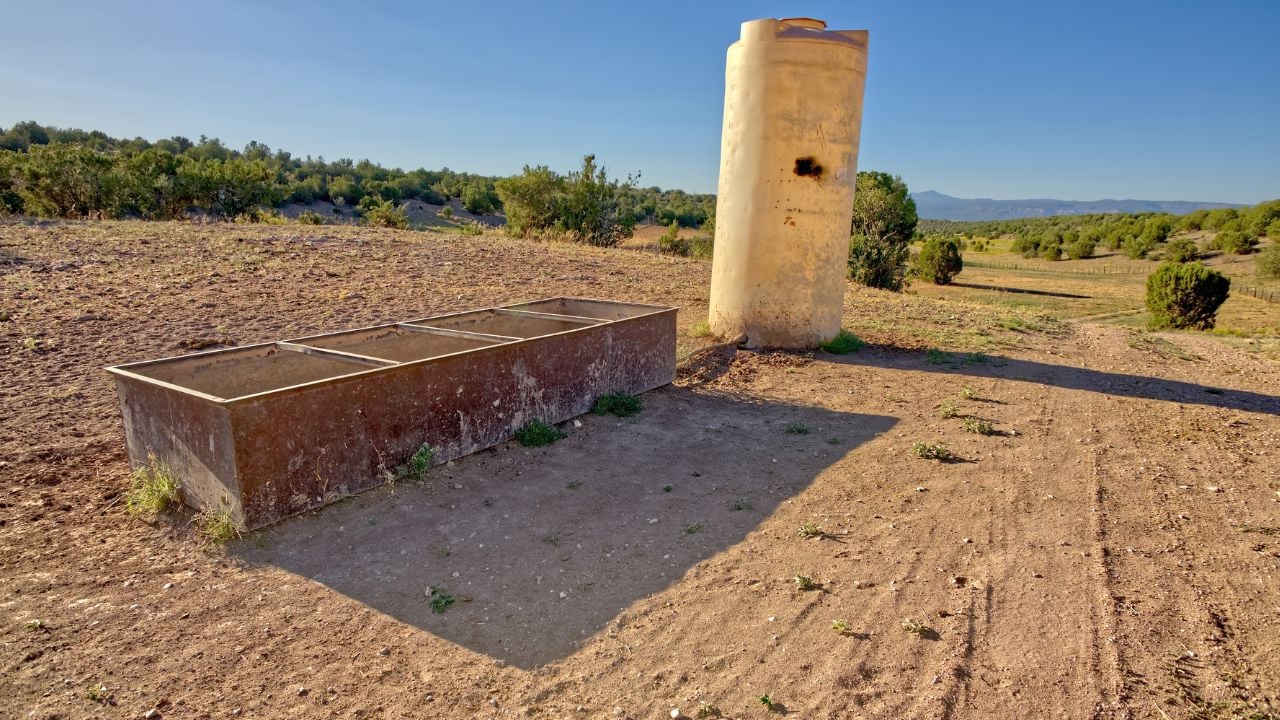
1. Stock Tank Heaters
Montana ranchers are keeping roughly 2.14 million cattle fed and watered through a season that can turn hard overnight.
Every one of those animals needs to keep drinking once the cold sets in.
So ranchers put in tank heaters and check water lines before the first hard freeze, not after.
Montana State University (MSU) Extension recommends keeping stock water above 37 degrees Fahrenheit because cattle drink less from an icy tank.
Eating drops right along with it.
A heater that isn’t properly grounded can leak stray voltage into the water, and even a few volts is enough to make a herd avoid the tank.
Cold cattle don’t drink.
2. Stockpiling Feed
Ranchers order extra hay and grain before the freeze, not after the first storm closes the roads.
A hard winter storm can shut down county roads for days at a time.
A rancher caught short can’t just drive to town for more feed once cattle are already hungry.
MSU Extension advises building up feed supplies heading into fall for exactly that reason, since severe weather can cut off delivery right when a herd needs it most.
Some ranchers add a second cutting of hay to the barn just for this stretch, so a slow week of deliveries never turns into an empty feed bunk.
Stock up before the snow.
3. Body Condition Checks
Ranchers walk their herds in the fall looking for more than just weight.
A cow carrying too little fat going into winter burns through her reserves fast.
A thin cow is more likely to lose a pregnancy or fail to rebreed in the spring.
MSU Extension’s advice is blunt about the timing: Start improving a thin animal’s condition in the fall.
Waiting until the snow is already on the ground means feeding twice as hard for the same result.
Thin cows struggle first.
4. Windbreak Repairs
Ranchers patch fences and windbreaks before the wind needs stopping.
Cattle left with no shelter from an open Montana plain need up to 30 percent more feed a day just to hold their body temperature, per MSU Extension.
An hour spent fixing a broken windbreak panel in October is cheaper than the extra hay it buys in January.
Cheap insurance, in other words.
5. Deworming the Herd
Ranchers treat their cattle for internal parasites before turning the herd out for winter.
Parasites pull energy a cow needs to fight off the cold.
MSU Extension lists deworming as one of the concrete steps that lowers a herd’s winter stress load.
It’s usually the last routine health pass ranchers make before pastures ice over and gathering cattle gets a lot harder.
Healthy cattle handle cold better.
Psst! How much do you know about Montana’s ranching history? Take our quiz and see how many you can get right.
Quiz
Montana Ranching Trivia
Answer these questions on Montana’s ranching history. We bet you can’t get them all right. Prove us wrong?
What year did Montana’s territorial government start officially recording livestock brands?
6. Weaning the Calves
Ranchers separate this year's calves from their mothers before the ground freezes solid.
Moving pairs to different pasture is a lot easier while cattle can still cross open ground.
Ice and snow turn every gate and lane into a hazard once the freeze sets in.
Weaning early also means a rancher feeds one cow through the winter instead of a cow and a nursing calf, right when hay is at its most expensive.
Easier now than in ice.
7. Selling Open Cows
Ranchers pregnancy-check their cows every fall to see which ones didn't take during breeding season.
A cow that tests "open," meaning she isn't carrying a calf, still eats the same hay all winter as one that is.
Selling an open cow before the snow flies is standard practice across the state's operations.
A pregnancy check costs only a few dollars a head, next to months of feed for an animal that won't produce a calf.
No calf, no free ride.
The Math on a Montana Rancher's Open Cow
A Montana rancher running a cow for a year, feed and care included, is typically looking at roughly $500 in cost, per industry estimates.
A pregnancy test runs about $5 a head.
Checking 100 cows and finding five open costs around $500 in testing to catch animals that would otherwise cost roughly $2,500 to feed all winter for nothing.
Finding several open cows at once can also point to a herd health problem worth investigating before calving season, not just a financial one.
Montana's Ranches by the Numbers
Montana runs about 23,800 farms and ranches, according to the USDA's most recent count.
The average one spans 2,412 acres.
Only Texas covers more total farmland than Montana, at 57.6 million acres statewide.
Beef cows alone account for roughly 1.25 million of the state's cattle, with the rest split between this year's calves and a small dairy herd.
That's a lot of ground to cover before the first hard freeze ever shows up on the forecast.
Big country, well used.
