
7 Things Ohio Kids Did in the 1960s That Would Panic Parents Today

Think back to the back seat of your family car in the 1960s.
On every sharp turn, you probably slid from one door to the other, and nobody up front gave it a second thought.
These are the things Ohio kids did in the 1960s that would panic parents today.
Note: This is general information, not medical advice. Guidelines are subject to change.
1. Racing Homemade Soap Box Cars
By the mid-1960s, many soap box cars looked like torpedoes, and some drivers lay down inside them to cut wind resistance, according to Smithsonian magazine.
Myron Scott, a Dayton Daily News photographer, started it all with a race in Dayton in 1933.
Nineteen racers came.
The official Derby began in Dayton the next year.
Then an Akron delegation approached Chevrolet about making it a national event, and the 1935 Derby was held in Akron.
In 1936, the Derby moved to Derby Downs, a Works Progress Administration project next to the Akron Municipal Airport.
Ohio Memory says the world championships have been held there each July since 1936.
Ohio Memory says girls were racing as well starting in 1971.
Kids came from other states, too. Robert Pusateri, a boy from Connecticut, was 11 when he planned his car in the summer of 1960, and he raced it in the Akron finals in 1961.
2. Waiting in Line for Sabin Sunday
Children in Cincinnati and Hamilton County lined up for a polio vaccine on April 24, 1960, the first Sabin Sunday.
The University of Cincinnati says 180,000 local children were vaccinated within a short time.
It was the world’s first oral, live-virus polio vaccine, and Albert Sabin developed it while on the faculty of the University of Cincinnati College of Medicine.
The vaccine had been tested in other countries but wasn’t widely used in the United States before the Cincinnati campaign.
The University of Cincinnati says free distribution of the vaccine there led to its U.S. licensing and nationwide distribution.
The dose came as a spoonful of pink syrup or on a sugar cube, according to UC Magazine.
The oral vaccine isn’t used in the United States anymore. CDC says an inactivated polio vaccine, given as a shot, has been the only polio vaccine given here since 2000.
3. Catching Measles
In the decade before a measles vaccine became available in 1963, nearly all U.S. children got measles by the time they were 15, according to the Centers for Disease Control and Prevention (CDC).
CDC estimates that 3 to 4 million people in the United States were infected each year.
Ohio reported 16,803 measles cases in 1963.
Nationwide, 385,156 cases were reported that year, down from 481,530 in 1962.
Those figures count only reported cases.
Measles was declared eliminated from the United States in 2000.
What Measles Cost Before the Vaccine
Among reported cases each year before the vaccine, measles put an estimated 48,000 people in the United States in the hospital.
About 1,000 people a year developed encephalitis, which is swelling of the brain.
About 400 to 500 people died each year.
4. Drinking Raw Milk
Raw milk is milk that hasn’t been pasteurized, and Ohio law limits who can sell it directly to consumers.
Under the Ohio Revised Code, a retailer needs a license and must have sold raw milk continuously since before October 31, 1965.
Farm and Dairy reported in 2003 that Young’s Jersey Dairy, in southern Ohio, was the only farm in the state legally allowed to sell unpasteurized milk.
In January 2003, the dairy announced that it would stop selling unpasteurized milk after December’s salmonella outbreak.
The Ohio Department of Agriculture recommended that the dairy surrender its raw milk retailer license after cream and butter samples tested positive.
CDC says raw milk can expose people to germs such as Salmonella and Listeria.
Children under 5 are among the groups at higher risk of serious illness.
Psst! How much do you know about Ohio in the 1960s? Take our quiz and see if you can ace it.
Quiz
Ohio in the 1960s Trivia
Answer these questions on Ohio in the 1960s. We bet you can’t get them all right. Prove us wrong?
How long did the June 22, 1969 Cuyahoga River fire burn before crews brought it under control?
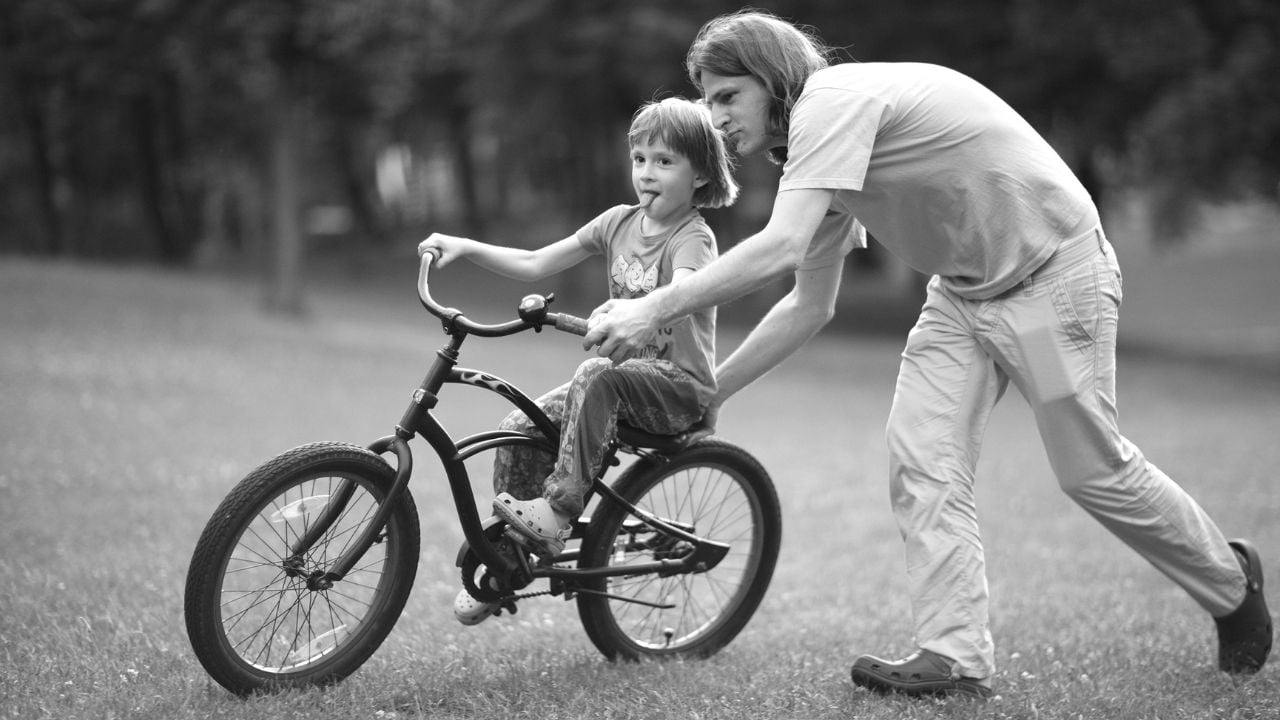
5. Walking or Biking to School
Nationwide, 48% of children ages 5 to 15 walked or biked to school in 1969, according to the National Personal Transportation Survey.
By 2001, fewer than 16% of students that age did.
Researchers writing in 2008 said rates of walking and bicycling to school had declined precipitously over the previous 30 years.
6. Flavored Children's Aspirin
In 1965, the National Clearing House for Poison Control Centers received 34,483 reports of accidental drug ingestion by children under five, according to a University of Pennsylvania history.
Of those cases, 47% involved aspirin or other salicylates.
In 1966, poison control centers reported that 88% of the nearly 11,000 children under age five treated in an emergency room for aspirin ingestion had overdosed on a flavored formulation.
Aspirin was the first product covered by the Poison Prevention Packaging Act, which was enacted in 1970.
That law is part of the reason some medicine bottles are hard to open.
7. Riding Without Seat Belts
Federal Standard No. 208 required seat belts in all passenger cars manufactured after January 1, 1968.
In Ohio, the State Highway Patrol's superintendent required that all new patrol cruisers include two front-seat safety belts in February 1956, according to a 1987 Police Chief article.
The patrol had begun promoting belt use among its personnel in 1952, and in 1981 it helped launch a public campaign with the slogan "I Never Unbuckled a Dead Person."
But Ohio's mandatory safety belt use law didn't take effect until July 4, 1986.
CDC reports that about 11% of people nationwide used safety belts in 1981.
The first state laws requiring belt use arrived in 1984, two years before Ohio's.
12 Words Ohioans Used in the 1960s That Make No Sense Today

Some words can date you faster than a birth certificate.
Many Ohioans who were young back then used these words often.
12 Words Ohioans Used in the 1960s That Make No Sense Today
13 Things Ohio Kids Lost When Smartphones Took Over
Remember hunting for a quarter to call home from a pay phone?
Once phones moved into every pocket, a lot of small childhood moments went with them.
