
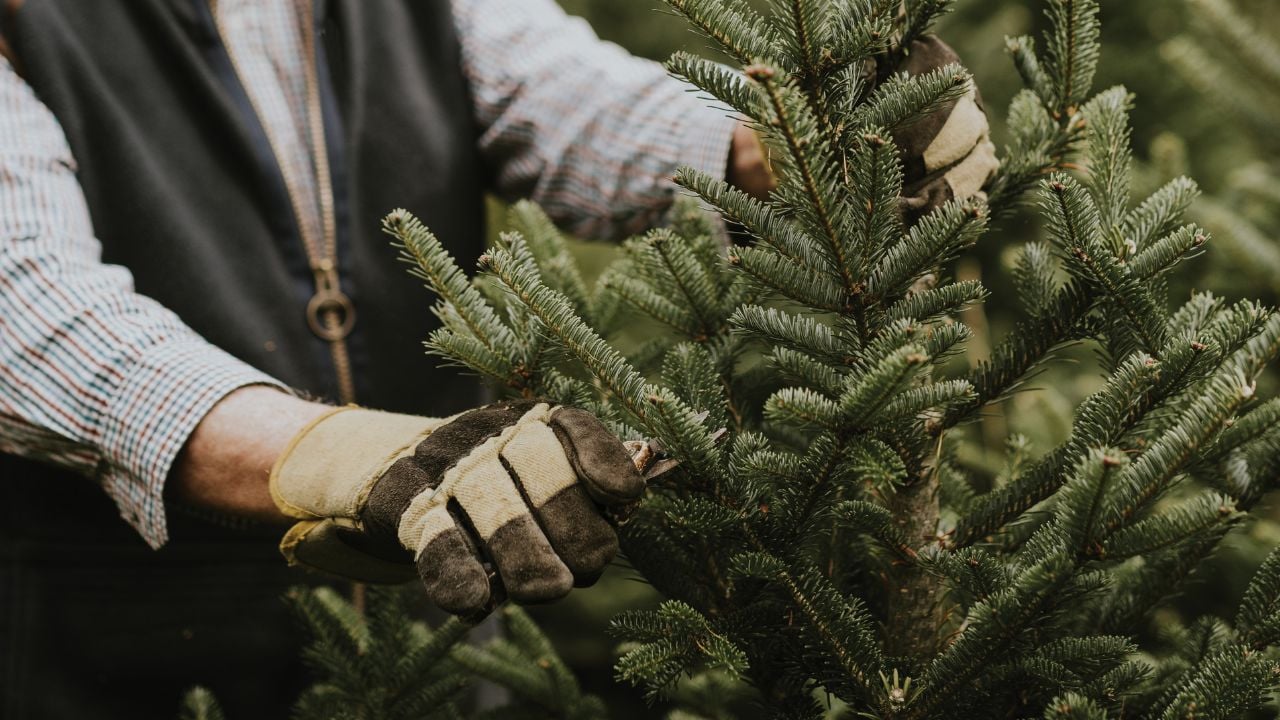
7 Things Pennsylvania Christmas Tree Farmers Do Months Before Anyone Buys a Tree

Picking out a Christmas tree takes an afternoon.
Growing one takes years.
Long before Pennsylvanians pull into a tree farm, growers have been busy in the rows all season.
Here’s what goes on in the months before anyone buys a tree.
1. Sticky Tape Scale Insect Checks
Penn State Extension’s August 5, 2026 scouting report tells Christmas tree farmers to wrap sticky tape, adhesive side out, around twigs on infested trees.
The tape catches crawlers, the tiny young stage of cryptomeria scale insects.
The second generation of cryptomeria scale insects was active in southeastern and central Pennsylvania, with both eggs and crawlers present.
Second-crawler emergence is linked to roughly 1,750 to 2,130 growing degree days.
Those are heat units counted above a 50°F base.
Mottled yellow needles are a common sign of scale insects, though scouting should come before any treatment decision.
Movento (spirotetramat) is listed for application during active tree growth, typically late August through early September.
That timing falls at least two months before the late-November rush.
2. Degree-Day Spray Timing
Christmas tree farmers lean on growing degree days, and Penn State Extension says that measure estimates crop and pest development more accurately than calendar days alone.
For Cooley spruce adelgid, a pest of spruce, the April 9 report sets the critical control window at roughly 20 to 120 growing degree days.
That window falls just before or at bud break, when the buds open.
Target overwintering females and developing young with horticultural oil or insecticidal soap.
For stronger knockdown, options include contact insecticides such as lambda-cyhalothrin or bifenthrin.
Applications must be made before galls form.
Adelgids are protected once galls develop.
As of April 6, the York area was at about 143.5 degree days, while Schuylkill County sat at 116.
York was already past that 120 mark, while Schuylkill County was still inside the window.
How Christmas Tree Farmers Count Degree Days
Christmas tree farmers find a day’s degree days by averaging the high and low temperatures, then subtracting a base temperature.
A day with a 70°F high and a 50°F low averages 60°F, so against a 50°F base it adds 10 degree days.
A day that averages at or below the base temperature adds nothing.
Farmers add each day’s number to a running total through the season.
3. Weevil Traps and Leader Cuts
Christmas tree farmers watch their traps for white pine weevils, and the April 9 report lists trap results from two counties.
York County’s traps caught no weevils that week despite favorable temperatures.
Schuylkill County’s traps caught 17 adults on April 1 and 4 adults on April 4, at one warmer site.
A July 1 report from Penn State Extension found low levels of weevil damage on Norway spruce, Serbian spruce, and white pine.
Farmers should remove damaged leaders, the top shoots of trees.
They cut several inches below the lowest tunneling, into healthy wood, so no larvae or pupae stay behind.
Weevil infestations frequently recur in the same places, particularly field edges, roadways, hilltops, and other warm, exposed sites.
4. Aphid Treatment on Fraser Fir
Active balsam twig aphids turned up in untreated 2-foot Fraser fir Christmas trees, according to Penn State Extension’s May 28 report.
Their feeding curls, twists, and distorts needles on tender shoots as new growth expands.
Products commonly used by farmers include pyrethroids, insecticidal soaps, horticultural oils, and systemic materials labeled for conifer aphid management.
Treatments work best while the aphids stay active on tender, expanding growth.
Coverage matters since aphids shelter deep inside the expanding shoots.
Unnecessary pyrethroid applications are best avoided, since they may flare mite populations by reducing beneficial predators.
Some aphid populations may begin declining as shoots harden off, meaning the new growth firms up.
Even so, farmers should keep scouting susceptible Fraser fir blocks, especially younger plantings.
Psst! How much do you know about White House Christmas tree history? Take our quiz and see if you can ace it.
Quiz
White House Christmas Tree History IQ
Answer these questions about the history of the White House Christmas tree and the National Christmas Tree. We bet you can’t get them all right. Prove us wrong?
About how many people watched the first National Christmas Tree lighting in 1923?
5. Summer Shearing
Most mowing and shearing on a Christmas tree farm happens in hot, humid conditions from June through August, according to Penn State Extension.
Many farmers had begun shearing and corrective pruning, the trimming that fixes a tree's shape, by July 1.
The Agricultural Marketing Resource Center's trade guide says almost all trees need shearing to reach the proper branch density and cone shape.
The Extension's production guide says young trees should be only lightly trimmed until they reach 4 to 5 feet tall.
After about the third growing season, each tree needs annual shearing.
Each tree is also pruned at the base during that season's second shearing.
6. Mowing and Weed Control
Christmas tree rows pick up escaped grasses, yellow nutsedge, Canada thistle, and perennial broadleaf weeds as summer goes on, according to Penn State Extension's June 18 report.
Yellow nutsedge is a continuing challenge in Christmas tree production.
For grass escapes, clethodim products control many annual and perennial grasses but not broadleaf weeds or sedges.
For yellow nutsedge, S-metolachlor products such as Pennant Magnum, a residual herbicide that suppresses emergence, are an option.
Grass strips between the rows usually need mowing at least two or three times a season, according to the production guide.
Farmers control weeds by mowing between the rows and by using labeled herbicides in the rows between the trees.
7. Culling Unsellable Trees
Penn State Extension's August 5 report tells Christmas tree farmers to remove and burn heavily infested or non-sellable trees, months before you walk the rows to choose a tree.
Removal reduces inoculum, meaning fewer scale insects left to spread, and opens the canopy for better spray coverage and air circulation.
Beneficial insects can also suppress scale insects.
Years Behind One Tree
A new Christmas tree farmer must be ready to invest seven to ten years of work and money before any revenue arrives, according to the Extension's production guide.
Trees should be planted as soon as possible in spring, so they can develop new root growth before top growth begins.
New farmers also do better with three- to four-year-old transplants than with younger seedlings.
Farmers test the soil the season before planting for phosphorus, potassium, calcium, magnesium, and pH.
Pennsylvania's Blue Room Trees
The White House Historical Association lists Pennsylvania as the state of origin for 12 Blue Room Christmas trees since 1961, second only to North Carolina's 16.
Since 1966, the National Christmas Tree Association has held a competition for the official tree in the Blue Room, a State Floor room at the White House.
Wisconsin is third on that list with 8.
Five-Year Shift
Christmas tree farms that cut trees fell from 962 in 2017 to 906 in 2022, according to the census.
Trees cut dropped from 1,050,159 to 721,480 over the same stretch.
Acres in production fell from 30,793 to 24,697.
Sales rose in nominal dollars, from about $28.8 million to about $31.4 million.
The number of farms with Christmas trees in production rose slightly, from 1,281 to 1,301.
Farms with 100 acres or more of Christmas trees fell from 50 in 2017 to 40 in 2022, and their acreage dropped from 13,721 to 8,153.
Farms with 10 to 19 acres of Christmas trees rose from 246 to 300 over the same stretch.
Farms with 1 to 2 acres rose from 272 to 299, while farms with 20 to 49 acres fell from 212 to 190.
8 Pennsylvania Farm Markets and Orchards Worth Driving Hours For
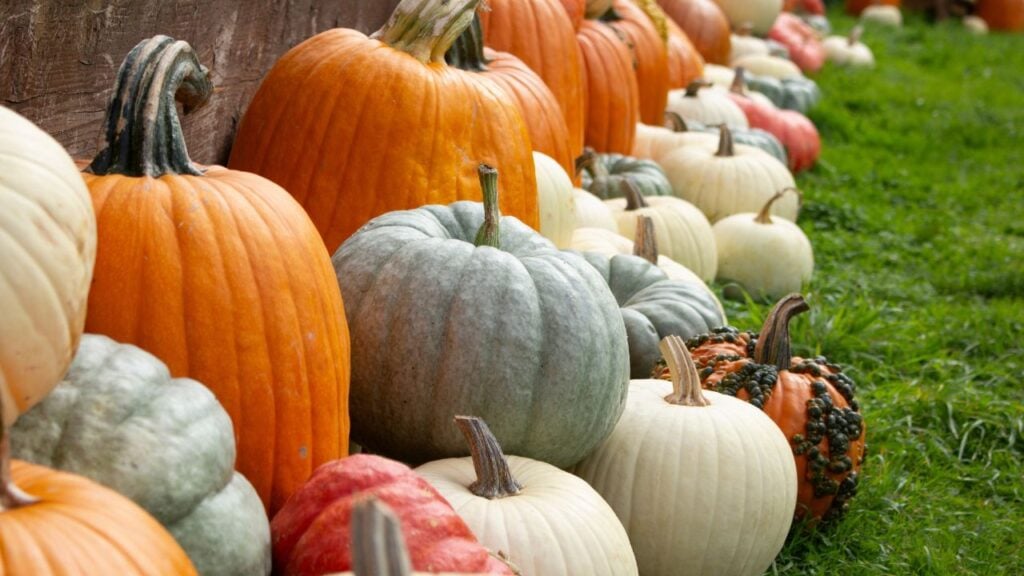
A fall drive through Pennsylvania can end at an orchard stand or a farm market.
These are the farm markets and orchards worth driving hours for this fall.
8 Pennsylvania Farm Markets and Orchards Worth Driving Hours For
8 Deer Camp Traditions Pennsylvanians Won't Reschedule for Anything

For many Pennsylvania hunters, deer camp comes with traditions that stay on the calendar.
These are the deer camp traditions Pennsylvanians refuse to reschedule.
8 Deer Camp Traditions Pennsylvanians Won't Reschedule for Anything
