
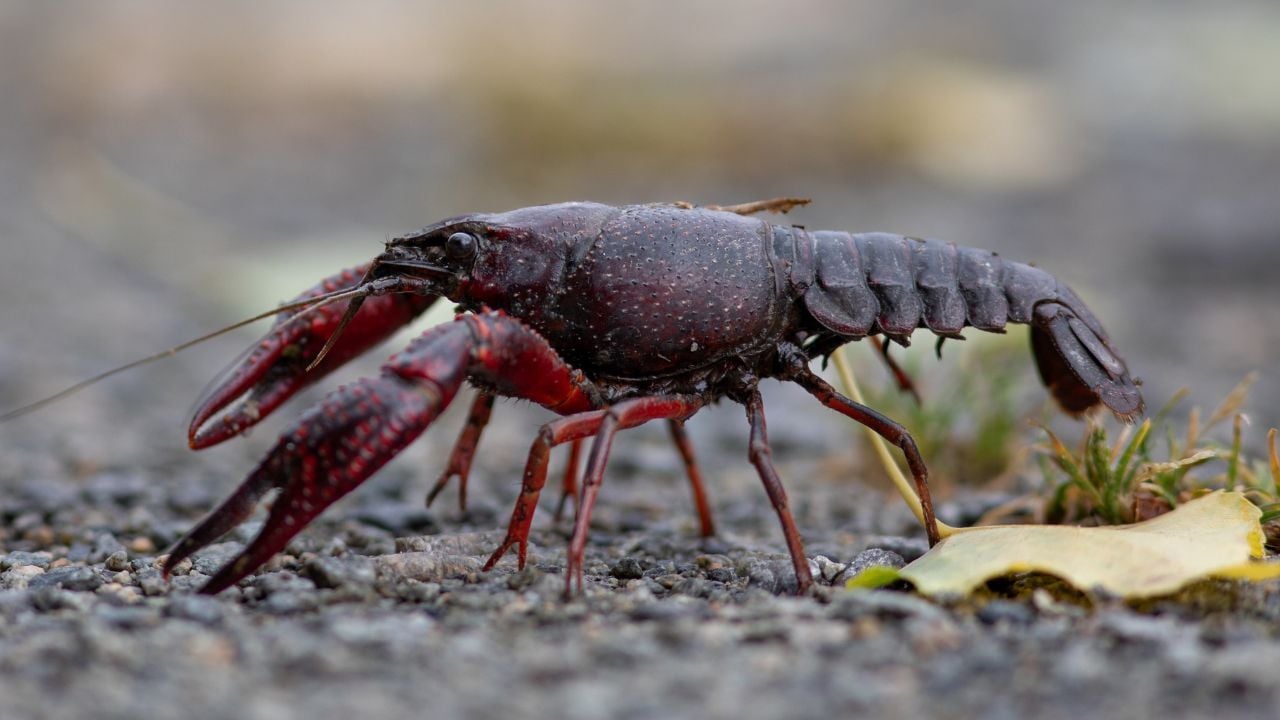
7 Things That Happen on a Louisiana Crawfish Farm Before the First Sack Is Sold

You drive through south Louisiana this time of year and pass flooded fields where nothing seems to be growing.
But those fields have been getting ready since summer.
Here’s what happens on a Louisiana crawfish farm before the first sack is sold.
1. Regrowing Rice Stubble
Rice does double duty on a crawfish farm.
Some 70% of Louisiana’s farmed crawfish are produced in rotation with rice, according to a 2024 LSU AgCenter report.
Farmers harvest the rice for grain in summer. Then the stubble begins to regrow.
On rotation farms, that regrowth is the food base for the crawfish crop.
If you pass a cut rice field in summer, you may be looking at next winter’s crawfish feed.
During the dry summer of 2023, an area agent said the goal was making sure that rice regrew.
2. Flushing Fields in a Dry Summer
Crawfish farms spend the summer with their crop sealed underground.
A few females begin laying eggs inside those burrows as early as late August.
In a dry summer, cracked soil can let outside air into a burrow.
During the 2023 drought, an LSU AgCenter report found many producers flushing their fields with water to replenish moisture and reduce cracking.
If you wonder where crawfish spend the summer, it’s underground, out of sight from the road.
Psst! How much do you know about Louisiana? Take our quiz and see if you can ace it.
Quiz
Louisiana IQ
Answer these questions on Louisiana’s state symbols, swamps, and crawfish country. We bet you can’t get them all right. Prove us wrong?
What’s Louisiana’s official state drink?
3. Timing the Fall Flood
A crawfish farm holds off on flooding until the summer heat eases.
LSU AgCenter 2018 guidance puts the flood in the first couple of weeks of October.
The idea is to wait until nighttime lows dip into the 60s and daytime highs are no longer in the 90s.
If you spot a field filling with water in October, you may be watching what the guidance calls the flood-up, a deep flood that saturates the pond levees.
Farmers flood deep enough to soak the pond levees up to where the breeding crawfish are buried, which may mean 12, 14 or 16 inches of water.
The guidance says crawfish leave their burrows only after the levees are saturated, whether by rising water or heavy rain.
4. Guarding Oxygen Levels
A crawfish farm has to watch the oxygen in a pond as soon as the water goes on.
Warm water and decaying plants can drop a pond's dissolved oxygen to near zero.
Crawfish that survive can be stressed enough to grow slowly.
Ponds planted with rice at the end of July or in August should have the best water quality.
LSU AgCenter aquaculture specialist Mark Shirley said the worst habitat to try to manage for crawfish production is a natural vegetation pond.
It needs frequent flushing, which can get expensive.
If you're wondering where the oxygen goes, even a little rotting rice straw or dead weeds can use it up.
5. Setting Out Trap Rows
A crawfish farm sets out its first traps when trapping begins, as early as November, according to the LSU AgCenter's crawfish production manual.
If you picture a crawfish trap, you're picturing a wire pyramid with three entrance funnels, which the manual says has become the industry standard.
Farmers set traps in rows, with 40 to 60 feet between individual traps and between rows being the most common spacing.
For ponds expected to yield more than 1,000 pounds per acre, the manual recommends 18 to 22 square-mesh pyramid traps per acre.
The manual lists a lower density of 10 to 15 traps per acre for a low-standing crop or when labor is limited.
6. Choosing Bait
Crawfish farms choose between natural fish bait and formulated bait, depending on water temperature.
Below 70°F, the manual says, shad and menhaden are more effective attractants than formulated bait.
Fish bait is used almost exclusively from November through March.
In winter, about a quarter pound of bait per trap is enough to harvest the available crawfish.
7. Sacking the First Catch
A crawfish farm sends live crawfish to on-the-farm coolers, or on to a terminal market, as soon after harvest as possible.
Sacks of live crawfish in good physical condition can be held in high-humidity coolers at 38°F to 46°F for up to several days.
Early in the season, the manual says, a crawfish farm usually doesn't sort by size.
Supply is low then, and demand is high for crawfish of all sizes.
If you're wondering when sorting happens, nearly all grading occurs later, at wholesale outlets or processing plants.
How Big Is a Sack of Crawfish?
A sack of live crawfish is a plastic mesh bag.
The manual says a sack weighs about 35 to 45 pounds, depending on how tightly the trapper packs it.
Packing tight limits how much the crawfish can move and claw.
The mesh lets crawfish cool quickly, but it can also let them dry out when moisture isn't maintained.
When Harvest Starts
If you're waiting on the first crawfish of the season, harvest in permanent ponds often begins in November, though it's not unusual to find some yield in late October.
Farms that rotate crawfish with rice rarely begin harvesting in earnest before January, according to the same 2016 Louisiana Agriculture article from LSU AgCenter researchers.
On those farms, harvest often starts in February or later.
Above-average temperatures in November and December gave one mild season a fast start, with many crawfish reaching market size in late December and early January.
If you're shopping for crawfish before spring, the manual says supply is relatively low then.
Prices to producers have historically run highest in winter and early spring.
After the 2023 Drought
Early in 2024, crawfish harvests were far below normal after the 2023 drought.
Dry weather in 2023 raised the salt levels in water sources producers use to flood their ponds.
An LSU AgCenter agent tested water samples from Vermilion Parish and found between 1,780 and 3,100 parts per million of sodium.
Some producers faced the chance that they wouldn't be able to flood at all.
If you noticed higher crawfish prices in 2024, an LSU AgCenter 2025 article ties them to the drought the year before.
By early April 2024, crawfish harvests had risen to roughly 25% of what could be considered normal.
Production before March that season was only 5% to 10% of typical.
8 Louisiana Dishes That Change Two Parishes Over
Think a bowl of gumbo tastes the same in every Louisiana parish?
Cross the right parish line, and the meat in the pot can often switch from chicken and sausage to seafood.
8 Louisiana Dishes That Change Two Parishes Over
9 Things Louisianans Miss Most After They Move Away

Leaving Louisiana means a new address, a new routine, and a few surprises.
The hardest things to replace aren't always the things you thought to appreciate back home.
