
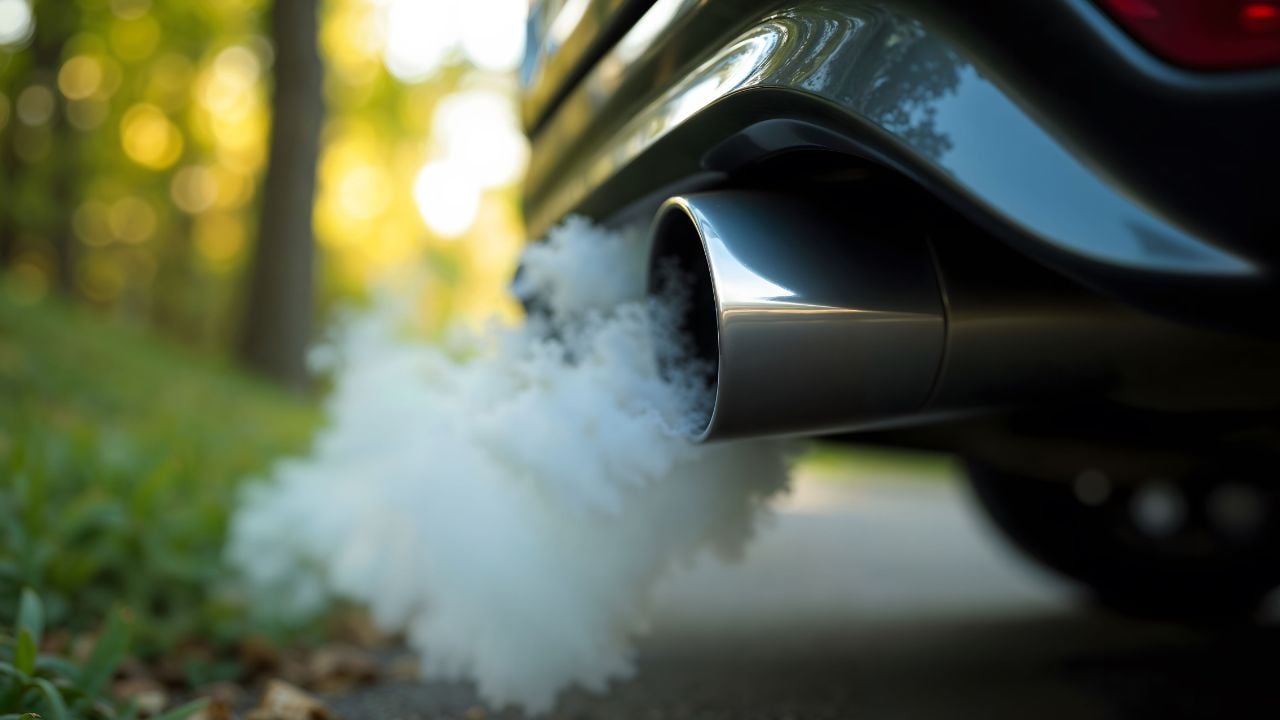
7 Vehicle Emissions Rules Marylanders Find Out About Too Late

If you skip a required emissions test in Maryland, the state’s Motor Vehicle Administration (MVA) can freeze your vehicle’s registration renewal until it’s fixed.
Some Marylanders learn that the hard way.
These are the vehicle emissions rules Marylanders find out about too late.
Note: This is general information, not legal advice. Emissions testing requirements, fees, and penalties are subject to change, so confirm the current details with the Maryland Motor Vehicle Administration (MVA).
1. Emissions Testing by County
Maryland’s Vehicle Emissions Inspection Program (VEIP) requirement travels with the county on a vehicle’s registration, not with the vehicle.
That link can change on an owner without a single mile driven.
Move from an uncovered county like Garrett into a covered one like Howard, and a test requirement can show up at the very next renewal that never applied before.
A buyer who assumes a car titled in an uncovered county stays exempt everywhere it drives makes the same mistake in reverse.
The requirement covers 14 jurisdictions, not the other ten counties.
Those covered spots are Anne Arundel, Baltimore City, Baltimore, Calvert, Carroll, Cecil, Charles, Frederick, Harford, Howard, Montgomery, Prince George’s, Queen Anne’s, and Washington counties.
Ten counties don’t test at all.
An owner titling a car in Garrett, Worcester, or another uncovered county can go a whole ownership without ever seeing a VEIP notice.
A neighbor two counties over answers to that same notice every two years.
What Moving Counties Does to VEIP Status
Maryland’s VEIP checks a vehicle’s home county at the point of title transfer or registration renewal, not on a fixed birthday-style reminder.
Moving out of a covered county doesn’t clear the requirement right away.
The exemption applies only once the new address updates with the MVA, and that update can lag behind the move by a full renewal cycle.
2. The New Car’s Grace Limit
A brand-new vehicle’s VEIP exemption runs on a fixed clock, not a lifetime pass.
A vehicle registered new in one of the covered counties gets a pass until 72 months from its model year.
That window applies only to the original owner, and only on a 2019-or-newer model year.
Once that six-year mark passes, the car drops onto the standard two-year cycle like every other vehicle in a covered county.
That’s six years, not forever.
Sell the car before that window closes, and the new owner doesn’t inherit it, since the state reserves the exemption for the original owner alone.
A private seller who tells a buyer the exemption still has a few years left is passing along a perk that no longer travels with the car.
That exemption stopped the moment the title changed hands.
3. The Snowballing Missed Deadline
Missing a vehicle’s VEIP due date is urgent business for the MVA, not something to let slide.
Skip the deadline, and the state won’t renew that vehicle’s registration until the test is done, no matter how current everything else on the account looks.
It’s a hard stop.
On top of that, a late fee kicks in once the due date passes, stacked on whatever the test itself already costs.
Renew everything else on time, and the overdue emissions test alone can still block a valid tag.
4. No Electric Pass for Hybrids
An electric vehicle skips VEIP altogether, but a hybrid doesn’t get the same pass.
An electric car is exempt because it has no tailpipe to test.
A hybrid isn’t the same car, emissions-wise, and the state treats it that way.
Gas still means testing.
Once a hybrid ages past any new-vehicle grace period it qualifies for, it goes onto the standard two-year cycle exactly like a gas-only car in the same county.
An owner who assumes “hybrid” and “electric” land in the same exemption bucket usually finds out otherwise at the next renewal notice.
Psst! How much do you know about Maryland’s roads, tolls, and driving history? Take our quiz and see how many you can get right.
Quiz
Maryland Driving IQ
Answer these questions on Maryland roads, tolls, and driving history. We bet you can’t get them all right. Prove us wrong?
Maryland requires a vehicle safety inspection separate from any emissions test. When does the safety inspection kick in?
5. "Old Enough" Versus Exempt
An age exemption inside VEIP covers older vehicles, but it isn't a rolling cutoff that moves forward every year.
The cutoff sits at a fixed model year, paired with a weight limit for lighter vehicles.
Maryland's emissions regulation exempts vehicles of 8,500 pounds or less with a model year earlier than 1996.
The line never moves.
A car built a few years after that cutoff can feel plenty old to its owner and still owe a test every two years.
An older model parked in the very same driveway owes nothing.
Age alone doesn't decide it.
6. No Automatic Waiver for Failed Tests
A failed VEIP emissions test in Maryland requires proof of documented repairs before a waiver applies.
The first retest is free, but a waiver only kicks in once an owner has documented at least $450 spent on emissions-related repairs within the required window.
The repair bill has to clear first.
An owner who assumes a couple of quick fixes will earn an automatic pass often finds the threshold is a documented repair invoice, not a good-faith effort.
That $450 has to go toward the actual emissions-related fix, not general maintenance like an oil change or a new set of tires.
7. Paperwork for Exempt Status
Claiming an exemption from VEIP's emissions rules takes more than an owner's word.
Filing the MVA's certified statement, the EP-009 form, is what makes an exemption official, not simply skipping the test appointment and hoping nobody checks.
Assumptions don't hold up.
Skip the form, and a vehicle that qualifies for an exemption can still land on the state's non-compliance list as if nobody had applied for anything.
The form's instructions spell out two named situations: a vehicle sitting out of the test area, or a vehicle under repair or storage at a shop.
Each scenario has a separate section to complete and sign.
The owner mails it in, hands it over at a VEIP station, or submits it through the MVA's online contact system before the exemption clears the account.
Ozone, Not Every Tailpipe
Ground-level ozone is why Maryland's Department of the Environment built VEIP in the first place, not a wish to test every vehicle in the state.
That's why the covered list clusters around the Baltimore and Washington, D.C. suburbs and reaches only as far west as Washington County, rather than spreading evenly across all 23 counties.
Geography, not policy, drew the map.
A car garaged in Ocean City, in uncovered Worcester County, answers to different rules than one parked in Rockville, even though both carry the same Maryland plate.
Day-to-day testing itself runs through a private contractor working under both the Department of the Environment and the Motor Vehicle Administration, not through a regular repair shop or dealer.
20 Errors That Invite Thieves to Your Car in Maryland

Think a locked door is all it takes to keep a Maryland car safe?
A cracked window, a phone left on the seat, or the wrong parking spot can turn that same car into an easy target without the owner ever noticing.
20 Errors That Invite Thieves to Your Car in Maryland
19 Hidden Costs of Owning a Home That Nobody Warns Marylanders About

Buying the house is the easy part.
What follows is a string of smaller bills that never make it into the closing paperwork, and homeowners tend to meet them one at a time, the hard way.
19 Hidden Costs of Owning a Home That Nobody Warns Marylanders About
