
7 Ways North Louisiana Feels Like a Different State From South Louisiana

Ask a Louisianan from Lafayette and one from up north what counts as Louisiana food, and you might get two very different answers.
Even a gas station snack counter can tell you which half of the state you’re in.
These are the ways North Louisiana feels like a different state from South Louisiana.
1. High Ground
North Louisiana has the state’s highest ground, and South Louisiana has its lowest.
Driskill Mountain, in Bienville Parish, is the highest point you can stand on in Louisiana, at 535 feet above sea level.
Claiborne Parish, in the north, averages 267 feet above sea level, making it the state’s highest parish.
Meanwhile, New Orleans holds the lowest point, at 8 feet below sea level, according to the U.S. Geological Survey (USGS).
In the urban parts of Orleans, Jefferson, St. Bernard, and Plaquemines parishes, your average elevation is half a foot below sea level.
2. Largest Denominations
Compare Caddo Parish and Lafayette Parish, and the 2020 U.S. Religion Census gives you different largest denominations.
In Caddo Parish, home to Shreveport, Southern Baptist congregations had 66,599 adherents, more than any other group.
The Catholic Church had 18,723 there.
The order flips.
In Lafayette Parish, the Catholic Church had 100,379 adherents, and Southern Baptists had 13,992.
Caddo Parish’s Southern Baptist adherents were counted across 78 congregations, and Lafayette Parish’s Catholic adherents across 29.
Richard Campanella writes in 64 Parishes that topography is a major factor in cultural variations within the state, though not a deterministic one.
The more Protestant parishes, he says, tend to be hillier.
He describes the Acadian parishes as more Cajun, Catholic, Creole, and Francophone than the rest of the state.
What the Religion Census Counts
The 2020 U.S. Religion Census counts adherents, a group that takes in members, children who aren’t members, and other participants who haven’t joined.
The Association of Statisticians of American Religious Bodies collected the 2020 data.
Caddo Parish’s groups totaled 192,302 adherents, or 80.9 percent of its 2020 population.
Lafayette Parish’s groups totaled 171,359 adherents, or 70.9 percent.
3. Poultry and Sugarcane
In the 2022 Census of Agriculture, Union Parish, in the north, counts its poultry in the millions, while St. Mary Parish, in the south, counts its sugarcane in tens of thousands of acres.
The U.S. Department of Agriculture’s county profile shows Union Parish had 6,773,403 broilers on December 31, 2022.
It also had 21,205 cattle and calves, and hay was its biggest crop at 13,115 acres.
St. Mary Parish had 2,632 cattle and calves.
St. Mary Parish had 38,677 acres of sugarcane, its biggest crop, and 5,081 acres of soybeans.
Its profile lists zero broilers.
Union Parish’s 414 farms sold $199,383,000 in products, and St. Mary Parish’s 75 farms sold $111,556,000.
Those farms cover 81,494 acres in Union Parish and 65,220 acres in St. Mary Parish.
4. Acadian Exiles and the Great Raft
In 1764, a group of Acadian exiles reached Louisiana after nearly a decade of wandering.
The colony’s French caretaker government, acting temporarily for Spain, gave them land and supplies in the Attakapas region of south-central Louisiana.
About 3,000 Acadian exiles eventually made their way to Louisiana.
If you follow Shreveport, in the northwest, back to its start, you land on the Red River.
There, a logjam called the Great Raft clogged the Red River for hundreds of years.
Shreve’s 1828 contract was to clear a channel northward from the Raft’s southern end to Arkansas.
Captain Henry Shreve began clearing the Raft on April 11, 1833, with two snagboats, two supply boats, and 160 workmen.
The inland port he had envisioned was chartered as Shreveport in 1839, in his honor.
The U.S. Army Corps of Engineers made the final clearing in 1873.
5. Duck Arrival Dates
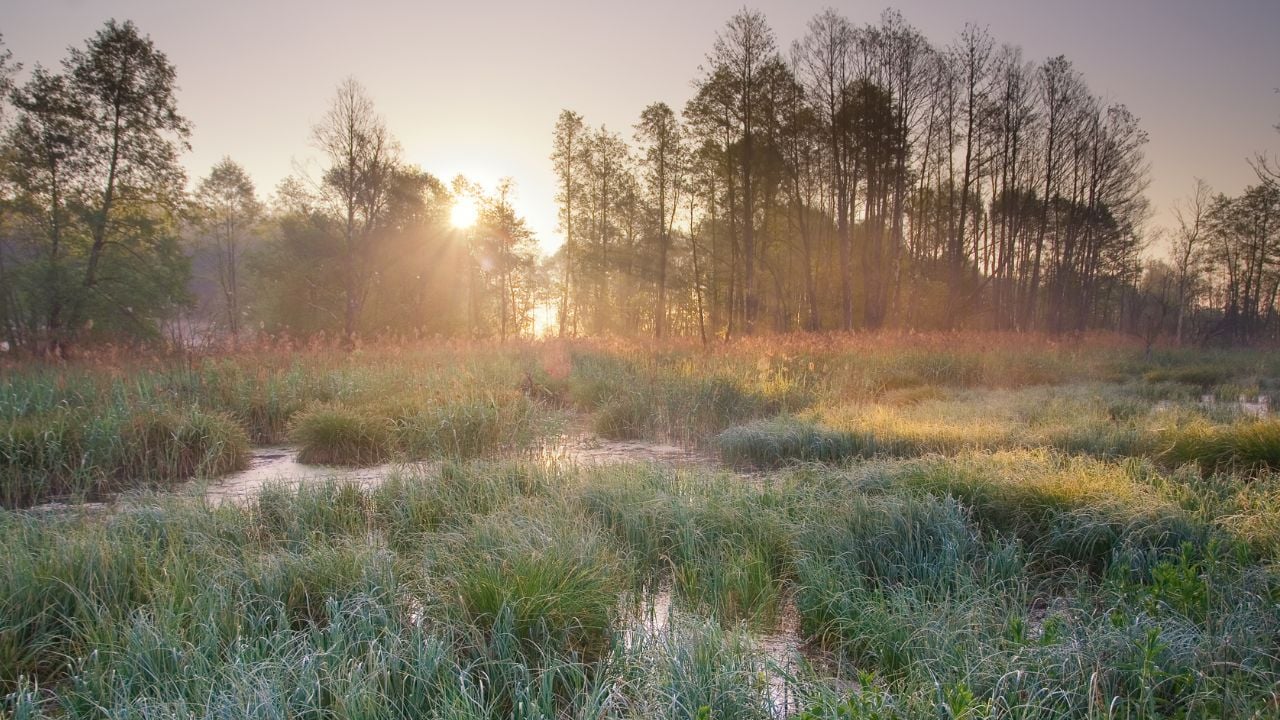
Migrating ducks reach the coastal marshes before they reach the swamps of the northeast.
The Louisiana Department of Wildlife and Fisheries says the first large flocks of migrant ducks appear in the coastal marshes in mid to late October.
Ducks generally reach the swamps and flooded forests of central and northeast Louisiana later, in November or early December.
6. Boudin Curtain
Boudin is a Cajun sausage of cooked pork, rice, onions, and cayenne.
Around Lafayette, you can buy boudin at butcher shops, grocery stores, dedicated boudin shops, and convenience stores.
Cooks mix and cook the meat and rice before stuffing it into a casing, and traditionally steam or simmer the links.
The finished links have a stretchy casing around a loose filling.
Richard Campanella also writes about what some people jokingly call the “boudin curtain.”
In his hill-country essay, Campanella puts the northwestern parishes around Driskill Mountain on the meat-and-potatoes side of that line.
Boudin has since spread to other parts of Louisiana and to other states, 64 Parishes adds.
7. Ties to Dallas
Richard Campanella writes in 64 Parishes that Shreveport seems to be more in the orbit of Dallas than Baton Rouge or New Orleans.
He adds that the pine-covered hills of northern Louisiana have more in common with neighboring Arkansas and Mississippi.
Those northern parishes are closer to the Ozarks than the Gulf, he notes.
To many people in the north, the Gulf can feel far away.
Psst! How much do you know about Louisiana’s history? Take our quiz and see if you can ace it.
Quiz
Louisiana History Pop Quiz
Answer these questions on Louisiana history and culture. We bet you can’t get them all right. Prove us wrong?
After his 1954 invitation to the Louisiana Hayride radio show, Elvis Presley signed a contract for how long?
The Blurry Line
North Louisiana isn't the state's only hill country.
You can find crests over 350 feet east of the Amite River, in the Florida Parishes, in northern St. Helena, Tangipahoa, and Washington parishes.
Campanella's essay says commodity agriculture is rare in those pine-covered hills.
It adds that the folkways there leaned more toward the interior South, hundreds of miles to the north.
The Real Reason Louisiana Has Parishes Instead of Counties
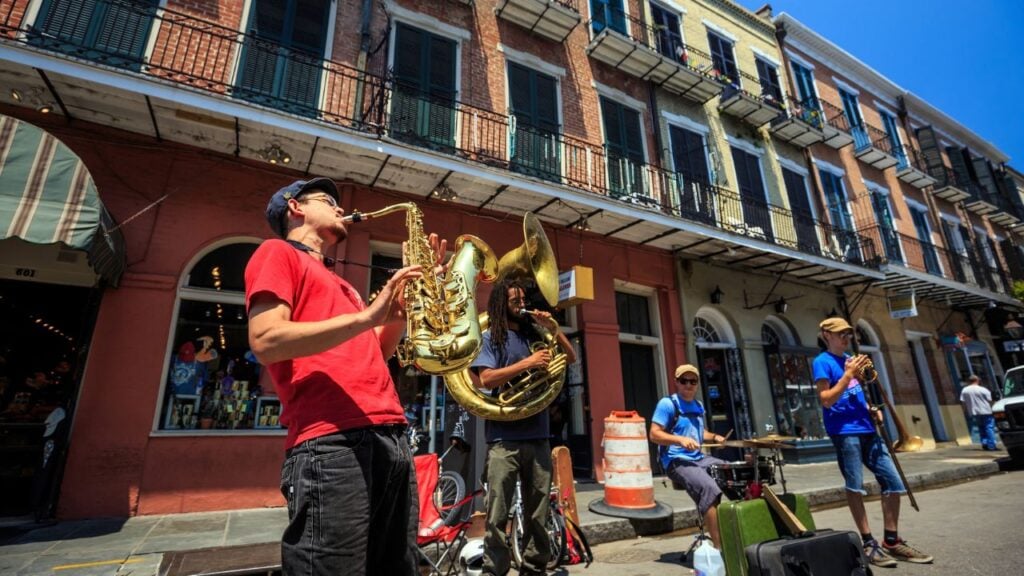
Louisiana's parishes confuse many out-of-staters.
The answer goes back further than you might think.
The Real Reason Louisiana Has Parishes Instead of Counties
13 Signs Someone Was Raised in Louisiana No Matter Where They Live Now
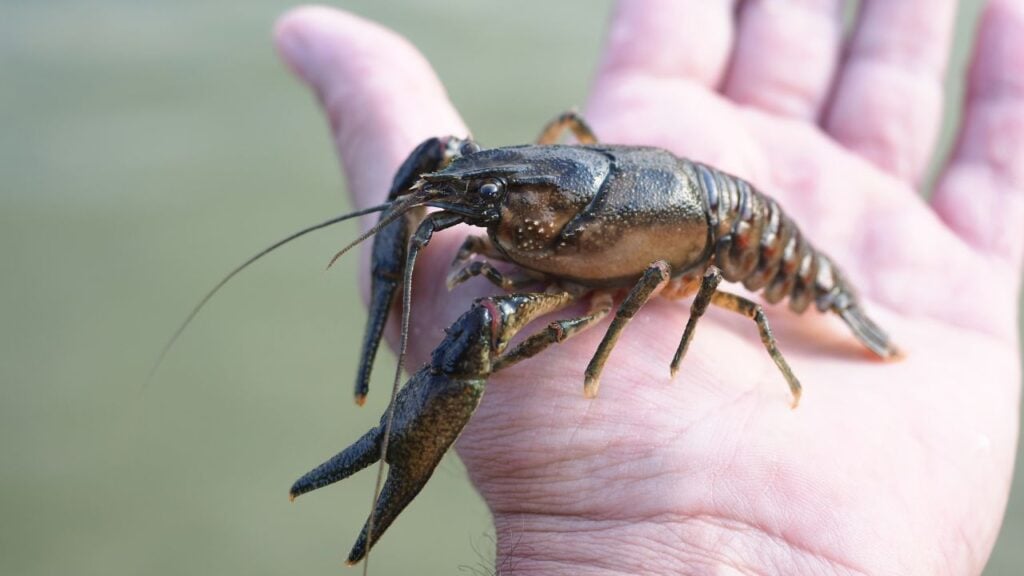
Many habits from a Louisiana childhood follow people wherever they move.
See how many you share.
13 Signs Someone Was Raised in Louisiana No Matter Where They Live Now
