
7 Well and Septic Surprises That Catch Idaho Buyers Off Guard

Idaho’s domestic exemption caps in-house well use at 13,000 gallons a day, or 2.8 acre-feet a year, plus irrigation of up to half an acre.
Nobody explains that at closing.
These are the well and septic surprises that catch Idaho buyers off guard.
Note: This is general information, not legal advice. Well and septic rules vary by county and are subject to change.
1. The Septic Pump-Out Permit
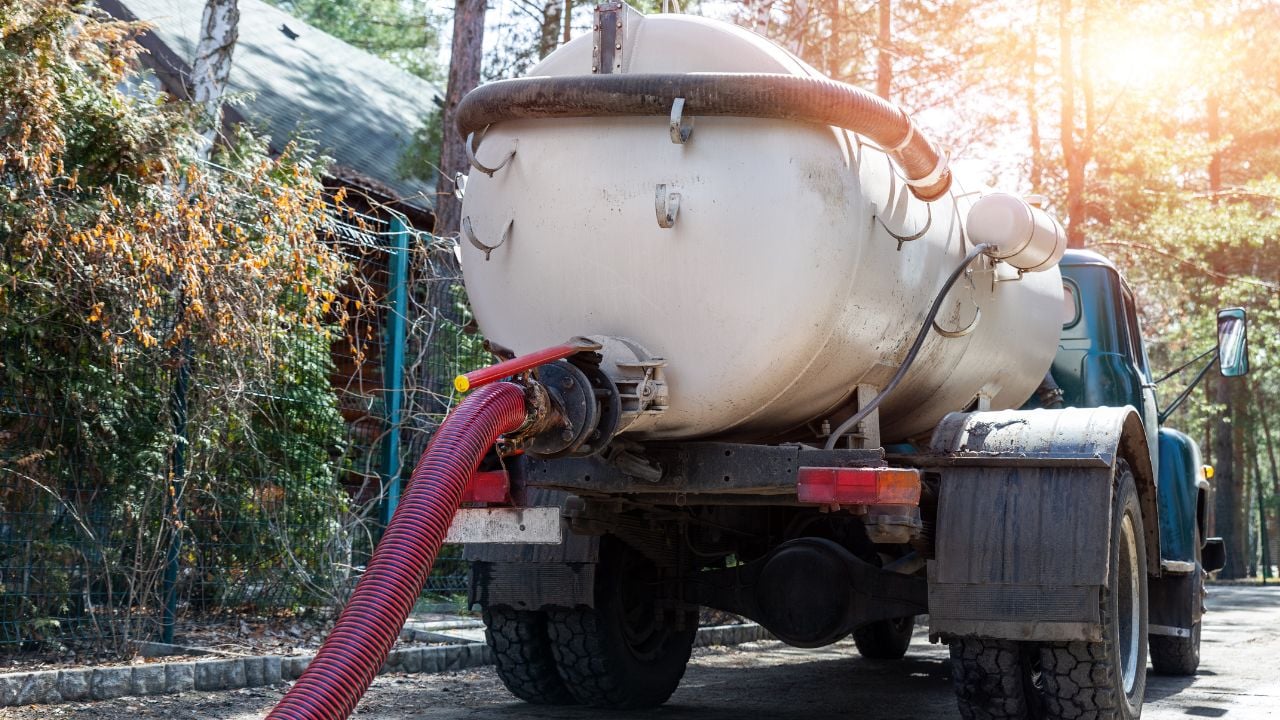
An Idaho buyer arranging a pre-purchase pump-out can ask the pumping company for its state hauler permit number before the truck ever shows up.
Idaho requires anyone who empties a septic tank to carry that hauler permit first.
The state tracks every permit it issues.
The Department of Environmental Quality issues the hauler permit and renews it every year.
That hauler permit is a different document from the septic-system permit a health district issues when a tank goes in or a drainfield expands.
Every truck has to display its assigned number where anyone can read it.
Hire someone without a permit, and the state has no record the job ever happened.
2. No Required Well Test
Under Idaho’s disclosure law, a seller only has to report what they personally know about the well.
Testing is on you.
The law calls itself no substitute for an inspection and tells buyers to arrange a well test themselves.
The Idaho Department of Health and Welfare recommends yearly testing for bacteria and nitrates, with a broader metals check every three to five years.
Private wells aren’t regulated the way city water is, so nothing forces a retest even after decades in the same house.
3. Shared Wells Past a Certain Size
Once a shared well in Idaho grows past a certain size, the state treats it differently.
Cross 15 connections, or serve 25 people an average of sixty days a year, and the well becomes a regulated public water system.
That’s not a paperwork formality.
A public water system means engineering review, regular water quality monitoring, and a licensed operator, the same oversight a small-town utility carries.
Rural subdivisions and clusters of vacation cabins are exactly where this catches buyers.
A well drilled decades ago to serve a handful of houses can end up serving many more today.
Psst! Think you know Idaho’s well and septic rules? Tap each card below and see how many you get right.
4. The Limit on Private Well Water
Many private wells in Idaho skip the standard water-right permit process, but that pass has a ceiling.
The domestic exemption caps in-house well use at 13,000 gallons a day, or 2.8 acre-feet a year, plus irrigation of up to half an acre.
Nothing about that number scales up for a bigger house or a growing family.
Go over it, and the well needs an actual, permitted water right like any other.
Mobile home parks, apartment buildings, and most subdivisions never qualify for the exemption at all, no matter how little water they use.
What Idaho’s Well Law Restricts
The Idaho Legislature passed Senate Bill 1083 in 2025, then Governor Little signed Senate Bill 1222 on February 17, 2026, to narrow it.
The restriction reaches only moratorium orders, critical groundwater areas, or groundwater management areas the state has mapped, not every Idaho subdivision.
Inside those zones, it applies only to a subdivision whose final plat or application was filed on or after July 1, 2025.
An earlier subdivision keeps the old rules.
A well caught by the restriction can still serve indoor household use, just not sprinklers or a stock tank without an actual water right.
A buyer building new in one of those zones should confirm the filing date with the Department of Water Resources before assuming the exemption applies.
5. Drilling a New Well
Drilling anything past eighteen feet into the ground on Idaho property takes a permit from the Department of Water Resources before the bit ever touches dirt.
That same threshold covers monitoring wells and geothermal wells too, not just the well that will supply the house.
Only a driller holding a state license can do the work.
No permit, no drilling.
A buyer planning to drill on raw land can’t just call the first company in the phone book and start digging.
6. A Bedroom’s Septic Permit
Idaho ties a septic permit to how much wastewater a house produces, not just whether a system already exists.
Panhandle Health District, like others around the state, issues an expansion permit once a remodel or addition pushes flow up enough to grow the drainfield more than 10%.
Districts set their exact percentage, but the principle holds across the state: A growing drainfield needs a new sign-off.
Converting a seasonal cabin into a full-time home, or turning a den into a fourth bedroom, can cross it without a single new pipe showing above ground.
Skip that step, and the system can end up serving more people than the county ever approved it to handle.
7. No Proof the Septic Works
Idaho doesn’t make anyone certify that a septic system works before a house changes hands.
A house with a failing system can still close on schedule, no inspection report required from either side.
That’s where skipping a test gets expensive.
A full septic system replacement nationally runs $3,589 to $12,463, according to Angi’s cost data, well beyond what a pre-purchase inspection would have cost.
A pre-purchase septic inspection isn’t required anywhere in Idaho law, so a buyer who skips the inspection is betting that bill doesn’t land in the first year of ownership.
What’s Driving the New Well Rules
The push to narrow Idaho’s domestic exemption didn’t come out of nowhere.
Paul Arrington, executive director of the Idaho Water Users Association, has pointed to roughly 60,000 wells added statewide since 2004.
That figure is the reason lawmakers took a harder look at the old rule.
None of those wells went through the standard water-right permitting process at all.
That growth is straining aquifers state regulators are now trying to protect.
Southern Idaho’s fastest-growing counties, where subdivisions keep replacing farmland, are exactly where the new well permitting rules matter most.
A buyer touring new construction in one of those counties is walking straight into that debate, whether the listing mentions it or not.
The Department of Water Resources’ mapping tool shows whether a parcel sits inside one of those moratorium, critical groundwater, or groundwater management zones.
Those zones are the only places the tighter well rules reach.
15 Legal But Questionable Things You Can Do in the USA

Just because something is legal doesn’t mean it earns anyone a good look from the neighbors.
Many everyday habits across the country sit in that gray zone between rude and technically fine, and some show up in a new neighborhood, too.
