
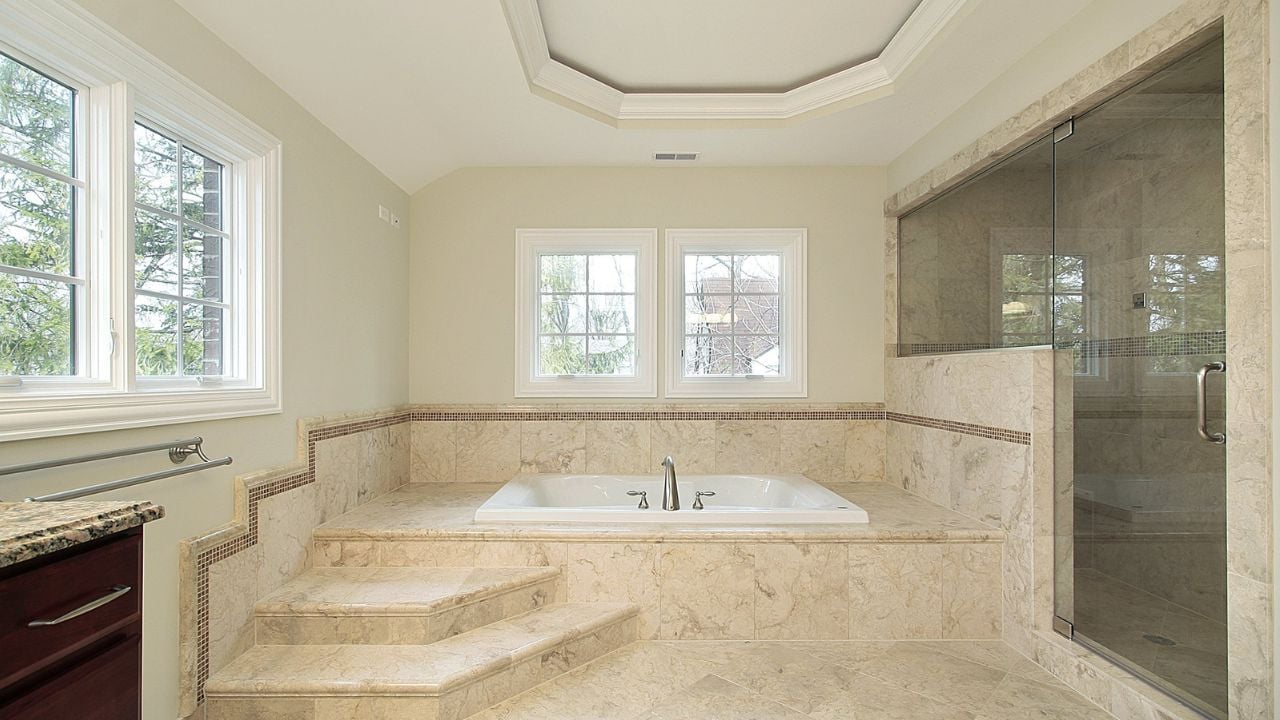
8 Bathroom Details Aging Georgians Regret Not Changing Sooner

Would you guess a bathroom sends more older adults to the emergency room than almost any other room in a Georgia home?
It does, and by a wide margin.
These are the bathroom details aging Georgians regret not changing sooner.
Note: This is general information, not medical or contracting advice. Program funding, coverage rules, and costs are subject to change.
1. Grab Bars by the Toilet and Shower
Grab bars are the bathroom detail aging Georgians mention first, and usually only after they’ve already fallen once.
The Centers for Disease Control and Prevention (CDC) tracked bathroom injuries nationwide and found that for adults 65 and older, bathroom injuries make up 2.5% of every unintentional injury they suffer.
That’s more than double the roughly 1% rate for the general population.
Falls caused the large majority of those injuries.
A national poll from the University of Michigan found only 49% of adults 65 and older have grab bars installed, even though a much larger share plan to eventually.
Just over half don’t.
The bar itself costs little next to what the wait can cost.
A properly anchored grab bar has to hit a wall stud or a reinforced backer board, not just drywall.
The toilet and the shower both need one within reach of where a hand lands on the way down.
2. A Curbless, Walk-In Shower
A curbless, walk-in shower removes the one bathroom obstacle a tub can’t avoid: The edge you have to step over to get in and out.
More than half of older adults nationwide have already made the switch.
56% of adults 65 and older have a walk-in shower, according to a University of Michigan National Poll on Healthy Aging.
Almost half haven’t.
Tub and shower injury rates rise from about 50 per 100,000 people ages 15 to 24 to 200 per 100,000 among adults 85 and older, a fourfold jump.
CDC doesn’t break the data down by exact mechanism.
The timing lines up with something simple: Stepping over a tub wall gets harder to manage safely as balance and strength decline with age.
A quarter of the older adults without a walk-in shower already say they plan to add one, proof the upgrade is easy to keep meaning to make and never schedule.
A curbless entry, a slight floor slope toward the drain, and a fold-down bench turn the shower into a room you walk into instead of a fixture you climb into.
3. Slip-Resistant Flooring
Falls caused 81.1% of every nonfatal bathroom injury the CDC counted among older adults, more than any other cause by a wide margin.
No contest.
People still treat slip-resistant bathroom flooring like a finishing touch, and that’s backwards.
The danger sits underfoot, and it only grows the longer it goes unaddressed.
Balance and reaction time keep declining with age, even as the tile stays exactly as slick.
Glossy tile turns into a skating rink the moment water hits it.
A thin bath mat that slides on that same tile doesn’t fix the problem.
It just moves where the slip happens.
Textured porcelain, slip-rated vinyl, and a mat with a rubber-gripped backing all address the floor itself instead of layering something loose on top of it.
Small tiles help too because more grout lines mean more texture underfoot.
4. A Comfort-Height Toilet
A comfort-height toilet sits close to chair height, several inches taller than the standard toilet many Georgia bathrooms still have.
A standard toilet sits around 14 to 15 inches off the floor, low enough that getting up off it puts a strain on the knees and the hips.
Toilet-related injuries rise faster with age than any other bathroom fixture in the CDC’s data.
The rate rises from roughly 4 per 100,000 among people ages 15 to 24 to 267 per 100,000 among adults 85 and older.
That’s not a small gap.
The federal accessibility standard sets a public restroom’s toilet seat at 17 to 19 inches.
Inside a home, that same standard only requires a 15-inch minimum, though many comfort-height toilets still land in the 17-to-19-inch range, close to the height of a regular chair.
That cuts down how far a person has to lower and raise their body weight.
Swapping the bowl is one of the simpler plumbing jobs in this whole list, which makes it the easiest upgrade to keep meaning to do and never schedule.
What Medicare Won’t Pay For in the Bathroom
Bathroom changes like a grab bar, a comfort-height toilet, and a curbless shower count as comfort items to Original Medicare, not durable medical equipment.
Part B doesn’t cover any of the changes in this list, no matter what a doctor writes on a prescription pad.
Some Medicare Advantage plans offer a partial workaround: A prepaid flex card worth up to $500 a year toward safety items.
Only about 10% of standard plans and 14% of special-needs plans include that benefit.
Georgia’s Community Care Services Program (CCSP) and Service Options Using Resources in a Community Environment (SOURCE) are two Medicaid waivers for frail, older adults.
They fund home care, case management, and meal delivery for people who qualify at a nursing-facility level of care.
Neither one lists bathroom construction among its covered services.
A separate Georgia waiver, the Independent Care Waiver Program, does cover home modifications.
It serves a different group: Adults 21 to 64 with severe physical disabilities or a traumatic brain injury, not general frailty tied to aging.
5. Layered, Brighter Lighting
Bathroom lighting in many Georgia homes starts and ends with a single overhead bulb, leaving the tub, the toilet, and the path from the bedroom door all guessing in shadow.
A motion-sensing nightlight along the floor and a switch within reach of the bed fix that guessing for a fraction of what a fall costs.
The guessing itself gets dangerous at night.
A study that followed 692 community-dwelling older adults for three years put a number on those nighttime trips.
People who got up three or more times a night to use the bathroom carried a 28% higher risk of falling than people who didn’t.
Twenty-eight percent isn’t small.
The researchers were tracking nighttime bathroom trips and fall risk, not lighting itself, but the two hazards share the same dark hallway.
That hallway doesn’t get safer with time.
Nighttime bathroom trips tend to grow more frequent with age, not less, so the risk compounds the longer it goes unlit.
Psst! Is your bathroom ready for the years ahead, or just familiar? Run through this checklist and see where you stand. (General self-check only, not a professional assessment.)
6. Lever-Style Faucet Handles
Faucet handles in many bathrooms are still a round twist knob, which asks for a firm grip and a full wrist turn, twice, every time someone washes their hands.
That takes more strength than it looks like.
An estimated 25.8% of Georgia adults report having arthritis, close to the national rate.
Small joints, big difference.
Stiff or swollen finger joints make exactly that twisting motion harder than it used to be.
A lever handle works with a push, a pull, or the side of a closed fist, no grip required.
It’s a small hardware swap, and the lever itself usually runs under a hundred dollars.
Nobody thinks to make the change until their hands start arguing with the sink.
7. A Wider Bathroom Doorway
Bathroom doors in many older Georgia homes were framed with just enough width for a person to walk through, not for a walker or a wheelchair to follow.
CDC survey data, from the agency’s most recent national count, found that 13.9% of adults 50 and older use a cane, a walker, or a wheelchair to get around.
A walker alone typically needs close to two feet of clear space to pass through a doorway.
The federal accessibility standard sets 32 inches as the minimum clear width for a doorway, several inches wider than many of those older doorways allow.
Widening a doorway means moving a stud, not just swapping a fixture.
Not a quick fix.
That’s why it’s the item people put off longest, then need most urgently once a walker shows up in the hallway.
8. An Anti-Scald Valve
An anti-scald valve caps how hot bathroom water can get at the shower or tub, no matter what the water heater is set to.
Water at 140 degrees causes a serious burn in about three seconds.
Just three seconds.
A Johns Hopkins-led study published in the Journal of Burn Care & Research found that young children and older adults share thinner skin, which burns faster than a middle-aged adult’s.
Tap water burns cause an estimated 1,500 hospital admissions a year nationwide.
Slower reflexes and reduced sensation mean an older adult may not pull back from that water as fast as the moment demands.
That gap between the danger and the reaction time doesn’t close on its own, and it tends to widen further with age.
A valve fixes the risk at the fixture, so nobody has to remember to check the water heater dial every time someone new steps into the shower.
Where Homeowners Can Get Help Paying
Georgia doesn’t leave every homeowner to cover these changes alone, even though the money is limited.
The Georgia Department of Community Affairs runs a Home Access Program that funds ramps, roll-in showers, and widened doorways for homeowners with disabilities.
It works through local Centers for Independent Living.
Not exactly plentiful.
The state put $600,000 toward it in the 2026 fiscal year, funding just 57 projects statewide, an amount that runs out fast against how many homes need the work.
Southwest Georgia got a boost this year, too.
The Southwest Georgia Regional Commission received a $1 million federal grant through the U.S. Department of Housing and Urban Development’s (HUD) Older Adult Home Modification Program.
It’s aimed at residents 62 and older across 14 counties.
A certified occupational therapist assesses each home before any work starts, matching the grant money to what that bathroom needs.
Georgia’s Aging and Disability Resource Connection runs one statewide line for both programs: 1-866-552-4464.
A call to a local Area Agency on Aging is usually the fastest way to find out which waitlist has room.
How Georgia Retirees Cut a Medicare IRMAA Surcharge With Form SSA-44
Georgia retirees hit with a Medicare income-related monthly adjustment amount (IRMAA) surcharge have a way to fight it.
A form built for exactly this problem can knock that surcharge back down when a one-time event, not an actual raise, pushed the income number too high.
How Georgia Retirees Cut a Medicare IRMAA Surcharge With Form SSA-44
8 Restaurant Chains Georgians Grew Up With That Are Almost Gone
Think you could find a Shoney’s in Georgia this weekend?
A whole run of restaurants that used to anchor a Georgia road trip have thinned out to almost nothing.
8 Restaurant Chains Georgians Grew Up With That Are Almost Gone
