

8 Bottle Deposit Rules New Yorkers Get Wrong at the Machine

New York’s Returnable Container Act sends about five billion bottles and cans back through store machines every year.
That’s a lot of nickels.
Still, many New Yorkers lose money at the bottle deposit machine without meaning to.
These are the bottle deposit rules New Yorkers often get wrong.
Note: This is general information, not legal advice. New York’s bottle deposit amounts and container rules are subject to change, so confirm current details with the New York State Department of Environmental Conservation.
1. Assuming Every Container Counts
Not every can or bottle earns a nickel under New York’s bottle law.
A can of sparkling water carries a deposit.
So does a can of beer, a plastic soda bottle, or a jug of water, as long as nobody added sugar to it.
A carton of milk doesn’t.
Neither does a bottle of wine, a fifth of liquor, or a can of iced tea that isn’t carbonated.
The machine won’t take it.
One exception trips up many shoppers: A wine cooler still carries a deposit in New York, even with the word wine sitting right on the label.
That mix-up catches longtime New Yorkers almost as often as it catches a first-time visitor standing at the slot.
2. Cashing in an Out-of-State Can
New York only recognizes a container carrying its own refund mark.
A can of soda bought across the line in New Jersey or Pennsylvania doesn’t carry that mark.
New York’s reverse vending machines won’t scan it and won’t pay out, even though it looks identical to the can sitting on a New York shelf.
A shopper who fills a trunk with soda during a weekend trip to New Jersey, or drives home from visiting family in Pennsylvania with a case in the back seat, hits the same wall at the machine.
Same can, different rules.
Federal prosecutors charged five people in 2017 with running that same trick at scale, pulling hundreds of thousands of dollars out of New York City redemption centers using containers hauled in from across the New Jersey border.
New York’s own Department of Environmental Conservation later built its own multi-agency task force, launched in October 2023, to catch this kind of fraud on its own.
3. Crushing the Can First
New York’s redemption machines are built to accept only whole cans and bottles.
Step on a can to save space in the trash bag, and that same crushed can gets rejected the moment it hits the machine’s sensor.
A flat can gets nothing.
New York’s own dealer rules spell this out directly: A container has to stay whole, without heavy corrosion or crushing, to qualify for a refund.
A small dent usually still scans.
Flatten it, or crunch a bottle down to fit ten more into one bag, and it usually doesn’t scan.
Uncrush it before the trip.
4. Sticking to One Store
A can bought at one store can go back at any other dealer selling that same brand, type, and size under New York’s bottle law, not only the store where you bought it.
A bottle of Poland Spring bought at one ShopRite works at any other ShopRite, Stop & Shop, or corner store stocking that same water.
You don’t need the receipt, either.
New York’s redemption rules drop the proof-of-purchase requirement many shoppers assume applies.
Bring the can.
That’s it.
Driving back to the exact register where you bought the soda just adds a stop that New York’s own law never required.
5. Expecting Instant Cash
Cash doesn’t always come out the instant a can drops into one of New York’s redemption machines.
Many kiosks print a slip instead, and a shopper has to carry that slip to the register to collect the money.
Paper first.
Cash after.
State regulation allows a machine to pay out in scrip or a receipt instead of cash, as long as that paper can be exchanged for cash within 60 days.
Walk out without cashing it in.
That slip is still good weeks later.
Toss it in the same coat pocket you always lose things in.
It’s gone for good.
6. Ignoring the 240-Container Rule
New York sets a floor under how many containers a dealer can turn away, never a ceiling.
A store may cap daily redemptions, but state rules keep that cap from dropping below 240 containers per person, per day.
Any posted limit under that number isn’t New York’s rule.
It’s the store cutting corners.
Even a store using its full 240-can limit still has to post a sign saying so.
New Yorkers hauling in more than that can also arrange in advance, 48 hours out, to redeem an unlimited amount in one visit.
Nobody has to guess their way through it.
7. Blaming a Broken Kiosk
New York doesn’t let a broken reverse vending machine get a grocery store off the hook.
State guidance is direct about it: Running a machine at all doesn’t relieve a dealer of its duty to redeem containers if that machine is jammed, full, or switched off.
The counter still owes you.
A cashier waving a shopper away over a broken kiosk is skipping a step New York’s rules never gave them the option to skip.
Someone still has to take the can by hand and pay the nickel.
Ask for the counter.
8. Showing up at Opening or Closing
Redemption hours have limits under New York’s bottle law, catching shoppers who show up right at opening or closing.
Dealers have to take redemptions during all normal business hours, but a store that isn’t open 24 hours can skip its first or last hour of the day.
Right at opening, that counter can say no.
That’s allowed.
A 24-hour supermarket doesn’t get that exception, so its machine and its counter both stay open around the clock.
This rule catches New Yorkers who rush in the second the doors unlock.
Psst! See how many of these deposit habits you’re already getting right. Run through this checklist and see where you stand.
A Possible Double Nickel
New York’s nickel deposit hasn’t moved in more than 40 years, and state lawmakers are trying to change that again this year.
New York’s bottle system already handles about five billion containers a year.
A bill sitting in the state Senate would raise New York’s deposit to a dime and pull in more drinks the current law leaves out, including noncarbonated soft drinks and noncarbonated fruit and vegetable juices.
Nothing has passed yet, and New York’s legislature has let a version of this bill stall for several sessions running.
A New Yorker filling a bag at the machine today is still working the nickel system that’s been around since the early 1980s.
Where New York’s Handling Fee Goes
New York’s handling fee is separate from your nickel, and it’s the part that makes running a redemption machine worth it for a store.
New York’s dealer rules currently set that fee at 3.5 cents per container, paid to the dealer or redemption center on top of your deposit, never out of it.
8 Unwritten New York City Subway Rules Tourists Break Every Day
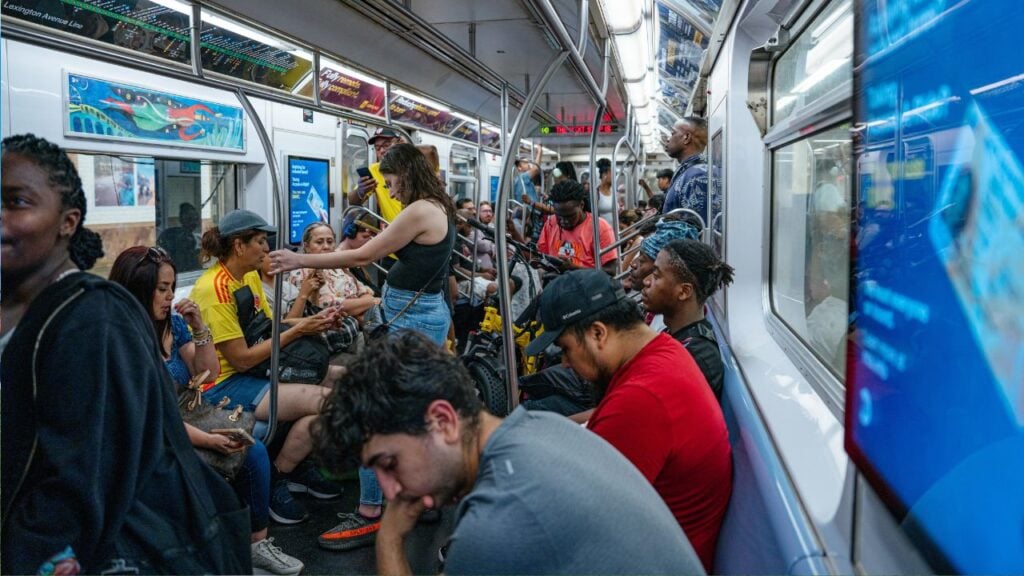
Six people step off a downtown 4 train at Grand Central, and six more slide into the same doorway before the chime even finishes.
New York City’s subway runs on habits nobody ever posted on a sign, tripping up outsiders before they even reach the turnstile.
8 Unwritten New York City Subway Rules Tourists Break Every Day
10 New York State Fair Foods and Drinks That People Can’t Get Enough Of
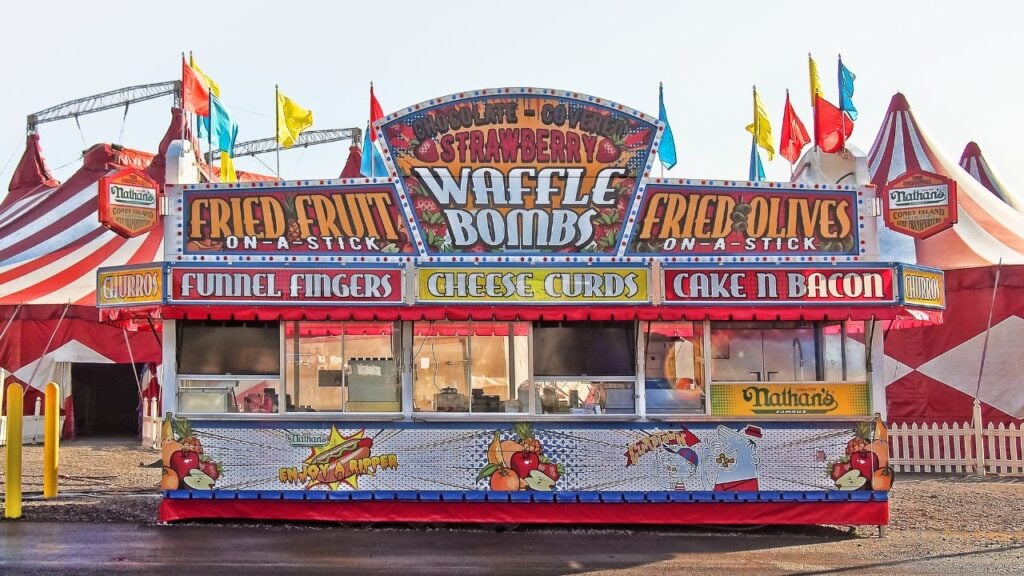
Yelp recently ranked the New York State Fair the fourth-best state fair for food in the entire country.
One dessert alone gets big enough to share, and almost nobody does.
10 New York State Fair Foods and Drinks That People Can’t Get Enough Of
