
8 California Rules That Change the Day You Register a Car From Another State

Driving a car into California is easy; making it legal to keep there takes work.
California requires you to complete several steps for a car that’s registered somewhere else.
Know these rules before you start the paperwork.
Note: This is general information, not legal or tax advice. Registration rules, fees and taxes are subject to change, so confirm the current requirements with the California Department of Motor Vehicles.
1. 7,500-Mile Rule
The 7,500-mile rule can stop the DMV from registering a nearly new car you bring in from another state.
The DMV’s guide says California law prohibits residents and businesses from bringing in or registering a vehicle that is less than 2 years old and has less than 7,500 miles on the odometer.
The ban applies only if both are true when you buy, trade for or acquire the vehicle.
The exceptions are a vehicle built to meet California emission standards or one that qualifies for an exemption.
Exemptions go through a Statement of Facts form.
Many manufacturers make vehicles to be sold only in the other 49 states, according to the DMV’s out-of-state fact sheet.
To find out whether a vehicle is California certified, check the emission label under the hood.
2. Smog Certificates
Registering an out-of-state car in California includes a smog check, even if you’ve already registered the car in another state.
Your old state’s test doesn’t count: The DMV’s checklist says out-of-state smog tests aren’t accepted.
The certificate has to come from a California smog station.
Which cars need one depends on the fuel and the year.
Gasoline-powered vehicles from 1976 and newer need a certificate.
Diesel-powered vehicles from 1998 and newer need one too if their gross vehicle weight rating is under 14,001 pounds.
If you’re driving an electric vehicle, the Bureau of Automotive Repair’s smog page lists it among the vehicles that don’t need a smog check.
Psst! How much do you know about California’s roads and license plates? Take our quiz and see if you can ace it.
Quiz
California Road History IQ
Answer these questions on California’s roads, license plates and vehicle history. We bet you can’t get them all right. Prove us wrong?
By 1915, about how many vehicles were registered across California?
3. VIN Verification
Before the DMV registers your out-of-state car, someone besides you has to confirm its vehicle identification number (VIN).
Only a DMV employee, a law enforcement officer or a California-licensed vehicle verifier can do it, on the Verification of Vehicle form (REG 31).
Your car doesn't have to be in the state yet.
According to the DMV's checklist, a peace officer in the state where it sits can do the check, but only on the REG 31 form.
A DMV visit only for VIN verification needs no appointment, but you bring the car and use a designated lane.
If your title is salvaged or branded, you must make an appointment with the California Highway Patrol (CHP) for the check.
4. Residency Deadline
You have 20 days to register your car after you become a California resident or get a job in the state, according to the DMV driver handbook.
The clock starts early.
Renting a home counts as establishing residency, so the 20 days can start before you've unpacked.
Missing paperwork is no reason to wait: Submit your application and fees on time, even without your title or smog certificate.
The DMV's penalties page has a table for a vehicle never registered in California, which can include a car brought in from another state.
For a vehicle that's a year or less late, the table lists 40% of the vehicle license fee due for that year, and 40% of the weight fee due for that year, if any.
5. Out-of-State Purchase Deadline
Buying a car in another state to bring it to California comes with extra paperwork and a shorter deadline.
If your car is less than 10 model years old, the DMV's guide asks for an odometer disclosure on the Vehicle/Vessel Transfer and Reassignment Form.
When the seller isn't the registered owner on the out-of-state title, you also need a bill of sale or that same form.
If you bought the car to bring it to California, the DMV's out-of-state checklist gives you 10 days from the purchase date to initiate the transfer.
That's half the 20 days new residents get.
6. Use Tax Bill
Registering a car you bought in another state can bring a use tax bill if you brought the car into California within 12 months of the purchase date.
The California Department of Tax and Fee Administration (CDTFA) presumes you bought the car for use in California if it arrives inside that window.
You generally pay the tax when you register the car with the DMV.
You can push back with documents showing you bought the car for use outside California, such as out-of-state registration.
A car you bought long before moving falls outside that presumption.
The use tax rate is the same as the sales tax rate based on the address where you register your vehicle.
At registration, the DMV's fee table also lists a $28 nonresident service fee on an original registration from out of state.
How Your Use Tax Credit Works
California's use tax on your out-of-state car comes with a credit for sales or use tax you already paid to another state.
The CDTFA gives this example: You paid $1,500 to another state, and California's use tax comes to $2,000.
That leaves a balance of $500 due to California.
If you overpaid tax to California at the DMV, you can ask for a refund with form CDTFA-101-DMV or through the agency's online services.
7. Your Old Title
The DMV asks for the last title your old state issued when you register an out-of-state car.
If you don't surrender it, the DMV marks your registration card "Nontransferable" and doesn't issue a California certificate of title.
You'll also give the DMV your lender's name and address if you're still financing the car.
If your lender is the legal owner, it can also release its interest on a notarized release form (REG 166).
A lost title needs a duplicate from the state that issued it, if you're changing ownership or want a California certificate of title.
8. Insurance Proof
When you register an out-of-state car, the DMV's checklist lists proof of California-compliant liability insurance among the documents you need.
The minimums are $30,000 for injury or death to one person, $60,000 for more than one person and $15,000 for property damage.
California insurers report private-use vehicle coverage to the DMV electronically under Vehicle Code 16058, the DMV's insurance page says.
That reporting has covered commercial and fleet vehicles since January 1, 2023.
If the DMV doesn't receive proof of insurance for a vehicle, it suspends the registration.
You can't operate or park the vehicle on public roadways until proof arrives.
6 Fuel Price Assumptions That Cost Californians at the Wrong Chain
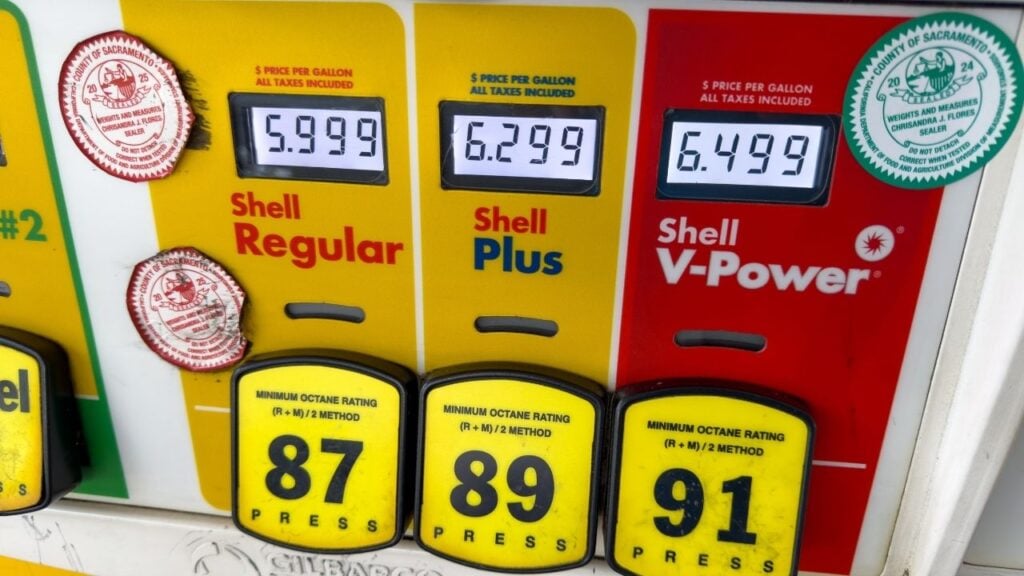
You fill up in California, and the price on the sign is only part of the story.
A rewards app or a loyalty discount can look like a bargain, but it barely dents the gap.
6 Fuel Price Assumptions That Cost Californians at the Wrong Chain
9 Things Californians Who Moved Inland Miss About the Coast, and What They Don't

Drive an hour inland from the coast, and housing costs drop fast.
That gap moved a lot of people, and it isn't the only thing that changed for them.
9 Things Californians Who Moved Inland Miss About the Coast, and What They Don't
