

8 Delaware Words and Phrases That Make No Sense to the Rest of the Country

Delaware fits three counties into 1,949 square miles, the second-smallest footprint of any state in the country.
That’s not much room to spread out.
But it’s apparently enough room to grow three different vocabularies, since a phrase that means everything in Wilmington can draw a shrug forty-five minutes south.
These are the Delaware words and phrases that leave the rest of the country stumped.
1. Slower Lower
Slower Lower is the nickname Delawareans coined for their own southern half, the stretch of Kent and Sussex counties below the traffic and office parks around Wilmington.
Say it in Rehoboth Beach and everybody nods.
Say it outside Delaware and you get a blank stare because the phrase only makes sense to someone who already knows the state splits itself into a north and a south worth separating.
Not one Delaware. Two.
Slower Lower keeps its own calendar of traditions, too, like the Nanticoke Indian Tribe’s annual powwow outside Milton every September, a Sussex County event the rest of the country has never heard of.
The “slower” half of the nickname hasn’t aged well either. Sussex County has grown from Delaware’s least populated county to its second largest over the past 25 years, with new subdivisions and traffic signals showing up on roads that used to dead-end at a cornfield.
Lower, yes.
Slower, not anymore.
2. North of the Canal
Delaware covers just 1,949 square miles of land, the second-smallest state in the country, and it still finds room to split itself in two.
It doesn’t split east from west. It splits north from south, using a man-made ditch as the line.
Crews dug the Chesapeake and Delaware Canal across the top of the state between 1824 and 1829, cutting a fourteen-mile channel that saved ships the long trip around the Delmarva Peninsula. Delawareans have used the canal as a cultural marker ever since.
“North of the canal” means Wilmington, the suburbs, the highway on-ramps.
“South of the canal” means Dover, the beach towns, and flat miles of farmland.
Neither phrase means a thing to a visitor because nobody outside Delaware has a reason to know a canal is doing that kind of work.
The ditch decides the answer.
Delaware’s Population Split
Many people assume the wide-open, farm-heavy side south of the canal outnumbers the busier half, since “Slower Lower” sounds like the state’s biggest chunk of Delaware.
It’s the other way around. New Castle County, the urbanized county north of the canal, holds more residents on its own than Kent and Sussex counties combined, according to the U.S. Census Bureau.
3. Delaware Way
The Delaware Way is the phrase locals reach for to describe the state’s own brand of politics, and it confuses new arrivals every single time.
It doesn’t refer to a law or a policy.
It describes a compromise-heavy, everybody-knows-everybody style of government that works because Delaware is small enough to get the right people in one room and work things out before a dispute ever goes public.
Everybody already knows everybody.
Anyone who moves to Delaware for work hears the phrase in a meeting within the first month and has no idea whether it’s a compliment or a warning.
Usually, Delaware means it as both.
4. MOT
Middletown, Odessa, and Townsend (MOT) shows up on Delaware real estate listings, school newsletters, and neighborhood Facebook groups with zero explanation, as if everyone already knows what the shorthand stands for.
Three towns. One acronym.
The three communities grew from small farm crossroads into one fast-growing corridor along Route 301, and locals shortened the name long before outsiders caught on. A local news outlet calls itself The MOT Journal without ever spelling out what the letters stand for.
Anyone shopping for a house near Middletown decodes the acronym fast.
Anyone else just Googles it mid-conversation.
Psst! How much do you know about Delaware’s history? Take our quiz and see if you can ace it.
Quiz
First State Trivia
Answer these questions on Delaware’s history and firsts. We bet you can’t get them all right. Prove us wrong?
On what date did Delaware become the first state to ratify the U.S. Constitution?
5. Blue Hen
The Blue Hen is Delaware's official state bird, and the name confuses outsiders even when they think they already know it.
Many people outside Delaware recognize "Blue Hens" only as a University of Delaware sports team, never realizing the words describe a bird at all, let alone the actual state bird.
It isn't a chicken breed, either.
Blue Hens aren't a recognized breed at all.
Nothing like it.
The name traces back to a Delaware regiment in the Revolutionary War, whose captain kept famously aggressive fighting chickens at his Kent County farm. Soldiers everywhere started calling the unit the Blue Hen's Chickens, and Delaware's own legislature made the bird official in 1939.
The nickname stuck to the whole state decades before the University of Delaware borrowed it for its sports teams in 1911.
Tell someone who's cheered for the Blue Hens on TV that the name comes from a fighting rooster, and watch their face.
6. Scrapple
Scrapple is the word that stops out-of-state visitors cold on a Delaware breakfast menu, and it gives them no clue what's coming.
It's a loaf of seasoned pork scraps and cornmeal, sliced thin and fried until the edges crisp.
Neighbors up in Pennsylvania and Maryland grew up eating it too, but Delaware's own scrapple maker has kept the word alive in its most literal form.
Founders Ralph and Paul Adams gave the company its name (RAPA), and RAPA has run the same recipe out of Bridgeville since 1926, packaging it in the same waxed loaf shape it always has.
The recipe hasn't moved.
Delaware's governor marked the company's centennial this past February with an official proclamation.
7. Chicken Capital of the World
Delaware's Sussex County calls itself the Chicken Capital of the World, a title that sounds made up until you hear where the industry started.
In 1923, a Sussex County farm wife named Cecile Steele ordered 50 chicks for eggs and received 500 by mistake.
She raised them for meat instead.
Neighbors in Ocean View copied her within a couple of years, and the whole county was raising broiler chickens by the tens of thousands before the decade ended.
One mix-up grew into the commercial broiler industry the entire country now eats from, and Sussex County still raises around 200 million chickens a year.
Outsiders hear "Chicken Capital of the World" and assume it's a joke.
It's a receipt.
8. Home of Tax-Free Shopping
Delaware's official welcome signs once told drivers they'd crossed into the Home of Tax-Free Shopping, a slogan many other states can't fully make sense of.
It isn't a marketing trick.
Delaware charges no sales tax at all, on anything, a rule many shoppers from neighboring states only discover by accident at the register.
None of it.
Delaware swapped the signs for "Endless Discoveries" in 2015, after a run of other slogans came and went, but the reason shoppers still detour across the state line at the mall never went anywhere.
A cash register in Rehoboth Beach still rings up the exact price printed on the tag, nothing added at the counter.
Outsiders keep double-checking the receipt anyway, certain the store forgot something.
9 Words, Foods, and Customs That Instantly Give Away a Lifelong Texan
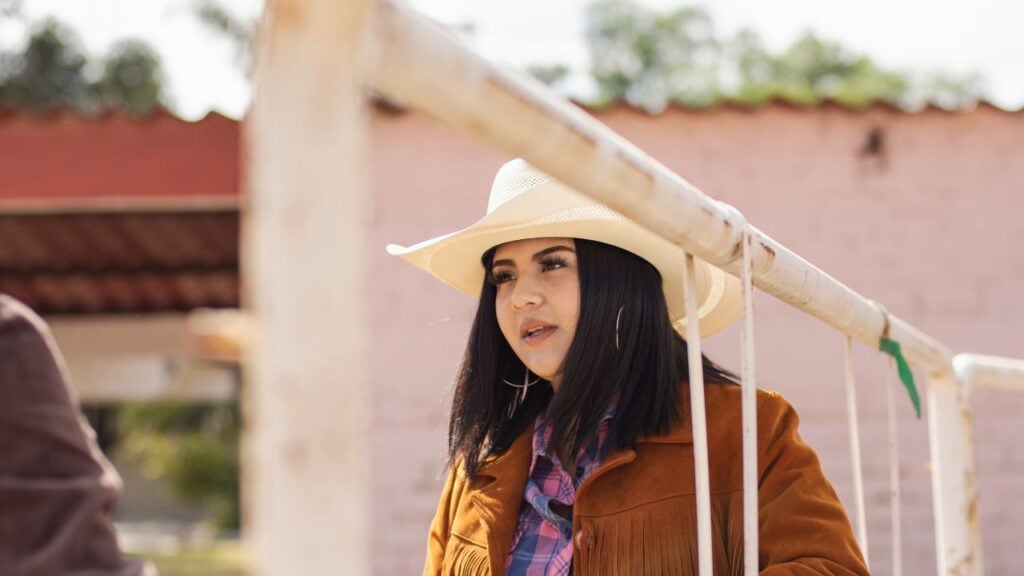
A rancher out past Marathon, Texas watches the sky turn strange shades of gray and calls it a blue norther before the front even arrives.
A visitor just calls it a cold front, and that's only the first word that gives away who grew up there.
9 Words, Foods, and Customs That Instantly Give Away a Lifelong Texan
