
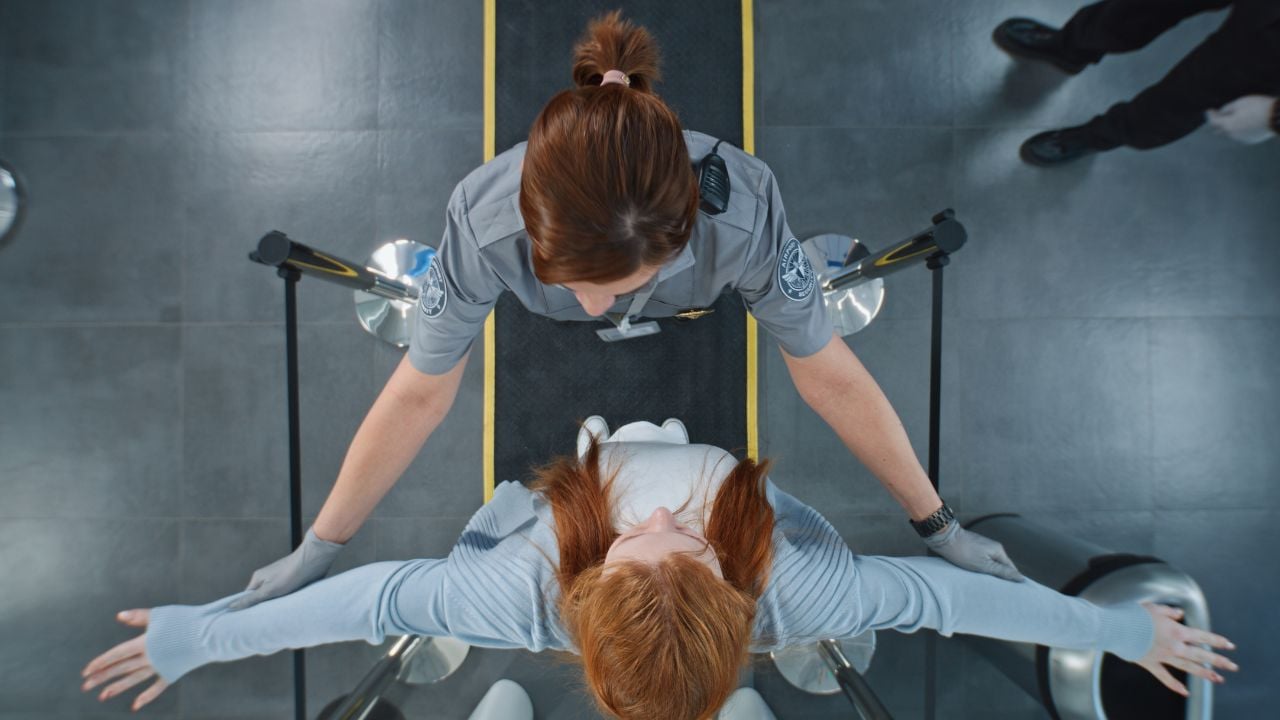
8 Everyday Things Travelers Pack That Texas TSA Employees Throw Away

Eighty-nine lithium battery incidents happened on U.S. planes in 2024.
It was a record year, and phone chargers were one of the culprits.
These are the everyday items that Texas’ airport security takes away from carry-on and checked bags.
1. Queso and Other Creamy Dips
Queso doesn’t look like a security risk to a Texan packing a care package for family up north.
TSA disagrees.
Anything spreadable, pourable, or squeezable counts as a liquid or gel under the agency’s 3.4-ounce carry-on limit, and that covers queso, salsa, and guacamole right along with shampoo and sunscreen.
A full tub of H-E-B queso sails through checked luggage without a second look.
Try to carry it on, and it doesn’t make it past the belt.
Pack it checked, or leave it home.
2. High-Proof Texas Whiskey
Texas whiskey has grown from a novelty into an industry, with Hill Country distilleries bottling small-batch spirits Texans love to carry home as gifts.
Some of those bottles are stronger than travelers realize.
Any spirit over 140 proof, meaning more than 70% alcohol by volume, counts as hazardous material and is barred from carry-on and checked bags alike, no matter how it’s packed.
Moonshine and cask-strength bourbon are the usual culprits.
Spirits between 24% and 70% alcohol still make it home, capped at five liters per traveler and only in checked bags, sealed in their original retail packaging.
Anything higher stays behind.
3. Spare Phone Batteries and Power Banks
Spare phone batteries and power banks look harmless enough tucked into a Texas traveler’s suitcase headed home from a family reunion in Waco.
But if you pack them in a checked bag, they’ll get flagged.
A record 89 lithium battery incidents happened on U.S. planes in 2024.
The Federal Aviation Administration (FAA) bars every loose battery and power bank from checked baggage because a fire in the cargo hold can’t be reached until the plane lands.
Batteries under 100 watt-hours are allowed in carry-ons.
But they’re not allowed in a checked bag at all.
4. Fireworks From a Roadside Stand
Fireworks turn up in more Texas carry-ons than you’d expect, especially the sparklers and bottle rockets grabbed from a roadside stand on the way to the airport.
None of it is allowed to fly.
TSA bans every kind of firework, from a single sparkler to a full multi-shot cake, from carry-on and checked bags alike.
The FAA even runs a passenger safety campaign called “Fireworks Don’t Fly,” warning that a stray spark in the cargo hold has nowhere to go at cruising altitude.
Roadside stands do brisk business across Texas every summer and New Year’s, and a souvenir pack occasionally ends up tucked into a suitcase without a second thought.
It’ll quickly be taken away at the X-ray machine.
Psst! How ready is your carry-on for a Texas security line? Run through this checklist and see where you stand.
5. Pepper Spray
Pepper spray rides in many Texas keychains and glove boxes, so travelers assume it can ride in a carry-on too.
It can’t.
TSA bans pepper spray from carry-on bags entirely, no size small enough to sneak by.
A checked bag allows only one 4-ounce canister, and only with a safety mechanism that keeps it from firing by accident.
Carrying it through the checkpoint anyway can draw a civil penalty that starts around $390 and rises toward $2,250 for repeat or more serious violations.
Bear spray fares worse.
Its bigger canisters and stronger concentration put it over TSA’s limit entirely, so a Big Bend backpacking trip needs to buy that can locally and leave it behind at the end.
Dallas/Fort Worth International alone intercepted 378 firearms in carry-on bags in 2023, the second-highest total of any U.S. airport, yet it’s pepper spray that catches honest travelers who never meant to bring a weapon at all.
What a Pepper Spray Stop Costs
Pepper spray caught at a Texas checkpoint doesn’t come with an on-the-spot ticket.
TSA mails a civil penalty afterward.
The published range for self-defense spray or tear gas runs $390 to $2,250.
TSA generally proposes the low end of that range first, then moves higher for a repeat violation or other aggravating factors.
6. Dry Ice in a Cooler
Dry ice rides home in many Texas coolers, packed around brisket, tamales, or kolaches a traveler doesn’t want to trust to a shipping box.
Not without a catch.
The FAA caps a passenger’s dry ice at 5.5 pounds, and the package has to stay vented so the carbon dioxide gas it gives off can escape.
A cooler taped shut to keep the cold in traps that gas instead.
A screener who finds a sealed, unlabeled cooler can pull it from the flight entirely.
The package also needs a label reading “dry ice” with its weight, plus a heads-up to the airline before the flight.
Pack too much ice, and the whole cooler misses the flight.
7. Camp Stove Fuel Canisters
Camp stove fuel canisters go along on many Texas hunting leases and Big Bend backpacking trips without a second thought.
They shouldn’t.
Propane, butane, and isobutane canisters are barred from the cabin and the cargo hold alike, full or empty, with no exception for a weekend deer lease.
The stove itself can travel checked, but only once it’s completely drained and cleaned.
Leftover fuel residue or vapor clinging to the burner is enough for a screener to pull it and toss it, stove and all.
Buy fuel after landing instead.
8. Metal or Stone Cremation Urns
A cremation urn carries a loved one home to family plots across Texas more often than many travelers realize.
The material decides.
TSA officers won’t hand-open a sealed urn under any circumstances, out of respect for the remains, so the container has to be one the X-ray can see through clearly.
Metal, stone, and ceramic urns, a common family choice, often block the scan.
There’s no opening it to check.
When the image comes back too dense to read, the urn doesn’t pass, no matter how far the family has already traveled to bring someone home.
A lightweight wood, plastic, or cardboard container, plus the cremation certificate, clears the same checkpoint without a delay.
A funeral home can usually point a Texas family toward an X-ray-friendly container before the trip ever starts.
That one phone call beats finding out at the checkpoint, with a flight to catch and nowhere left to turn.
10 Small-Town Texas Diners Worth the Detour
The best meal in Texas rarely turns up in Austin, Dallas, or Houston.
It’s tucked into a town no flight path crosses, at a counter that’s been serving the same pie since long before jet bridges existed.
10 Small-Town Texas Diners Worth the Detour
9 Odd Texas Laws Most Americans Have Never Heard Of
Airport security isn’t the only place Texas keeps a rulebook nobody expects.
Some of the state’s oldest laws are just as surprising as anything a screener has ever pulled out of a carry-on.
