
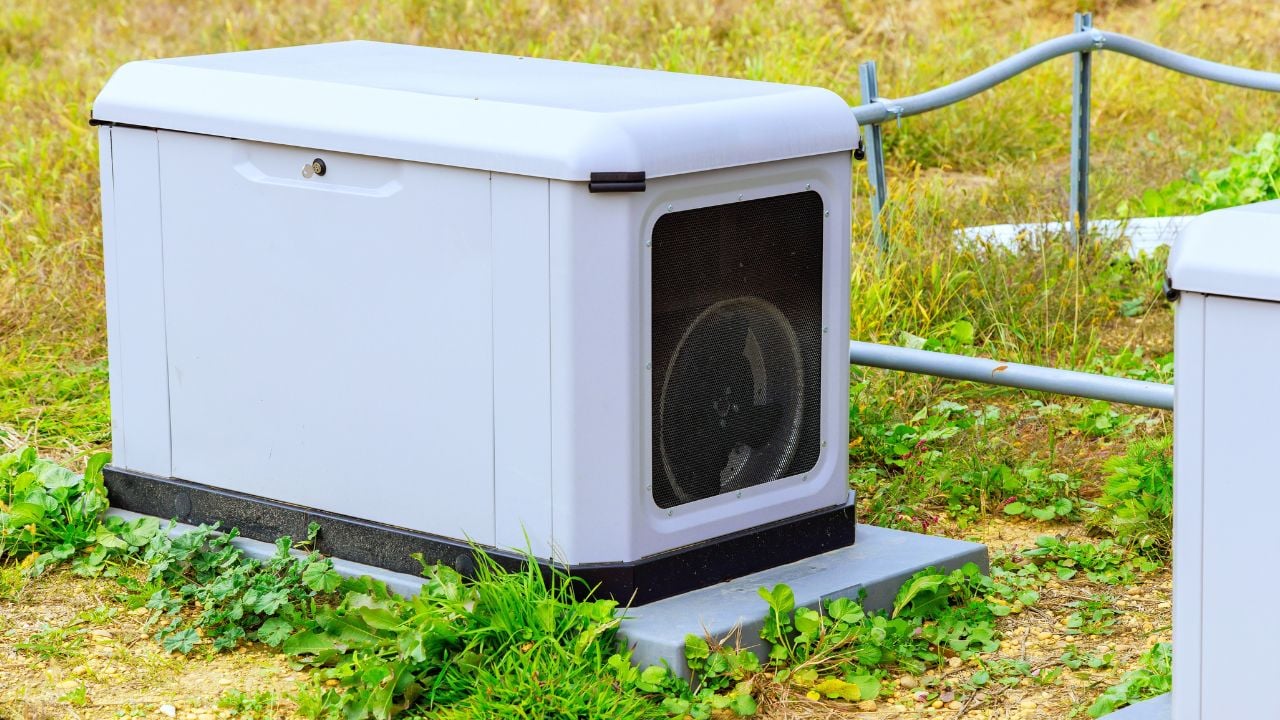
8 Generator Mistakes That Put Wisconsin Households in Danger After a Storm

Wisconsin has about 500 emergency room visits a year from carbon monoxide poisoning, according to its Department of Health Services.
Storm season is partly why that number is so high.
These are the generator mistakes that put Wisconsin households in danger after a storm.
1. Too Close to the House
Your generator has to sit at least 20 feet from your house, exhaust pointed away from every window, door, and vent.
Carbon monoxide from the engine collects fast once it reaches an opening, building to a dangerous level in minutes, even outdoors.
It has no smell.
A garage, a covered porch, or a spot just under a window are exactly where this mistake happens most.
The storm is still loud outside, and the driveway feels closer than the yard.
Cracking the garage door doesn’t fix it.
The exhaust drifts toward the house along with the outside air, door open or not.
2. Skipping the Carbon Monoxide Alarm
A generator running outside doesn’t warn the house when its exhaust drifts back in.
That’s the job of a battery-backed carbon monoxide alarm, the one thing in the house that catches the gas before the emergency room does.
A working alarm on every level is the only way to catch a gas you can’t see or smell.
Batteries fail silently.
Check them before a storm rolls in, not after the lights flicker and the generator is already running.
A plug-in alarm with a battery backup keeps working even if the outage takes out the outlet it’s plugged into.
3. Backfeeding Into Your Panel
Plugging a generator straight into a wall outlet sends power backward through the lines, not just into the house it’s meant to power.
Wisconsin Public Service calls that backfeeding, and it can send live current down a line a utility crew believes is dead.
Linemen don’t expect that.
The fix is a licensed electrician wiring in a transfer switch, not a longer cord.
A transfer switch also protects the generator, since power flowing the wrong way through a panel can fry it along with the wiring.
The Fix for a Backfeeding Generator
A transfer switch is the fix every Wisconsin utility points to for backfeeding, and it isn’t something a homeowner wires in alone.
A licensed electrician typically installs one for $300 to $900, wiring it into the panel so the generator’s power never has a path back to the street.
4. Running It in the Rain
Water and a generator’s open panel make a bad combination once the rain starts.
Water and electricity don’t mix.
A canopy built for generators keeps the unit dry without blocking the air it needs to run.
A ground-fault circuit interrupter outlet or cord cuts the power the instant something goes wrong.
New York’s Division of Homeland Security and Emergency Services tells generator owners to add one rather than assume the unit already has it.
Dry your hands before you touch it, every time.
A tarp thrown over the top traps exhaust instead of rain, trading one danger for another.
5. Using the Wrong Extension Cord
Every generator needs a heavy-duty, outdoor-rated cord, not whatever is coiled up in the garage already.
The cord’s wattage rating has to clear the combined load of everything plugged into it, or it overheats.
Frayed cords fail fast.
Check the full length for cuts, and make sure every plug still has all three prongs before the storm even starts.
Plug appliances into the cord first, then plug the cord into the generator, so nothing draws power before it’s ready.
6. Overloading Its Capacity
Push a generator past its rated wattage, and the danger isn’t just a tripped breaker.
Leesburg, Florida’s hurricane-prep guidance lists an overloaded generator under fire hazards.
A cord or circuit carrying more current than it’s rated for can overheat enough to spark a fire.
Running more than a generator is built for can also damage the appliances plugged into it, not just the generator.
Starting wattage runs higher than running wattage, and a refrigerator or a well pump can spike hard enough to push a generator past its limit.
Paper math isn’t the same.
Add up what matters most, like the refrigerator and a few lights, instead of trying to run the whole house at once.
Psst! How storm-ready is your generator setup? Run through this checklist and see where you stand.
7. Storing Fuel the Wrong Way
Fuel for your generator belongs outside the house, in an approved container, away from anything that could spark it.
The basement isn’t safe either.
Refueling a hot engine is how a spill turns into a fire, so Wisconsin’s health department tells owners to let it cool down first.
That’s fire-prevention guidance state health officials repeat every storm season, and it’s the step people skip when they’re in a hurry to get the lights back on.
A sealed, properly labeled container also keeps the fuel usable longer, instead of going stale in an old jug in the corner.
8. Skipping the Pre-Storm Test Run
Sitting untouched since last winter, a generator doesn’t announce it won’t start until the moment you need it most.
The Consumer Product Safety Commission tells owners to regularly check and maintain a generator so it’s ready before a storm arrives, not after the power’s already out.
The agency also tells households to test smoke and carbon monoxide alarms every month.
Those alarms are what catch a leak the generator itself has no way to sense.
It has to start first.
A household relying on it to run a breathing machine, an oxygen concentrator, or a furnace blower has no backup plan if the generator doesn’t.
Newer models built to the Underwriters Laboratories (UL) 2201 standard shut themselves off automatically if carbon monoxide rises too high, a safeguard many older generators simply don’t have.
Why Households Lean on Generators
A generator becomes the first thing many Wisconsin households reach for once a storm cuts the power.
Storms like the one that crossed Milwaukee and Waukesha counties on August 18, 2026, cut power across the region for hours.
We Energies reported more than 30,000 customers without power that night, with the heaviest damage in Milwaukee and Waukesha counties.
That’s a lot of dark houses.
Waukesha is also home to Generac.
The state’s economic development agency puts the company’s share of the automatic standby generator market at close to eight in 10 machines sold.
Those standby systems switch on by themselves and wire in through the same kind of transfer switch that keeps a portable generator from backfeeding into the grid.
A portable generator in the garage still needs someone outside doing every step by hand, storm or no storm.
9 Wisconsin Supper Club Rules Outsiders Break Without Knowing

A Wisconsin supper club orders an Old Fashioned a different way, starting with brandy instead of bourbon and a follow-up question many out-of-staters never see coming.
The rest of the ritual, from the relish tray to the exact order to walk in, trips up visitors before they ever sit down.
9 Wisconsin Supper Club Rules Outsiders Break Without Knowing
6 Kwik Trip Habits Costing Wisconsin Shoppers More Than They Notice

Much of what’s stacked on a Kwik Trip shelf carries the store’s name instead of a national brand, a bigger share than many shoppers expect.
That mix is part of why Wisconsin shoppers keep coming back, but a few habits at the pump and register cost more than shoppers realize.
6 Kwik Trip Habits Costing Wisconsin Shoppers More Than They Notice
