
8 Habits Northern Transplants Pick Up in North Carolina Within a Year

Has your weekly routine changed since you moved south?
You’re not alone.
These are the habits many Northern transplants pick up in North Carolina within a year.
Note: This is general information, not legal advice. Traffic laws are subject to change.
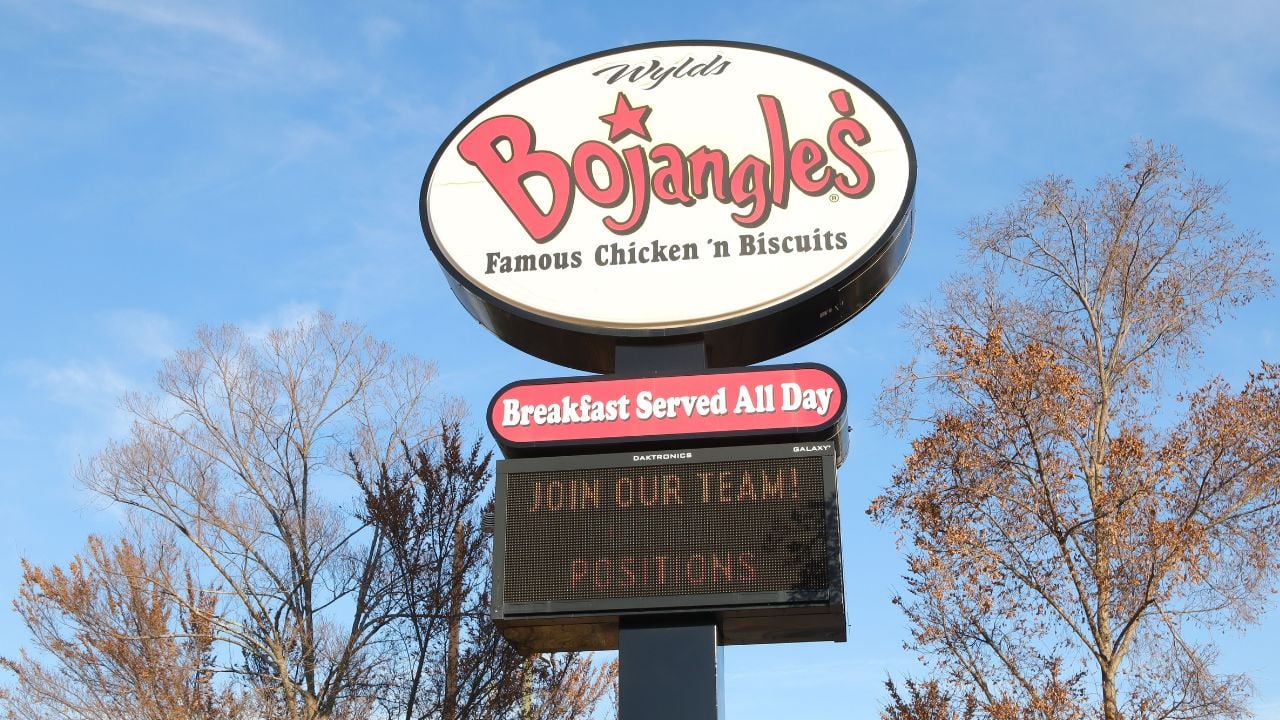
1. Making Bojangles Runs
If you’ve wondered where Bojangles started, its first restaurant opened in Charlotte on July 6, 1977.
Jack Fulk and Richard Thomas founded the chain.
Franchising started in 1978.
By 2016, Bojangles had more than 500 restaurants in 10 states.
Bojangles opened a support center and headquarters in Charlotte in June 2025, Restaurant Dive reported.
The chain had 800 restaurants at the time.
2. Ordering Cook Out Milkshakes
Cook Out gives you 40-plus milkshake flavors to choose from.
Cook Out began in Greensboro in 1989.
The chain didn’t cross state lines until 2010.
By 2018, it had more than 200 restaurants across the Southeast.
3. Drinking Cheerwine
Cheerwine started with a sugar shortage during World War I.
Salisbury’s Lewis D. Peeler needed a cheaper product, and fast.
He tried several syrup sweeteners before settling on a wild cherry flavoring.
Peeler renamed his company Cheerwine.
He did it in honor of the drink’s popularity.
If you want to try it where it started, Salisbury hosts an annual Cheerwine Festival downtown.
The festival began in 2017 to mark the soda’s 100th anniversary.
The 2026 festival was scheduled for Saturday, May 16.
4. Choosing Harris Teeter or Food Lion
Harris Teeter and Food Lion both began in North Carolina.
Many transplants end up with a favorite between the two.
Ralph Ketner, his brother Clifford and family friend Wilson Smith left a larger supermarket chain and opened a store in Salisbury in 1957.
It opened as Food Town.
The chain became Food Lion in 1983, after another grocery company turned out to own the Food Town name.
Trace Harris Teeter back, and you reach a Charlotte grocery that W. T. Harris opened.
In 1939, Willis and Paul Teeter borrowed $1,700 to open Teeter’s Food Mart in Mooresville.
Harris Super Markets and Teeter’s Food Marts merged in February 1960.
Harris Teeter’s headquarters is in Matthews, Grocery Dive reported in September 2026.
Psst! How many of these North Carolina habits are yours? Run through this checklist and see where you stand.
5. Buying Bread and Milk Early
Milk and bread were running low or out of stock at Triangle grocery stores as a winter storm approached in January 2026.
The rush came even though Raleigh’s normal yearly snowfall is about five inches.
The snowiest season on record, 1892-93, left Raleigh with 31.6 inches, WRAL reports.
Raleigh then missed most of the snow from the late January storm.
The 2025-26 season ended at 3.6 inches there.
If you moved from a snow belt, the rush may look silly at first.
Then the forecast shows flurries.
By their first winter, many transplants have joined the milk-and-bread run.
6. Saying “Might Could”
If you say “might could,” you’re stacking two helping verbs into one phrase.
That’s called a double modal.
Linguists Walt Wolfram and Jeffrey Reaser say newcomers and their children tend to avoid the drawled vowel in the word time.
They may still pick up y’all and might could.
Neither linguist is from North Carolina.
Our State reports that a double modal draws a stigma in other regions but not across the South.
7. Yielding to Funeral Processions
North Carolina’s funeral procession law lets oncoming drivers yield by slowing down or stopping off the roadway.
Once the lead vehicle has crossed an intersection legally, the rest of the procession may proceed through it without stopping.
Joining a procession just to get that right-of-way isn’t allowed.
If you know a procession is going through a red light, you can’t enter on green unless you can do it safely without crossing its path.
Green doesn’t always mean go.
8. Rooting for Duke, UNC or NC State
In a March 2025 Elon University Poll, North Carolina adults named their favorite in-state Atlantic Coast Conference men’s teams.
In that poll, 37% said they’re fans of UNC-Chapel Hill, 31% said NC State and 26% said Duke.
Wake Forest had 17%.
The figures add up to more than 100% because respondents could be fans of more than one team.
No team reached a majority.
Some transplants find themselves rooting for a team sooner than they expect.
That makes the Nov. 7 game, with Duke playing at NC State, a quick way to find out where your loyalties land.
Residents Born Out of State
Axios Charlotte reported in January 2024 that 46% of North Carolina residents were born outside the state, citing Carolina Demography.
In 1980, that share was about 23%.
About 518,000 of them were born in New York, the leading birthplace of residents born outside North Carolina.
If you moved from New York, you’re far from alone.
Mecklenburg County is home to 87,749 people who were born in New York.
Wake County has the second most, with 78,749.
Names for Newcomers
North Carolina Sea Grant defines “dingbatter” as a nonnative of Ocracoke or the Outer Banks.
Ocracoke natives are “O’cockers.”
If you hear “off” on Harkers Island or Ocracoke, it means someone or something from outside the region, according to Our State‘s dialect glossary.
UNC’s Carolina Demography project uses “halfback” for transplanted Northerners who move out of Florida to mid-south states, halfway back to the North.
In 2014, New Yorkers made up 13% of the people 55 and older who moved from Florida to North Carolina.
7 North Carolina Foods That Only Show Up at a Church Homecoming
A church homecoming spread has a few dishes that people look for first.
These are the North Carolina foods you only find at a church homecoming.
7 North Carolina Foods That Only Show Up at a Church Homecoming
6 Things That Make North Carolinians in Charlotte and Raleigh Roll Their Eyes at Each Other
Ask someone in Charlotte about Raleigh, and you’ll get a grin and an opinion.
Ask someone in Raleigh about Charlotte, and you’ll hear an opinion right back.
6 Things That Make North Carolinians in Charlotte and Raleigh Roll Their Eyes at Each Other
