
8 Home Projects That Need a Permit in New York, and What Skipping One Costs

A missed permit in New York rarely ends with a written warning.
Some towns escalate straight to a stop-work order. Others go further, with jail time on the table or an insurer that simply refuses to pay.
These are the New York home projects that call for a permit, and what it costs homeowners who skip one.
Note: This is general information, not legal advice. New York’s Uniform Fire Prevention and Building Code sets the baseline, but permits are issued and enforced locally, and rules, fees, and fines vary by town, so confirm the specifics with your local building department.
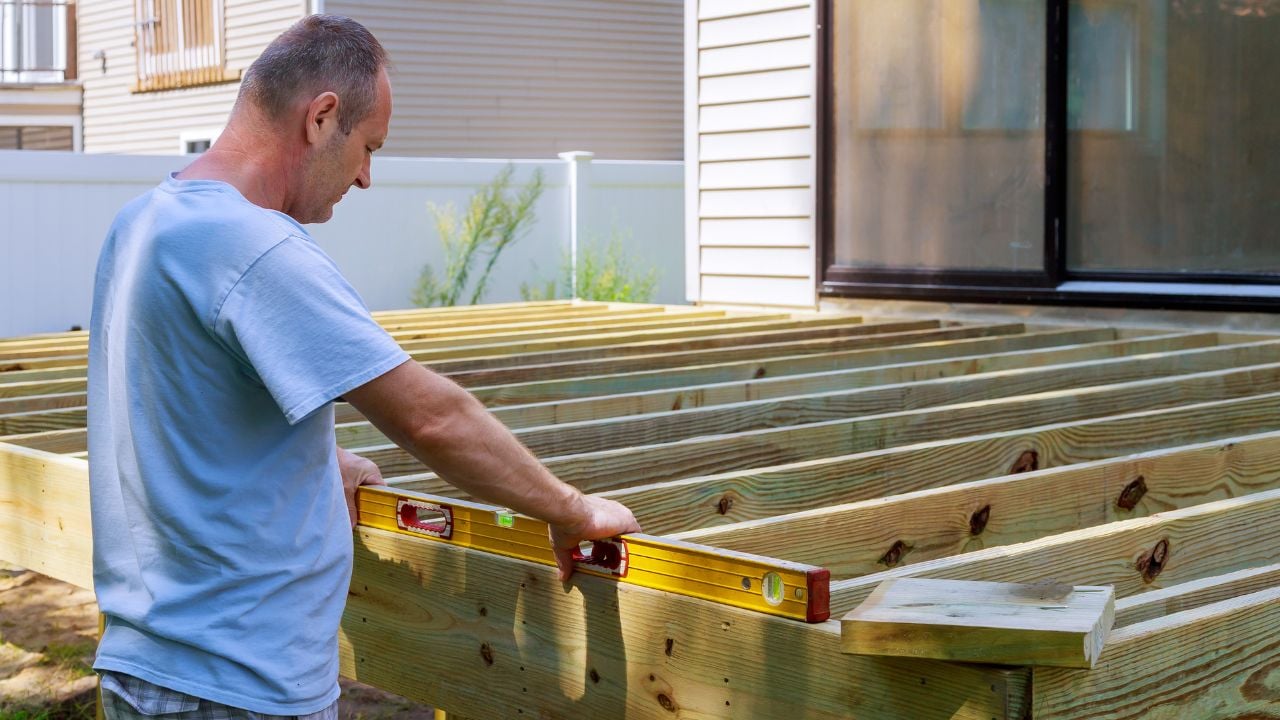
1. Building a Raised Deck
New York requires a permit for a deck attached to the house or built more than 30 inches above grade in many towns, plus a guardrail once it clears that height.
Skip the paperwork, and the math isn’t friendly.
New York City charges six times what the permit would have cost, with a floor of $600 and a cap of $10,000 for a one- or two-family home.
That’s on a deck.
A crew still working when the violation lands can also get hit with a stop-work order, and ignoring that order adds its own separate fine on top.
Homeowners outside the five boroughs face the same basic choice under their own town’s fee schedule, just with different numbers attached.
2. Installing a Backyard Pool
New York treats a backyard pool as a safety project, not a summer whim.
Any pool deeper than 24 inches, in-ground or above-ground, needs a permit under the state’s Uniform Code, plus a compliant fence or barrier before anyone fills it with water.
Skip that step, and some towns don’t just fine you.
The Town of Islip can fine a homeowner up to $5,000 or jail them for up to 15 days.
Every day the violation continues counts as its own separate offense.
Insurers agree.
A pool accident tied to a barrier that was never inspected is exactly the kind of claim a homeowner’s policy is built to question first and pay second.
What New York’s Pool Barrier Requires
New York’s pool code spells out exactly what counts as a legal barrier, not just that a fence exists somewhere in the yard.
The fence has to stand at least 48 inches tall.
Any gate in it has to close and latch on its own too, with the latch set at least 40 inches off the ground.
That trips up many pool owners who assume their existing yard fence already qualifies, since a fence with a gate that swings free instead of latching itself shut still fails inspection.
3. Building a Home Addition
A home addition in New York goes through the same process as new construction because that’s exactly what the code calls it.
Add a room, a dormer, or a bump-out to the kitchen.
The project needs its own permit and its own final inspection before the town updates the home’s certificate of occupancy.
Skip it, and the bill doesn’t come due right away.
It waits.
An appraiser working a future sale often won’t count the extra square footage toward the home’s value.
A buyer’s attorney who spots an addition missing from the certificate of occupancy can hold up the closing until it’s fixed or credited.
A retroactive permit application, called legalization, is usually still possible.
It’s rarely cheap or quick.
4. Upgrading an Electrical Panel
New York requires a licensed electrician to pull a permit for rewiring a room or swapping out an electrical panel, with an inspection before the walls close back up.
No exceptions.
Skip that inspection, and an unpermitted job gives an insurer an easy opening on a future claim.
If a fire starts anywhere near work nobody ever inspected, the insurer can point to it and deny the claim outright.
That leaves a homeowner covering the loss alone, on top of whatever fine the town already issued.
Psst! How permit-ready is your next home improvement project? Run through this checklist and see where you stand.
5. Building a Retaining Wall
New York lets towns set their own trigger height for a retaining wall permit.
It’s lower than many homeowners guess.
Smithtown requires one for any wall exposed more than 30 inches, and nearby villages like Bayville and East Hills draw the line at just 24 inches.
Above that height, many towns also require a professional engineer to stamp the design.
Skip the permit, and the wall becomes a bigger risk than a fine.
If it fails and damages a neighbor’s yard or foundation, the homeowner is on the hook for repairs.
A policy often won’t cover damage tied to work that was never permitted.
The homeowner pays for it.
6. Installing a Standby Generator
A whole-house standby generator in New York needs a stacked set of permits: Electrical for the transfer switch, gas or mechanical for the fuel line, and often a building permit for the pad it sits on.
Villages like Ardsley spell it out plainly: A licensed electrician and a licensed plumber each file for their own piece of the job.
Skip any part of that stack, and the trouble stacks too.
A stop-work order can halt the install mid-job until an inspector signs off on every missing permit.
It doesn’t stop there.
A buyer’s inspector who flags the uninspected hookup at resale can send the whole sale back to the negotiating table.
7. Building a Storage Shed
New York exempts small sheds from the permit process, but the size limit is smaller than many homeowners plan for.
Many towns outside New York City set the cutoff at 144 square feet; inside the city, it drops to 120.
Go bigger than that, and the shed needs the same permit as a garage addition.
Same paperwork, bigger box.
Skipping it invites a stop-work order first.
Defy that order, and the fine jumps again.
It can reach up to $10,000 on top of whatever the original violation already carries.
Some towns skip straight to an order to move the shed or tear it down.
8. Putting up a Tall Fence
New York leaves fence height limits to each town, but a common pattern shows up statewide: About 4 feet in a front yard, 6 feet along the sides and back, with a permit required past that line in many places.
Rochester enforces its limit with fines that start at $50 to $150 per violation.
Ignore it, and the fine rises with each ticket that follows.
That escalates fast.
Unpaid, the fine can end up added to the property tax bill instead of arriving as its own invoice.
A code enforcement officer can also just order the fence changed or removed, at the owner’s own expense.
New York’s Permit Patchwork
New York doesn’t run home permits out of one office in Albany.
The New York State Uniform Fire Prevention and Building Code sets the statewide floor, but each town, village, and city enforces it through its own code enforcement office, which is why a 30-inch deck needs a permit in one town and a slightly taller deck might not two towns over.
Fees follow the same pattern.
What a generator permit costs, and how long the inspection takes to schedule, depends on which town’s office picks up the phone, not a single statewide price list.
Small Jobs That Skip the Paperwork
Not every home project in New York needs that trip to the building department.
Repainting a room, replacing flooring, or swapping in a new faucet or sink doesn’t trigger a permit anywhere in the state.
That’s the easy list.
Even a straight, like-for-like swap of a gas water heater or furnace can skip the process in New York City, as long as the shutoff valve stays exactly where it was and a plumber confirms the chimney still vents properly.
That exemption is a New York City rule, not a statewide one, so a homeowner in Buffalo or Syracuse should check with their own town before assuming the same swap is automatically permit-free.
A homeowner doesn’t even have to be the one who skipped the permit to inherit the problem.
An open or missing permit found during a title search often becomes the new owner’s job to resolve, even when a previous owner did the unpermitted work years before the sale.
9 Things New York Landlords Can Legally Do That Renters Assume Are Illegal
New York’s Good Cause Eviction law has spread to more than a dozen cities since it passed in 2024, and many renters assume the whole state now leans their way.
It doesn’t, and landlords still have several legal moves that catch tenants off guard.
9 Things New York Landlords Can Legally Do That Renters Assume Are Illegal
8 New York Laws From the 1800s That Are Somehow Still on the Books

New York’s building code isn’t the only rulebook with a few outdated surprises.
Some of the state’s oldest laws, dating back to the 1800s, are still technically on the books, and a few sound almost too odd to be real.
8 New York Laws From the 1800s That Are Somehow Still on the Books
