

8 Money Mistakes That Cost Texas Renters Every Year

A Texas renter pays rent two days late, and the landlord tacks on a fee that isn’t tied to anything written in the lease.
That’s not allowed.
State law only lets a late fee apply once rent is two full days late, and only when the lease spells out the exact amount in writing.
These are the money mistakes that cost Texas renters every year.
Note: This is general information, not legal advice. Texas landlord-tenant laws are subject to change, so confirm the current rules with a Texas attorney or your local tenant assistance office.
1. Assuming Landlords Need Notice to Enter
Renters who move to Texas from a state with entry rules carry over an assumption that doesn’t hold up.
Texas has no statewide law that forces a landlord to warn you before walking into your rented home.
There’s no 24-hour rule.
Only a clause a renter negotiates into the lease can create that requirement, and most leases never bother.
Most Texas leases never spell it out at all, which means a landlord can enter with no warning and still be entirely within the law.
Not illegal.
Just legal in a way most renters never expect.
The standard lease form used across much of the state doesn’t require advance notice either, though it does require the landlord to leave a note explaining who came in and why if nobody was home.
That note arrives after the visit, not before it.
A landlord who wants to keep tenants happy will still call ahead, but nothing in Texas law makes them.
2. Assuming There’s a Deposit Cap
Every renter eventually asks how much a landlord can charge for a security deposit in Texas.
The honest answer surprises people.
Texas sets no cap on the amount, so a landlord can ask for one month’s rent, three months, or more.
No ceiling exists in the Property Code at all.
Renters signing a $1,400 apartment sometimes hand over $3,000 or $4,000 before they ever get a key, and nothing in state law stops it.
That’s legal.
Several nearby states put some kind of limit on the number.
Texas simply doesn’t.
Once that number is signed, it’s locked in for the length of the lease, and no court steps in to lower it.
3. Not Chasing a Bad-Faith Refund
Move out of a Texas rental, and the landlord owes you two things within 30 days: Your deposit back, or a written, itemized list of what they kept.
Miss that window, and the law presumes bad faith.
Here’s what most renters never chase down: A landlord who acts in bad faith owes you $100, three times whatever portion they wrongfully withheld, and your attorney’s fees.
On an $1,800 deposit kept without explanation, that adds up to well over $5,000.
Real money.
Renters who never hear back after 30 days often assume they simply lost the deposit.
A written demand letter is usually all it takes to turn a missing deposit into a real refund.
4. Missing the Late Fee Ceiling
Late fees are legal in Texas, but not any amount a landlord feels like charging.
State law only lets a late fee apply once rent sits unpaid for two full days past the due date, and only if the lease spells out the fee in writing.
The amount matters too.
A fee counts as reasonable at up to 12% of rent in a small building, or 10% in a larger complex.
Charge more than that without real cause, and a landlord who gets caught owes the tenant $100, three times the fee collected, and attorney’s fees, the same penalty as the deposit rule.
Renters who never check the math end up paying fees no landlord was legally allowed to charge.
Psst! How much do you know about renting in Texas beyond your own lease? Take our quiz and see how many you can get right.
Quiz
Texas Renting IQ
Answer these questions on Texas renting history and habits. We bet you can’t get them all right. Prove us wrong?
Which Texas metro has the highest share of renters of any metro area in the country, driven largely by a huge college population?
5. Betting on Rent Control
Some renters facing a steep rent increase assume a city ordinance or a state limit will step in to stop it.
Texas law doesn't allow that.
No exceptions worth counting on.
State law bars cities from passing rent control, with one narrow exception for a declared disaster emergency that also needs the governor's approval.
No Austin ordinance, no Dallas cap, no exception for a rough year in the market.
A landlord can raise the rent by any amount once a lease term ends, and a renter's only real leverage is walking away or negotiating before signing the new term.
That risk resets every renewal, whether rents are rising or holding steady.
6. Paying Cash Without a Receipt
Many Texas renters still hand over rent in cash, especially at smaller, independently owned properties.
State law protects that choice.
A landlord has to accept cash rent unless the lease requires a check or money order instead.
Hand over cash, and the landlord owes you a written receipt and an entry in a payment log, every time.
Skip that step, and the landlord risks owing the tenant a full month's rent or $500, whichever is greater.
Most renters never ask for the paper trail.
Then a dispute over a missed payment turns into their word against the landlord's, with nothing to back either side up.
That receipt is the only paper trail either side has.
7. Skipping the Flood Question
Ask about a rental's flood history, and many Texas renters skip the question entirely.
State law now makes the landlord answer it anyway.
Since January 2022, landlords have to tell tenants in writing if the unit sits in a 100-year floodplain, or if flooding has damaged it at all in the past five years.
That notice has to come as its own separate document, handed over at or before signing.
Skip it, and a tenant whose belongings take real flood damage later can end the lease early with 30 days' written notice.
That's worth acting on.
Renters near a bayou, creek, or low-lying stretch of highway have the most riding on that one-page disclosure.
8. Not Knowing the Family Violence Exit
A lease feels permanent right up until it isn't.
Texas law gives tenants who survive family violence, sexual assault, or stalking a way out most renters have never heard of.
With documentation and 30 days' written notice, a tenant can end the lease early without owing rent for the months left on the term.
Living with the person the notice names ends the lease right away instead of waiting out those 30 days.
That part is immediate.
The lease has to mention this right before a landlord can hold a tenant liable for skipping notice, so read that section closely if you ever need it.
Renters who don't know this option exists sometimes keep paying on a lease tied to an address that isn't safe anymore.
Texas built a real exit for exactly that situation, and it costs nothing to ask a caseworker or a tenant hotline whether it applies.
8 Brookshire's Deals Texas Shoppers Plan Their Week Around

A Brookshire's shopper in Tyler hands over an ID at checkout, and her total drops before the card ever comes out.
The rest of the store runs on deals just as easy to miss if a shopper doesn't know to look for them.
8 Brookshire's Deals Texas Shoppers Plan Their Week Around
12 Texas Habits Transplants Can't Fake No Matter How Hard They Try
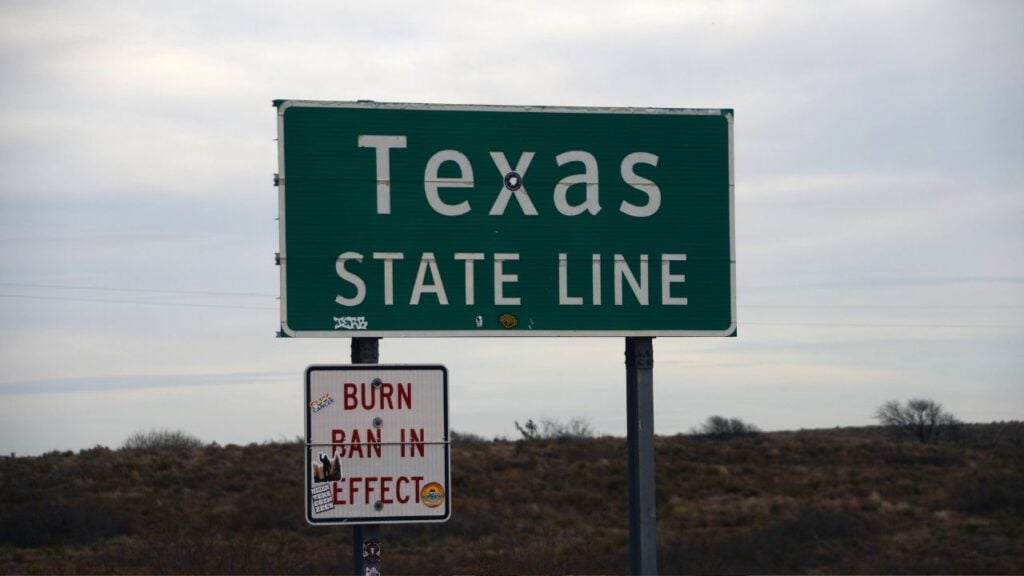
A Fort Worth native rattles off farm-to-market (FM) road directions without blinking, "Take FM 1187 past the feed store, then watch for the water tower."
Twelve years in, and a transplant still can't fake that kind of local knowledge, no matter how hard they practice the route.
12 Texas Habits Transplants Can't Fake No Matter How Hard They Try
