

8 North Carolina Car Repair Bills Drivers Can Refuse to Pay

North Carolina keeps a toll-free hotline for situations like getting ripped off at a car repair shop: 1-877-5-NO-SCAM (the state’s consumer complaint line), printed right on the state’s own auto-repair guidance page.
State law has clear rules on what a shop can and can’t charge you once your car’s already on the lift.
These are the North Carolina car repair bills state law lets a driver refuse to pay in full.
Note: This is general information, not legal advice. North Carolina’s repair shop protections carry their own conditions and dollar thresholds, and rules can change, so confirm current requirements with the North Carolina Department of Justice’s Consumer Protection Division.
1. Repairs You Never Authorized
North Carolina makes it illegal for a shop to bill you for work you never approved.
That’s not a guideline.
It’s written into North Carolina’s Motor Vehicle Repair Act, which bans charging for repairs the customer never expressly or impliedly authorized.
A mechanic who spots a leak mid-job and fixes it without calling first fits that exactly.
So does a $60 line item for “shop supplies” nobody mentioned when you dropped off your keys.
Ask for an explanation of anything you didn’t sign off on, and refuse to pay the part you never agreed to.
2. Charges Beating the Estimate by 10 Percent
A signed estimate in North Carolina comes with a hard ceiling on how far the final bill can rise.
The cap sits at 10 percent above that number, plus whatever extra work you separately authorized.
Cross that line, and the shop needs your OK first, given by phone, mail, or any other reasonable way to reach you, before it can charge you for anything beyond it.
Say no, and you can stop the job right there instead of paying for work you never agreed to.
The Math Behind North Carolina’s 10 Percent Cap
Say your signed estimate for a North Carolina repair came in at $800.
Partway through the job, the shop calls to report a failed part and asks for $150 more, which you approve by phone.
The 10 percent cushion applies to that new total, not the original $800, so the most the shop can legally collect is $1,045.
Anything past $1,045 on your final invoice is the exact overage this rule lets you refuse.
3. New-Part Prices for Used or Rebuilt Parts
Shops in North Carolina can’t swap in a used, rebuilt, salvaged, or straightened part and bill it at new-part prices without telling you first.
State law requires notice to both the vehicle owner and the insurer before making that swap.
The final invoice has to say plainly whether a replacement part was new, used, rebuilt, or reconditioned.
Skip that notice, and you have solid grounds to dispute the charge and demand a refund.
A quote built around a brand-new alternator that turns out to be rebuilt, with no invoice note and no heads-up, is the exact violation this rule targets.
Check the part descriptions on your invoice against what you were quoted, and refuse to pay the new-part markup on a part that was never new.
4. Diagnostic Fees Missing From the Estimate
North Carolina’s written estimate rule covers more than the repair alone.
It has to include the estimated cost of diagnostic work, too.
A shop that hands you a repair estimate and then tacks on a separate diagnostic fee afterward skipped a step state law requires, not a surprise the shop gets to spring on you once your car’s already back together.
Check your original estimate for a diagnostic or teardown line.
If it isn’t there, that fee never belonged on your invoice, and you can refuse to pay it.
5. Estimate Fees Nobody Told You About
A repair shop can legally charge for the estimate itself in North Carolina, covering the inspection and paperwork before any wrench turns, but only under two conditions.
The shop has to disclose the dollar amount of that fee up front, and it has to get your written OK before charging you for it.
Not disclosed, not owed.
Skip either step, and the estimate fee has no legal basis on your bill.
6. Storage Fees Never Spelled Out in Writing
Storage fees have to appear on your written estimate under North Carolina law.
That daily rate kicks in once the shop has told you the car is ready and you haven’t come to get it.
That number has to sit on the estimate before repairs even start, written first and charged later.
A storage fee with no matching line on your original estimate is a charge state law gives you solid grounds to dispute, and to get back if you’ve already paid it.
7. Extra Money Demanded to Release a Paid-Off Car
North Carolina spells out exactly what a shop can hold your car over: The estimate, any extra work you authorized, and up to 10 percent more.
Pay that full amount, and the shop has no legal ground left to keep your keys.
Demanding one more dollar before handing back a paid-up vehicle is its own separate violation under state law, apart from the original overcharge.
Any extra amount asked for at pickup, once you’ve already covered the estimate plus that 10 percent, is money you can flatly refuse to hand over.
8. Lump-Sum Bills With No Breakdown of Costs
Every repair invoice in North Carolina has to itemize the work, not just hand over a single total.
State law calls for a description of what the shop did, plus a line-by-line accounting of labor, parts, and any merchandise supplied, each with its own cost.
A bill reading only “$1,200: repairs” hasn’t met that standard.
You can refuse to pay it until the shop hands over the line-by-line version state law requires.
When the Law Sides With the Shop
North Carolina’s repair-billing rules protect drivers, but they don’t make a valid bill disappear.
The bill still stands.
A shop with an unpaid balance can still file a mechanic’s lien, and under Chapter 44A of the state’s statutes, it can eventually sell the vehicle to collect.
The shop has to notify the state’s motor vehicle division before it can move forward on a registered vehicle.
Once that notice goes out, you have 10 days to request a hearing before any sale can happen.
Active-duty service members get another layer of protection, since federal law requires a court order before a lien can be enforced against their vehicle at all.
Psst! How much do you know about North Carolina car repair bills? Flip these cards and find out.
9 Things That Can Get Your North Carolina Driver’s License Suspended (Besides Drunk Driving)

North Carolina doesn’t need a driving under the influence (DUI) charge on the books to pull a driver’s license.
A courtroom with no car in sight can still end in a suspension, and many drivers never see the trigger coming.
9 Things That Can Get Your North Carolina Driver’s License Suspended (Besides Drunk Driving)
9 North Carolina HOA Rules Homeowners Wish They’d Read Before Signing
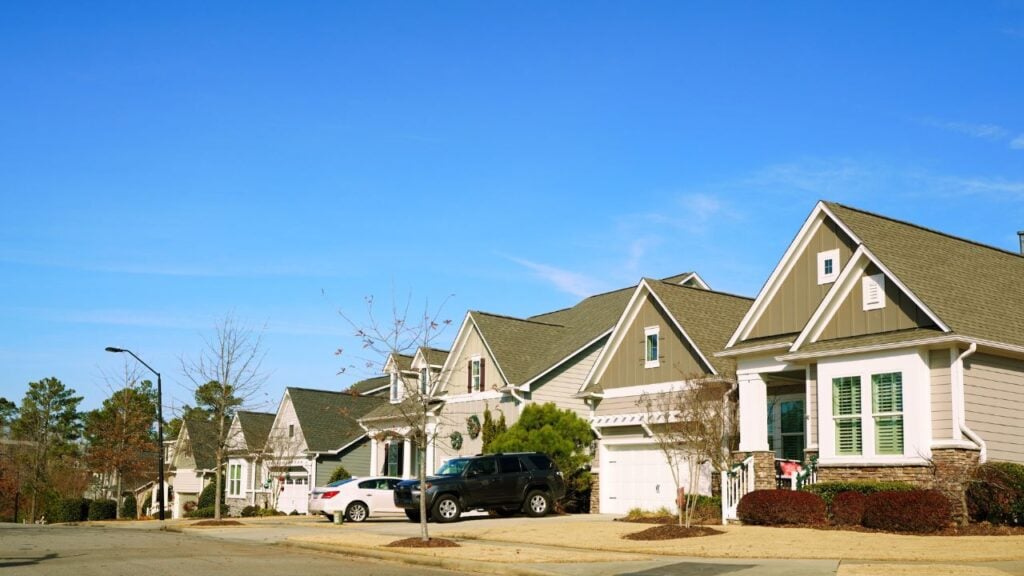
A couple signing closing papers outside Cary skims right past the thick stack tucked under the loan disclosures.
That stack is the homeowners association’s (HOA) declaration and bylaws, and North Carolina law backs every page of it, from the fines a board can charge to the limits on how far it can push them.
9 North Carolina HOA Rules Homeowners Wish They’d Read Before Signing
