
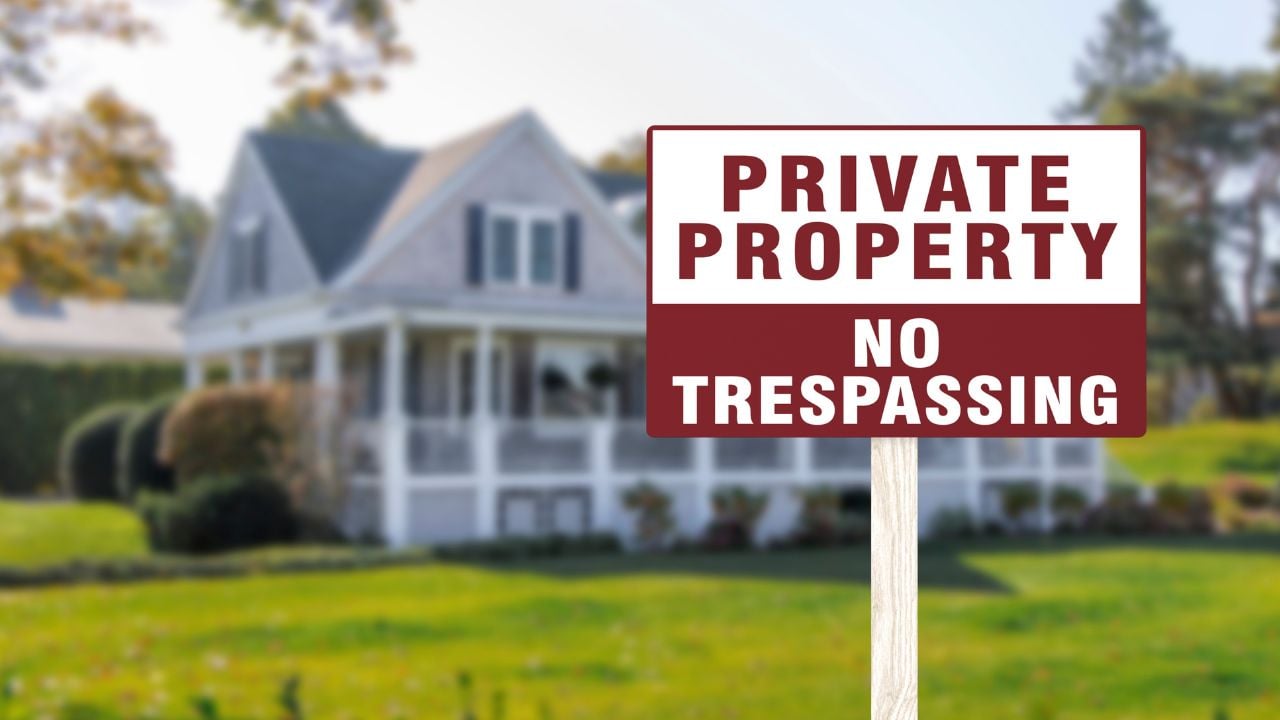
8 North Carolina Squatter Rules Homeowners Learn the Expensive Way

Think a North Carolina homeowner can just call the police the moment a stranger won’t leave?
For years, that call went nowhere.
The state finally built a legal fast lane for exactly this problem, and it comes stitched together with a strict clock, a list of required conditions, and at least one appeal a losing occupant can still file.
Here’s what a North Carolina homeowner needs to know long before a stranger ever tests it.
Note: This is general information, not legal advice. Adverse possession rules and eviction procedures are subject to change.
1. Misjudging the Adverse Possession Clock
Homeowners who let a back lot, an inherited house, or a vacation property sit unused and unchecked can end up losing it under North Carolina’s adverse possession rules, and many don’t find out until a title search turns up trouble.
State law requires 20 years of open, continuous, and “hostile” possession under known and visible boundaries before anyone can claim title through adverse possession.
Twenty years.
That clock shrinks hard if the squatter holds “color of title,” some document, even a flawed one, that makes the land look like theirs.
With color of title, the wait drops to just seven years.
2. Accepting Any Payment From Them
Under North Carolina’s new expedited removal law, in effect since December 2025, a homeowner only gets fast-track protection from someone who has never paid, or been asked to pay, a cent to stay there.
The moment money changes hands, or an owner even asks for it, the law reclassifies that occupant as a tenant under a separate landlord-tenant statute, not an “unauthorized person.”
Homeowners who let a squatter “chip in for utilities” just to keep the peace often don’t realize they’ve traded away their fastest legal option.
Even a tenant who never signed a lease still goes through the slower, standard summary ejectment process, which can run for weeks instead of days.
One payment changes everything.
3. Changing the Locks Yourself
Removing a squatter in North Carolina still goes through the sheriff, not a homeowner’s own toolbox.
A horse farm owner near Davidson found that out firsthand, watching a woman’s visitors roll through her gates for months on a $4.3 million property before deputies finally made an arrest.
She waited for that arrest before she felt safe changing the locks herself.
Homeowners who skip that step, swapping the locks or hauling out someone’s belongings before an order exists, risk a “wrongful removal” lawsuit under the new law.
Not cheap.
Punitive and triple damages are barred under §14-159.56, but the occupant can still recover actual damages for trespass or conversion.
The homeowner can still end up covering whatever it costs to fight it in court.
4. Assuming a Win Ends It
North Carolina lets either side appeal a magistrate’s removal order, so a homeowner’s win at that first hearing isn’t automatically the final word.
The law sends an appeal to district court for a full new trial, not just a review of the paperwork.
That new trial isn’t free for the homeowner either: North Carolina real estate attorneys bill an average of $374 an hour, and even a handful of hours defending the appeal can run past $1,000.
A losing occupant does need to post a bond, a minimum of $10,000, to keep fighting.
That’s serious money, but it also means a determined occupant with the cash can still drag a homeowner back into court months after they thought the case was over.
Plan for it before celebrating.
The Math Behind North Carolina’s Appeal Bond
That $10,000 minimum isn’t fixed under North Carolina’s law.
A magistrate can raise the bond above $10,000 based on the rent the property could reasonably fetch during the appeal.
It can also rise to cover any damage the owner is likely to suffer while the case drags on.
On a pricier home, that math can push the bond well past the minimum, which is exactly why an appeal is far less likely on an expensive property than a cheap one.
Psst! How much do you know about North Carolina squatter law? Take our myth-or-fact challenge and see how many you get right.
5. Missing Their Paper Claim
A homeowner’s fast-track case in North Carolina only works when the occupant has zero legal claim to the property, not even a shaky one.
The complaint has to prove there’s no pending lawsuit, no lease, and no contract for deed connecting that person to the home.
Paperwork works against the owner.
A Wake County dentist found out how expensive the alternative gets after a stranger recorded a fraudulent deed on the dentist’s own house and then claimed the property as her own.
He had to hire an attorney and fight it out in civil court just to get that phony deed declared void.
Real, forged, or somewhere in between, paperwork like that can knock a case out of the fast lane and into a slow, costly lawsuit.
6. Skipping the Formal Notice
North Carolina requires a homeowner to formally allege, in the complaint itself, that they already told the occupant to leave before any judge will hear the fast-track case.
No proof, no case.
That demand is one of ten required allegations the complaint has to include on the form the Administrative Office of the Courts (AOC) publishes for this process, AOC-CVM-407.
A homeowner who calls a deputy without ever documenting a clear, direct demand to leave can watch a magistrate toss the whole filing at the hearing, right back to square one.
Text messages, a dated letter, or a witness who heard the conversation all work as proof.
7. Tossing Out Their Belongings
A homeowner in North Carolina can move an occupant’s leftover belongings to the property line once the court’s deadline passes, skipping the storage locker and the notice period ordinary landlord-tenant law demands.
That’s not how a normal eviction works.
But that protection only holds up if the removal itself was legitimate.
Guess wrong about who counts as “unauthorized,” and the immunity disappears right along with it.
Maybe the occupant secretly had a lease, or some other claim, all along.
Gone.
The owner can end up owing for anything lost, damaged, or destroyed in the process.
8. Renting the Home Short-Term
North Carolina’s new squatter law doesn’t cover everyone who overstays their welcome: Anyone who moved into a property that was open to the public at the time doesn’t count as an “unauthorized person” under the fast-track process, and that surprises vacation-rental owners.
Property owners also have to prove the home wasn’t held open as a general accommodation to the public at the time the person moved in.
A beach house on the Outer Banks or a cabin near Asheville, booked through a short-term rental site, usually fails that test the moment a guest overstays their reservation.
It doesn’t qualify.
Owners of those properties are stuck using the slower, standard eviction process against a guest who won’t check out, the same one landlords have always used against a holdover tenant.
8 Money Mistakes North Carolina Renters Make Before Signing a Lease

A renter in Durham signs a lease at the kitchen table without ever reading page three, the page holding the dollar limits North Carolina law enforces.
That page rarely gets a second look before the pen goes down, and skipping it can cost a renter hundreds of dollars before they unpack a single box.
8 Money Mistakes North Carolina Renters Make Before Signing a Lease
8 North Carolina Beach Towns Tourists Are Slowly Ruining for Everyone Else

Tourists are loving North Carolina’s prettiest beach towns to pieces, and the ferry line to Ocracoke proves it: The wait for a boat can outlast the whole drive that got a visitor there.
Locals watch their own hometowns fill up past capacity every summer, one overcrowded dock and parking lot at a time.
8 North Carolina Beach Towns Tourists Are Slowly Ruining for Everyone Else
