
8 Overtime Rules California Workers Don’t Realize Protect Them

California’s minimum wage rose to $16.90 an hour on January 1, 2026.
That same number set a new $70,304 salary floor for the year, according to the state’s Department of Industrial Relations.
Clearing it doesn’t settle whether you’re owed overtime.
These are the overtime rules many California workers don’t realize protect them.
Note: This is general information, not legal advice. Wage and overtime rules are subject to change, so confirm your situation with the California Labor Commissioner’s Office.
1. Daily Overtime After 8 Hours
Overtime kicks in the moment a worker’s shift runs past eight hours in a single day.
Many workers assume overtime only starts after 40 hours in a week, the federal standard other states default to.
Not in California, it doesn’t.
A worker who logs ten hours on a Tuesday still earns two hours of time-and-a-half pay from that single shift.
The weekly total never has to come close to 40 hours for that extra pay to apply.
2. Double Time After 12 Hours
The same California rule doesn’t stop at time and a half.
Once a shift crosses twelve hours in a single day, every additional hour pays double the worker’s regular rate.
That’s double pay.
Picture a retail worker held for a fourteen-hour shift during a holiday rush.
Regular wages cover the first eight hours.
The next four hours pay time and a half.
The last two hours pay double time.
3. Seventh Workday Rule
A lesser-known California rule kicks in on a worker’s seventh straight day inside one workweek.
Work that seventh day in a row, and a separate overtime rule kicks in no matter how few hours the other six days totaled.
The seventh day is different.
The first eight hours worked that day pay time and a half.
Anything past eight hours that same day pays double time.
A restaurant server who picks up a seventh straight shift to cover a coworker earns overtime on that entire day, even if the week’s total hours stayed reasonable.
4. Alternative-Workweek Vote
Employers can’t just announce a switch to four ten-hour days for workers and skip the daily-overtime math above.
State law requires a two-thirds vote of the affected work unit, cast by secret ballot, before that kind of schedule change becomes legal.
No vote means no exception.
An employer who simply reassigns a crew to longer shifts without holding that election still owes daily overtime, even if the whole crew went along with it.
5. Bonuses Inside Your Overtime Rate
A worker’s hourly wage in California doesn’t get to sit alone when it’s time to calculate overtime.
California folds a nondiscretionary bonus, the kind promised in advance for hitting a production goal or an attendance target, into a worker’s regular rate before any overtime math happens.
Not automatically, though.
Skip that step, and the employer shorts every overtime hour on the check.
The Math Behind a Higher Overtime Rate
California folds a nondiscretionary bonus into a worker’s hourly rate before calculating overtime pay.
Take a worker earning $20 an hour who also collects a $200 weekly production bonus.
Divide that bonus across a standard 40-hour week, and it adds $5 to the hourly rate.
The true regular rate becomes $25 an hour, which makes the overtime rate $37.50, not $30.
6. Salaried-Exempt Myth
State law doesn’t treat a salary as automatic proof that overtime rules no longer apply.
An employer has to clear two separate tests before calling a worker exempt: A minimum salary and a strict duties test.
The salary line for 2026 sits at $70,304 a year, twice the state’s minimum wage for full-time work.
Salary alone isn’t enough.
The duties test is the part many salaried workers never see coming.
California requires more than half their time on the job to go toward exempt-level work, managing, deciding, exercising judgment, not just carrying a title.
A supervisor who carries the title “assistant manager” but spends more than half of every shift ringing up customers is still owed overtime.
Salary or job title doesn’t change that.
7. Three-Year Filing Window
The law gives a worker a clear window to chase down unpaid overtime instead of just letting it go.
A wage claim for unpaid overtime has to reach the Labor Commissioner’s Office within three years of the violation, not three years from the day the job ends.
The clock starts on the day that paycheck falls short.
The Labor Commissioner’s Office investigates every claim and usually sets up a settlement conference between the worker and the employer first.
A hearing follows only if that conference doesn’t resolve things.
California law also states plainly that every protection on this list extends to a worker regardless of immigration status.
There are no exceptions.
8. Overtime Without Approval
Employers can’t erase a worker’s overtime pay just because nobody approved the extra hours first.
State wage orders define hours worked as any time an employer suffered or permitted a worker to work, whether or not required to do so.
The rule holds either way.
A warehouse packer who stays forty minutes past a nine-hour shift to finish a pallet still earns that extra half hour at time and a half.
The supervisor never signed off on the extra time.
A manager can still write the worker up for breaking a no-unapproved-overtime policy.
The paycheck for those hours doesn’t change because of it.
Psst! California plays by different overtime rules than federal law does. Compare the two side by side and see where a job stands.
Missed-Break Premium Pay
California treats a missed meal or rest break as unpaid work that comes with a separate price tag.
State law requires an employer to pay one extra hour of wages at the worker’s regular rate for a missed meal break.
A separate extra hour applies for a missed rest break, on any workday either one goes missing.
That’s separate money.
It sits on top of the hours already worked that day, capped at two extra hours daily, one for meal breaks and one for rest breaks.
A worker who misses both a meal break and a rest break in the same shift is owed two of those extra hours, one for each category.
A second missed rest break in that same shift doesn’t add a third hour.
Waiting-Time Penalties
California backs every rule above with a penalty that lands hardest on the way out the door.
If an employer willfully leaves earned overtime out of a worker’s final paycheck, the penalty is steep.
The employer has to keep paying that worker’s daily wage for up to 30 days.
Every late day costs more.
A worker who leaves a job owed $9,000 in unpaid overtime and gets nothing in the final paycheck doesn’t just lose that $9,000.
The penalty can add the value of 30 more days of wages on top of it.
6 Rules California Landlords Have to Follow Before Showing an Occupied Unit

A renter comes home to find the blinds open and a chair pushed in wrong, proof a landlord walked someone through the kitchen that afternoon.
More than 44% of California households rent instead of own, and state law spells out exactly how much notice and access a landlord gets before that visit is legal.
6 Rules California Landlords Have to Follow Before Showing an Occupied Unit
6 Fuel Price Assumptions That Cost Californians at the Wrong Chain
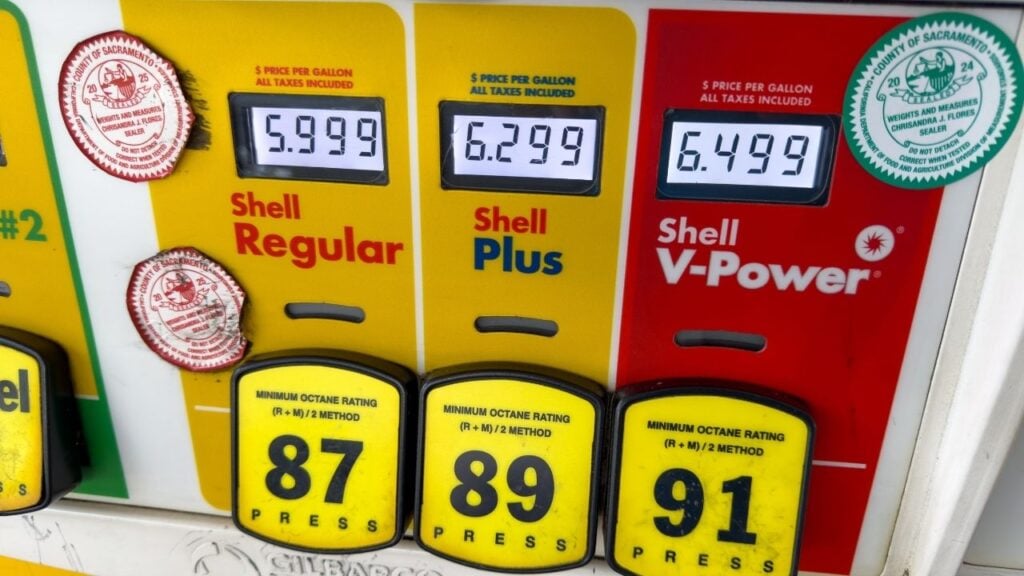
California’s gas tax runs 63.4 cents a gallon, the highest base rate in the country, sitting underneath every price on every sign before a single station adds its markup.
A rewards app or a loyalty discount barely dents that 63-cent gap, and guessing wrong about the cheapest chain adds up fast at the pump.
6 Fuel Price Assumptions That Cost Californians at the Wrong Chain
