
8 Renovations Coloradans Say Are Miserable to Live Through

Colorado’s state geologists say the ground beneath a house does more damage every year than tornadoes, floods, earthquakes, and hurricanes combined.
Fixing that damage means living through the work.
These are the renovations Coloradans say are miserable to live through.
Note: This is general information, not legal advice. Permitting, zoning, and homeowners association rules vary by city and county and are subject to change.
1. Renovating a Denver Landmark
Historic exterior renovations inside one of Denver’s landmark districts need the Landmark Preservation Commission’s sign-off before a contractor can pull a building permit.
That review comes on top of the ordinary permitting every other Denver renovation already requires.
One renovation on Denver’s 7th Avenue Parkway, a designated landmark block, pulled its permit in 2019 and then stalled out with the house half-finished.
The boarded-up house sat that way so long that the city listed it as neglected and derelict by 2024.
Frustrated neighbors started leaving bags of dog waste on its front steps as a protest.
Neighbors are still leaving bags.
2. Backyard Pergola That Turned Into a Legal Fight
Denver homeowner EJ Braquet’s small home renovation was just a pergola, built over his back patio in 2023 to shade his aging mother.
A neighbor reported the unpermitted structure to the city.
The retroactive permitting process the city required turned up two more problems: A garage and a shed, both built by a previous owner, also violated zoning code.
Denver’s Board of Adjustment approved a variance for the garage but denied one for the shed, ordering Braquet to move it to a corner spot blocked by a mature tree.
CBS Colorado reported that 2.5 years in, Braquet had spent nearly $2,000 in fees and hundreds of hours on paperwork, on top of being required to hire an architect for building drawings.
Denver City Councilman Kevin Flynn is now looking at protections for homeowners caught the same way.
The pergola still lacks permits.
3. Fixing a Cracking Foundation
Foundation and structural repairs usually start with the ground itself, not bad renovation workmanship.
The Colorado Geological Survey says expansive soil damages homes, roads, and buildings worse every year than tornadoes, floods, earthquakes, and hurricanes combined.
The survey’s case files show what that costs in Colorado.
A state college library in the southern part of the state needed $170,000 to repair expansive-clay damage.
One school district near Denver now spends an extra $42,000 per school just to keep the damage from happening in the first place.
A homeowner’s version of that repair means jacking up the slab and living around a crew that drills piers under the house for weeks.
A full underpinning job like that typically runs $2,225 to $8,133 nationally.
The state’s clay-heavy soil is exactly the kind of ground that drives a repair toward the top of that range.
Some live through it twice.
4. Renovating Under HOA Rules
Colorado’s homeowners associations (HOAs) have to let residents add solar panels and drought-tolerant landscaping under a 2021 state law, but that hasn’t ended the fights over how a renovation looks.
Lawmakers passed House Bill 21-1229 that year after enough of those fights piled up, forcing HOAs to allow xeriscaping, artificial turf, and solar panels.
The law didn’t end every fight.
Green Valley Ranch’s homeowners association in Denver fined resident Darla Nowak $1,400 over a temporary fence she put up for her small dogs, 9News reported.
Fighting that fine in court added another $14,000 in attorney fees, and Nowak took out a loan to cover the bill and keep her home.
The fence cost her $15,400.
What Colorado’s Solar Law Doesn’t Cover
Colorado’s 2021 law stops a homeowners association from banning solar panels or xeriscaping outright, but it doesn’t stop the fight over how a renovation looks.
An HOA can still set reasonable rules on where panels sit, how big they’re allowed to be, and how they’re screened from the street.
Those rules just can’t raise the cost or cut into how well the panels work.
An HOA can still make a homeowner move an approved solar array to a different roof plane.
5. Finishing a Basement
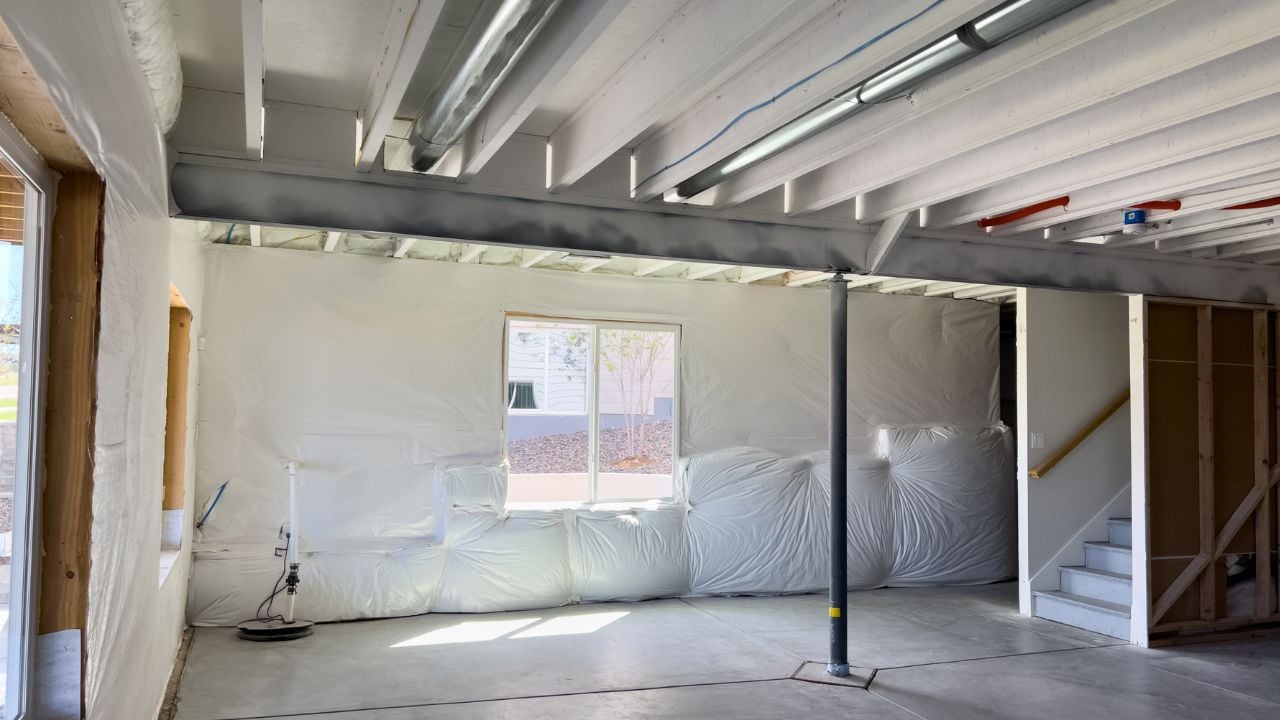
Basement-finishing renovations routinely collide with something the framing crew can’t see: Radon.
Every county in the state falls into the highest radon zone tracked by the Environmental Protection Agency (EPA).
Colorado’s health department says about half of homes test above the federal action level.
That means a straightforward basement remodel can turn into a mid-project mitigation retrofit, with a crew drilling through the slab you just poured to install a suction system.
A sub-slab system like that typically runs $800 to $2,500, on top of whatever the basement project already cost.
The drywall gets cut first.
6. Renovating Under Colorado’s Wildfire Code
Colorado’s first statewide wildfire-ready building code took effect in 2026 for new construction and significant renovations, and it catches more remodel jobs than homeowners expect.
Repair more than 25 percent of a home’s exterior, roof included, and the code requires bringing the rest of it up to the new fire-resistant standard too.
A hail-damaged roof is a common way a homeowner hits that threshold without ever planning to replace an entire roof.
Green Mountain Falls Mayor Todd Dixon has warned residents the code, combined with other state requirements, could push a full rebuild past what an insurance payout covers.
El Paso County Commissioner Bill Wysong says the added inspection and compliance costs land on the homeowner, especially in small fire districts with little state money to help cover them.
Nationally, a Headwaters Economics analysis puts the added cost of building to wildfire standards at roughly 2.7 percent over standard construction, though officials in Colorado’s mountain towns aren’t convinced that estimate holds up locally.
The repair estimate rarely stops at the roof.
7. Waiting on a Denver Permit
Additions and major remodels are the Denver renovations that often get stuck waiting on a permit.
Large residential permits were averaging 271 days in 2025, and some projects sat for more than two years before anyone broke ground.
The delays cost developers money and pushed some projects to nearby suburbs instead.
Denver Mayor Mike Johnston ordered city staff to cap that review at 180 days in 2025.
Shovels stayed in the truck for another year.
Psst! How much do you know about Colorado’s historic homes and hotels? Take our quiz and see if you can ace it.
Quiz
Colorado Home History IQ
Answer these questions on Colorado’s historic homes, hotels, and mining-town mansions. We bet you can’t get them all right. Prove us wrong?
The stone walls at the Manitou Cliff Dwellings near Colorado Springs are about 1,000 years old, but they didn’t start out where visitors see them today. Where were they first built?
8. Hiring the Wrong Contractor
Colorado's Better Business Bureau tracks a seasonal surge in complaints every time home-improvement season starts, from kitchen remodels to landscaping jobs.
Denver7 investigators have documented Colorado homeowners who lost tens of thousands of dollars to contractors who vanished mid-project, leaving gutted kitchens and half-finished additions behind.
The Better Business Bureau's advice is blunt: Skip the contractor who wants a big deposit upfront, and verify the license before signing anything.
That contractor never called back.
A homeowner who loses a contractor mid-project is often stuck living around open walls and missing cabinets for months while they hire someone new to finish the job.
Some pay twice for the same kitchen before a new crew ever finishes it.
9 Colorado Foods and Drinks That Confuse Every Out-of-Stater

A newcomer scans a Colorado bar menu and points at Rocky Mountain oysters without knowing what's on the plate.
That's just the start of the ordering mistakes visitors make at Colorado bars and diners.
9 Colorado Foods and Drinks That Confuse Every Out-of-Stater
