
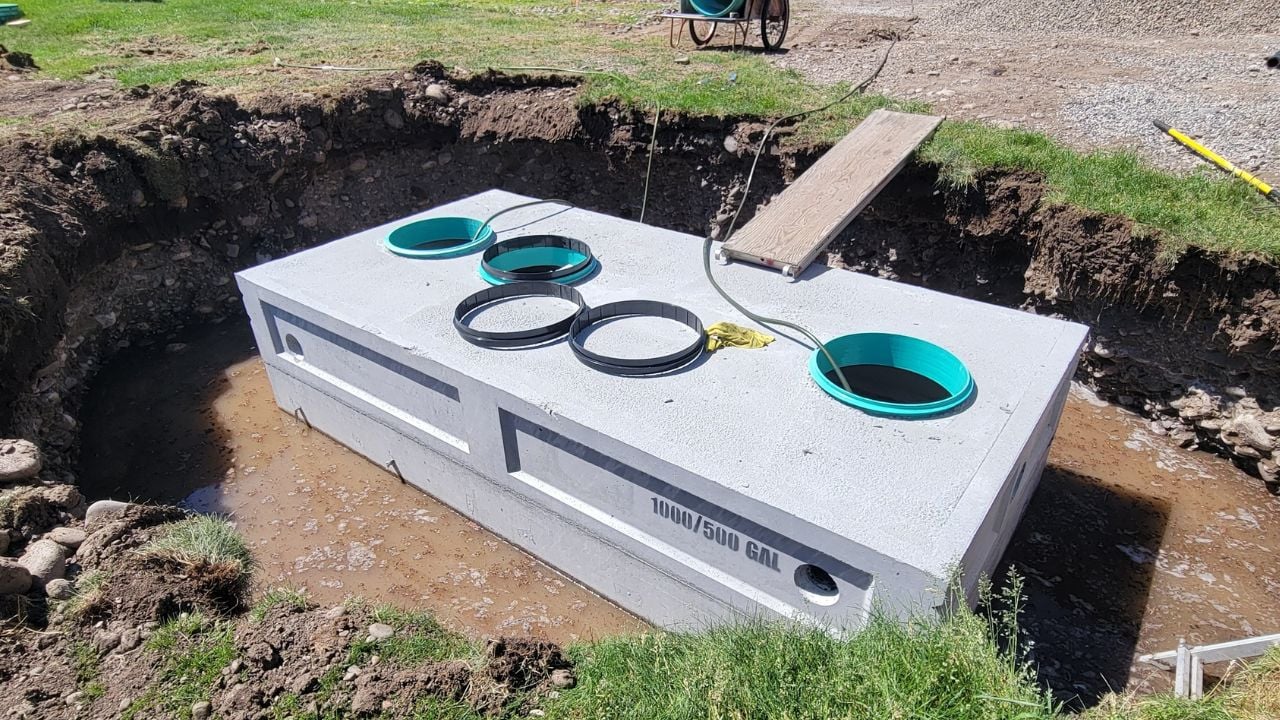
8 Septic and Well Checks North Carolina Homebuyers Skip at Their Own Risk

About 2.4 million North Carolinians pour a glass of water straight from a private well, and the state only requires at most one test forever to make sure it’s safe to drink.
More frequent checks fall on the buyer. Many skip it.
These are the septic and well checks that many North Carolina homebuyers skip at their own risk.
Note: This is general information, not legal advice. Septic and well permitting rules vary by county and are subject to change, so confirm the current requirements with your county environmental health department.
1. County Septic Permit and Bedroom Cap
North Carolina ties every septic-served home to a county permit that sets a hard cap on how many bedrooms the house can legally have.
That cap comes from a soil evaluation the county’s environmental health department ran years, sometimes decades, before a buyer ever walked the lot.
A four-bedroom farmhouse outside Rowan County might carry a permit written for three, if a previous owner finished an attic or converted a den without ever calling the health department.
The listing won’t say that.
Advertise or sell that home as a four-bedroom without correcting the record, and the North Carolina Real Estate Commission treats the gap as a misrepresentation.
Ask for the permit before closing, not after.
It’s the one document that tells a buyer how many bedrooms they bought.
The Math Behind a Septic Permit’s Bedroom Cap
North Carolina designs every septic system around 120 gallons of wastewater a day for each bedroom.
A three-bedroom permit means the system was built to handle 360 gallons a day, not a single gallon more.
Add a bedroom without a new permit, and the system takes on flow it was never sized for, which is exactly how a drain field fails early.
2. Independent Well Water Test
About 2.4 million North Carolinians drink water straight from a private well, and the state leaves it up to the homeowner to check what’s in it.
North Carolina requires a newly drilled well to be tested for bacteria and chemical contaminants within 30 days of construction.
That’s the only test the state ever mandates, and it only covers brand-new wells.
A well that’s been drawing water for 20 years and changes hands in a sale never has to be tested at all unless the buyer’s loan says otherwise.
Loans backed by the Federal Housing Administration (FHA), the Department of Veterans Affairs (VA), and the U.S. Department of Agriculture (USDA) all require a lab test before closing, screening for coliform bacteria, E. coli, nitrates, nitrites, and lead.
A conventional loan or a cash sale can close without any of that.
Nobody’s checking.
A buyer who orders an independent test anyway finds out before move-in whether the water needs a filter, a shock treatment, or a new well, not after the first run for bottled water.
3. Septic Tank’s Pump-Out Records
North Carolina septic tanks need pumping every three to five years, a job that costs $300 to $700 for an average household.
Sludge doesn’t stay put forever.
A tank that’s gone well past that window is carrying more solids than it was built to hold.
Ask the seller for maintenance records the same way a buyer would ask for furnace service records: When the tank was last pumped, who did the work, and whether it’s ever backed up.
No records often means no maintenance, not just no paperwork.
Skip this check, and the new owner inherits whatever the last several years left behind, plus a repair bill that runs $600 to $3,000 once solids reach the pipes and baffles.
4. Walk of the Drain Field
The signs of a failing septic system drain field show up in the yard, not inside the house, so North Carolina buyers have to walk the lot to catch them.
Soggy ground over the lines, a sewage smell after rain, or a stripe of unusually green grass across the yard all point to a drain field that’s already struggling, according to North Carolina State Extension.
Walk it before closing, not after the first hard rain reveals what a quick look would have caught.
That’s not a small fix.
HomeGuide puts a North Carolina drain field replacement at $3,000 to $15,000, depending on how much of the yard has to come up.
Psst! How septic-and-well ready is your North Carolina home purchase? Run through this checklist and see where you stand.
5. Setback Distances Between the Well and the Septic System
North Carolina sets a minimum distance between a well and a septic system for a plain reason: Keeping drinking water away from wastewater.
Wake County’s own rules put the standard well-to-system setback at 100 feet, dropping to 50 feet for a repair system, and every North Carolina county works from the same state minimums.
Older properties, especially lots platted before those rules tightened, sometimes fall short.
The gap doesn’t close alone.
A well and septic system that don’t meet the setback can block the county from approving a repair permit or an addition later, leaving a buyer stuck maintaining a nonconforming setup instead of fixing it.
6. Well’s Construction Record
Every well drilled in North Carolina is supposed to end up on the state’s Well Construction Record (GW-1), filed with the Department of Environmental Quality.
That record shows the well’s depth, its casing, and how it was sealed against the soil around it.
North Carolina requires that casing and seal to keep contamination out of the water supply.
Some wells drilled decades ago, especially those a homeowner put in without ever calling the county, don’t have a record on file at all.
That’s not just paperwork.
Without a record on file, nobody can confirm the well was ever built to meet that standard. That’s a gap that can complicate an appraisal, stall a resale, or leave a buyer liable for a contamination problem the record would have caught.
7. Whether the Septic Qualifies as an “Existing System”
North Carolina treats older septic systems under a different legal standard than new systems.
State law says any wastewater system installed before July 1, 1977, or a system whose original permit has gone missing, doesn’t automatically meet current standards just because it’s been working fine.
County environmental health staff have to verify the system before treating it as a legal existing system.
If nobody can find the paperwork, that can mean digging up the tank and distribution box just to confirm they’re there.
That’s not a weekend project.
Skip this check, and a buyer can inherit a septic system that looks fine at closing but can’t legally be repaired, expanded, or replaced without the county starting from zero.
8. Lot’s Backup Repair Area
Most North Carolina septic permits issued since the early 1980s set aside a second patch of land, called a repair area, reserved for a replacement drain field for when the original fails.
State Extension guidance protects that ground from excavation, from a pool, from a garage, from anything that would ruin it for future use.
Many owners build there anyway.
A shed, a driveway extension, or a patio poured over the repair area doesn’t show up on a walkthrough, but it can leave a failed system with nowhere left to legally go.
Ask the county for the repair area’s location before closing, and confirm nothing already sits on top of it.
How North Carolina’s Permit Process Differs From a Home Inspection
North Carolina’s septic permitting process has nothing to do with what a home inspector checks, and a buyer who assumes the two overlap can close on a house with neither confirmed.
A new septic system passes through three separate permits before anyone flushes a toilet: Improvement, construction authorization, and final operation.
Not a home inspection.
A standard home inspection in North Carolina covers the roof, the electrical panel, and the furnace, but it routinely leaves out the well and the septic system unless a buyer pays extra for a specialist.
Wake County makes the split explicit on its own website: The county doesn’t run point-of-sale septic inspections at all, and that work falls to a private, certified septic inspector the buyer has to find and hire.
A general home inspector spends a few hours walking through the house and writes up what’s visible.
Nobody on that visit is pulling septic permits, walking a drain field, or running a water sample unless the buyer added it to the contract.
8 North Carolina Beach Towns Tourists Are Slowly Ruining for Everyone Else

Tourists are slowly overrunning North Carolina’s beach towns, one ferry line at a time.
The wait for a boat to Ocracoke can outlast the whole drive that got a visitor there in the first place.
8 North Carolina Beach Towns Tourists Are Slowly Ruining for Everyone Else
8 Retirement Account Mistakes North Carolina Workers Make in Their 50s

North Carolina’s flat income tax rate keeps dropping every year, and many workers assume that break covers everything in their retirement account.
It doesn’t touch a 401(k) or individual retirement account (IRA) withdrawal, and workers in their 50s find that out first.
8 Retirement Account Mistakes North Carolina Workers Make in Their 50s
