

8 Texas Towing and Storage Charges Drivers Pay Without Knowing They Can Challenge Them

Texas caps what a storage lot can charge for holding a towed car at $22.85 a day.
Not every lot mentions that number out loud.
A driver who gets towed in Texas can end up paying more than the law allows and never know there was ever a cap to point to.
These are the Texas towing and storage charges state law lets a driver push back on, cap by cap.
Note: This is general information, not legal advice. Towing and vehicle storage fee caps adjust over time, so confirm the current amounts with the Texas Department of Licensing and Regulation.
1. Catching the Tow Before It Leaves
A driver still gets a free pass the moment a tow truck hasn’t finished hooking up their car, under Texas law.
If the vehicle isn’t fully attached to the truck yet, the driver can walk it away without paying anything.
No fee at all.
Once the car is hooked up but the truck hasn’t pulled out of the lot, a driver can still get it back for the $135 drop fee the state caps for anything 10,000 pounds or less.
A heavier vehicle’s cap rises from there, up to $190 for anything over 10,000 pounds and $244 once the gross weight passes 25,000 pounds.
Many drivers pay the operator’s full quoted tow bill instead because nobody at the gate mentions the second option.
A driver who already paid that full bill anyway can still challenge it after the fact and demand a refund down to the drop-fee amount.
The cap applies whether or not the lot mentioned it.
2. Card Surcharges Above the Cap
Every tow operator in Texas has to accept a credit card or debit card for the drop fee, not just cash.
The rule comes straight from the Texas Department of Licensing and Regulation (TDLR).
A driver who only has a card in their wallet doesn’t need to find a cash machine to leave the lot.
Cash isn’t the only option.
A lot that waves off a card and demands cash anyway is breaking its own license terms, not stating a policy.
TDLR does let a facility add a card surcharge on top of any towing or storage cost paid by card, but only up to whatever its own card processor charges for the swipe.
A flat “convenience fee” that runs higher than the facility’s actual card-processing cost is an overcharge, and a driver can dispute it and get the padding back.
3. Storage Fees Above the Daily Cap
The daily rate a Texas storage facility can charge tops out at $22.85 for a car or truck 25 feet or shorter.
Anything longer tops out at $39.99 a day.
That ceiling adjusts for inflation every couple of years, so it’s the current number that matters, not whatever a driver remembers from an old tow.
A facility can hang any number it wants on the office wall.
That’s not the law.
A driver billed above the cap can file a complaint with TDLR, which treats an overcharge as a licensing violation that can trigger fines against the facility.
4. Two Charges for One Day of Storage
A one-time impoundment fee sits on top of that daily storage rate, and Texas caps it at the same ceiling as a single day of storage.
Only once.
That impound charge belongs on the bill for the day the vehicle arrived, never repeated on any day after it.
A driver looking at a bill with a separate impound line and a full first day of storage stacked on top of it can challenge the total.
Filing a TDLR complaint is the next step if the facility won’t correct it.
Psst! How much do you know about Texas registration and inspection rules? Take our quiz and see how many you can get right.
Quiz
Texas Registration IQ
Answer these questions on Texas registration, inspections, and license rules. We bet you can’t get them all right. Prove us wrong?
Starting January 1, 2025, Texas eliminated the physical safety inspection non-commercial vehicles used to need before registering. What replaced it?
5. Notification Fees Above the Cap
A storage facility can charge a one-time notification fee for mailing or publishing notice to a vehicle's owner and any lienholder, capped at $50 under Texas rules.
Once the cost of publishing that notice runs higher than half the $50 cap, the facility can add the full publication cost on top of the fee, not just the difference above half.
Otherwise, $50 is the ceiling.
TDLR sets that number in its own official fee schedule.
Any other charge that isn't on the state's approved list, whether it's labeled an admin fee, a processing fee, or a paperwork fee, isn't legal to bill at all.
Texas bars a facility from charging for anything the state hasn't put on that list.
6. Campus Tow Fees Above the Cap
A college or university can tow a vehicle off its own parking lot, but it can't quote a student or a visitor the same rate a commercial tow yard charges downtown.
Texas caps that campus rate at 75% of the private-property tow maximum, or $191.25.
A driver towed from a campus lot who gets billed the full commercial rate is being charged for a cap the school doesn't get to skip.
A quarter off the top.
7. Disputing the Tow at a Hearing
A driver in Texas has 14 days to request a hearing that can challenge not just the tow but every charge that came with it.
The hearing decides whether the tow itself was ever justified in the first place.
A judge who hears the case can order the towing and storage fees refunded, along with court costs, if the driver proves there was no probable cause for the tow.
That request goes to a Justice of the Peace court, not to the tow company or the storage lot.
The company doesn't decide.
How Texas Counts the 14-Day Clock
The 14-day window for a Texas tow hearing starts on the date the vehicle was removed, not the date a driver finds out where it went.
Miss the deadline, and the right to a hearing is gone, even if the tow itself was never justified.
Once the court receives a timely request, state law requires the hearing itself within 21 calendar days, so the whole process moves fast in both directions.
A hearing isn't a guaranteed win.
But even when the tow itself holds up, the same judge can still order back any amount charged above what state law or a local ordinance allows.
8. Countdown Before Your Car Sells
A storage facility has to send a second notice, then wait 30 days before treating an unclaimed vehicle as abandoned and selling it at public sale, under Texas law.
Claim the vehicle before that window closes, and the sale never happens.
After that, ownership is gone.
Even then, that sale doesn't cancel what the facility owes back.
The clock resets with each new notice, so a driver who never received the first letter still has a chance to catch the second notice before the deadline passes.
That leftover balance is owed to the vehicle's owner or any lienholder, not the storage lot, no matter how the sale played out.
A driver who never asks about it simply lets the storage lot keep money that was never the lot's to take.
9 Texas Toll Road Rules That Catch Even Longtime Drivers Off Guard
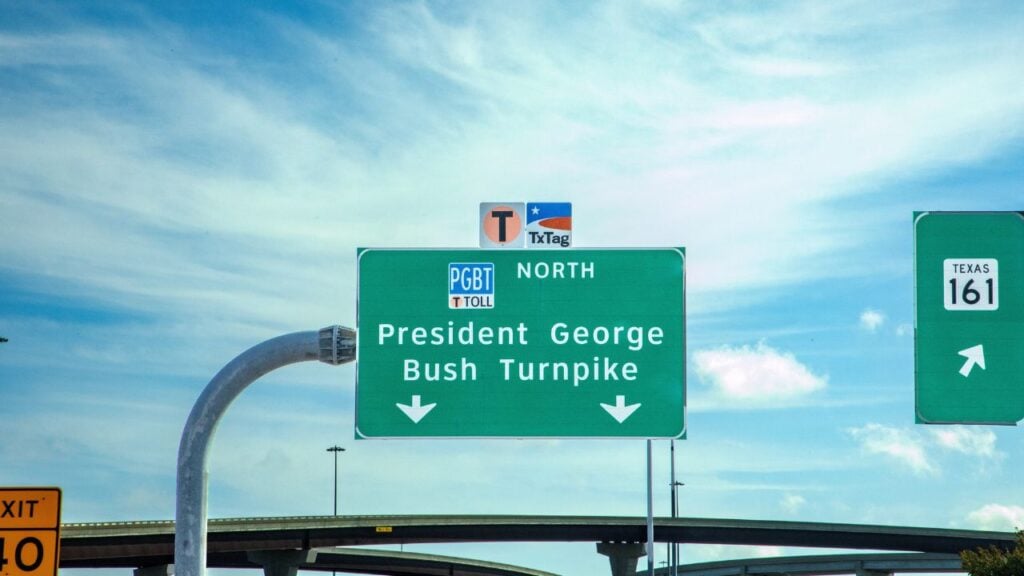
Texas runs its toll roads through half a dozen separate agencies, and not one of them follows the same rulebook.
A driver who's paid Texas tolls for twenty years can still get caught by a rule that costs money, or miss a perk that would have handed some back.
9 Texas Toll Road Rules That Catch Even Longtime Drivers Off Guard
The Most Expensive States to Own a Car, Ranked. Here's Where Texas Falls

Iowa drivers spend just $3,261 a year to keep a car legal, insured, and running, the cheapest total in the country.
A new ranking lines up exactly how much drivers pay for insurance, gas, maintenance, and registration in all 50 states, and Texas doesn't land where you'd expect.
The Most Expensive States to Own a Car, Ranked. Here's Where Texas Falls
