

8 Things California Home Sellers Have to Disclose That Surprise Buyers

Most home sellers expect to mention a leaky roof or a cracked foundation.
But Californians selling a house may be surprised how much more the law asks them to tell a buyer.
Here’s what to know before you list.
Note: This is general information, not legal advice. Disclosure rules and forms are subject to change.
1. Noncompliant Plumbing Fixtures
Your disclosure duty covers the toilets, showerheads and faucets in your house.
Under Civil Code section 1102.155, you have to tell a buyer in writing whether the property includes any noncompliant plumbing fixtures.
Civil Code section 1101.4 required owners of single-family homes to replace those fixtures by January 1, 2017.
The law defines a noncompliant fixture by how much water it uses.
A toilet rated for more than 1.6 gallons a flush qualifies, and so does a showerhead above 2.5 gallons a minute.
An interior faucet above 2.2 gallons a minute does too.
2. Former Ordnance Locations
Home sellers can owe a buyer notice about land once used for military training.
The law defines an ordnance location as land an agency has identified as once used for military training that may contain potentially explosive munitions.
If you have actual knowledge of a former federal or state ordnance location within one mile of your property, Civil Code section 1102.15 requires written notice before title transfers.
In 2021, the Army said cleanup of the former Fort Ord’s munitions impact area had eight to 10 years to go.
3. A Death on the Property
A death in the house can fall inside your disclosure duties, and the law draws a three-year line.
Civil Code section 1710.2 says you don’t have to tell a buyer about a death that happened more than three years before their offer.
Inside that window the statute gives you no such protection, and the general duty to disclose material facts can apply.
A 1983 California appeals court decision dealt with a seller’s silence about a death.
The buyer sued after learning the seller never mentioned that a woman and her four children had been murdered at the house 10 years earlier.
The court said a seller has to speak up about facts that materially affect a home’s value or desirability when the seller knows them and the buyer can’t readily learn them.
4. Water Heater Bracing
A home seller’s water heater has to be braced, anchored or strapped to resist falling or horizontal displacement in an earthquake, under Health and Safety Code section 19211.
The rule applies to standard water heaters up to 120 gallons.
You also have to certify to the buyer, in writing, that your water heater meets that rule.
That certification can sit in the sales contract, the receipt for deposit or a transfer disclosure statement.
Psst! How much do you know about California seller paperwork? Flip these cards and see if you can spot the myths.
5. A Megan’s Law Notice
Seller disclosure in a contract for a one-to-four-unit home has to include a Megan’s Law notice in type no smaller than 8-point.
The notice points buyers to the Department of Justice website at meganslaw.ca.gov.
Depending on an offender’s criminal history, the site shows either an address or a community and ZIP Code.
You deliver the notice with the contract, and after that you aren’t required to give a buyer more information about registered sex offenders nearby.
6. A Supplemental Property Tax Notice
Your disclosures to a buyer include a notice about supplemental property tax bills, under Civil Code section 1102.6c.
Under California property tax law, the assessor revalues a home when ownership changes.
Because of that, the buyer may receive supplemental tax bills, depending on when their loan closes.
If a buyer pays property taxes through an impound account, the lender won’t pay a supplemental bill, so the buyer pays the tax collector directly.
You hand over the notice; the bill is your buyer’s.
How a Supplemental Tax Bill Adds Up
A supplemental tax bill covers only the gap between a home’s old assessed value and its new one, according to the California State Board of Equalization.
Say a house was assessed at $400,000 and sells for $700,000.
The assessor taxes the $300,000 difference. At the 1.025% rate the board uses in its example, that gap works out to about $3,075 a year before proration.
A change of ownership from January through May brings two supplemental bills. A change from June through December brings a single bill.
7. Natural Hazard Zones
Your Natural Hazard Disclosure Statement tells a buyer which hazard zones your house sits in.
Under Civil Code section 1103.2, the statement covers special flood hazard areas, dam failure inundation areas, fire hazard severity zones, wildland areas with substantial forest fire risk, earthquake fault zones and seismic hazard zones.
A licensed expert who prepares a natural hazard report has to add more notices when they apply, and three of them stand apart.
The first covers a house in an airport influence area.
The second flags farm or ranch land on a county Important Farmland Map within one mile.
The third applies within one mile of a mine that has reported its location.
You deliver the statement to your buyer.
8. The Transfer Disclosure Statement
The Transfer Disclosure Statement is the form California’s seller disclosure article prescribes, and Civil Code section 1102 applies that article to single-family residential property.
You have to deliver the completed statement as soon as practicable before title transfers.
If the statement reaches the buyer after an offer, the buyer gets a cancellation window, and it runs shorter for in-person delivery than for mailing.
The clock starts only when Sections I and II of the form, plus Section III if an agent represents you, are completed and delivered.
Psst! How much do you know about California property law? Take our quiz and see if you can ace it.
Quiz
California Property IQ
Answer these questions on California property law. We bet you can’t get them all right. Prove us wrong?
How many years does adverse possession in California require a person to occupy land and pay the property taxes on it?
What Sellers Can Leave Out
Seller disclosure in California has limits, and Civil Code section 1710.2 draws two of them.
You don't have to tell a buyer that an occupant was living with human immunodeficiency virus or died from complications of acquired immune deficiency syndrome.
The statute treats that, like a death older than three years, as not a material fact that requires disclosure.
The death rule comes with a limit.
If a buyer asks you directly about deaths on the property, the statute doesn't shield an intentional misrepresentation in your answer.
That holds even for a death older than three years.
7 Rules That Decide Which California Neighbor Pays When a Shared Tree Falls
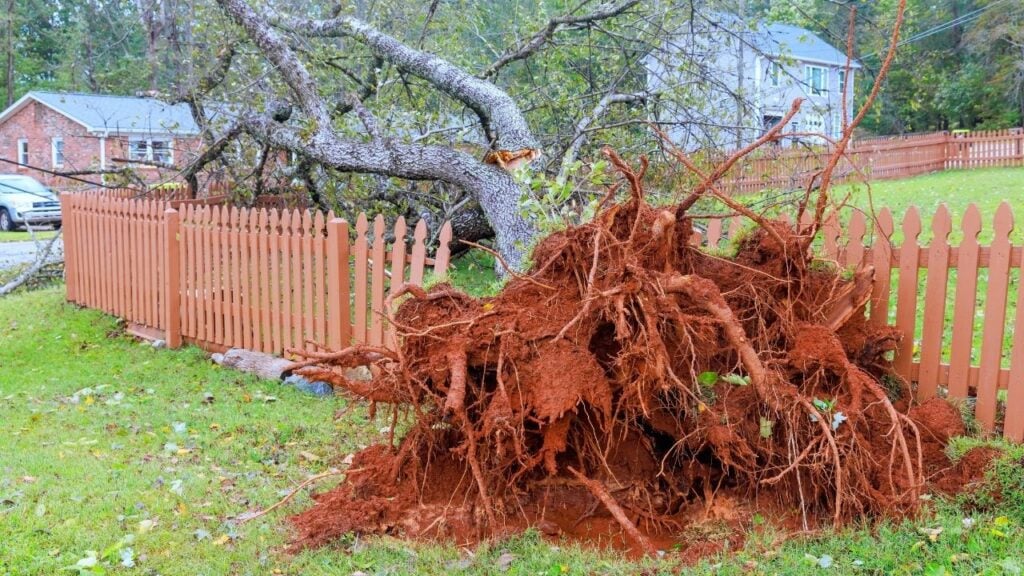
A tree trunk standing partly on two owners' land belongs to both of them in common.
The harder question is who pays when it falls.
7 Rules That Decide Which California Neighbor Pays When a Shared Tree Falls
8 Vons Deals Californians Only Get If They Do One Thing First

You key in your phone number at a Bakersfield Vons.
There's a reason for that.
8 Vons Deals Californians Only Get If They Do One Thing First
