
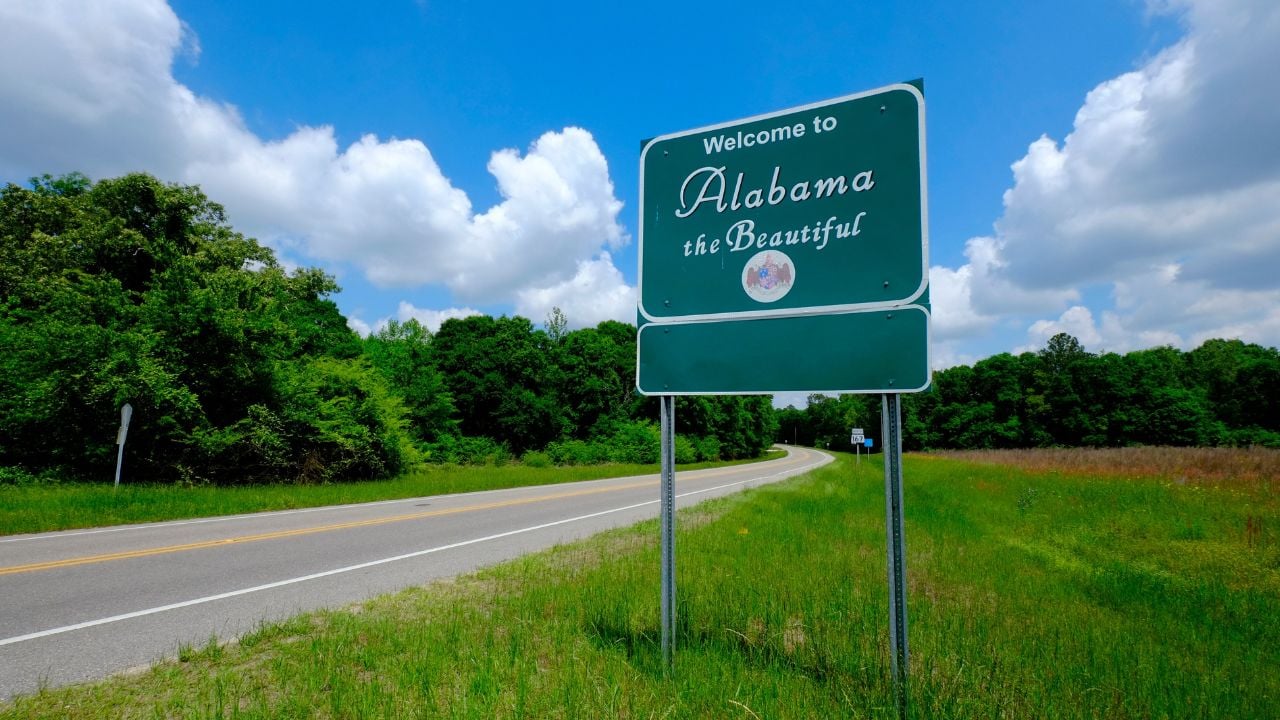
8 Things Illegal to Haul Across the State Line Into Alabama

Think a truck can cross into Alabama with anything in the bed as long as the driver has a valid license?
It can’t.
Alabama won’t even let a beehive cross its border without a health certificate signed within the last 60 days. Skipping that paperwork costs $100 a hive.
These are the things that are illegal to bring into Alabama.
Note: This is general information, not legal advice. Regulations, certificate requirements, and penalties are subject to change.
1. Loose Soil and Hay
Alabama can’t legally send a load of its own dirt across the state line without a permit, and that catches many people off guard.
The rule traces back to the state’s Imported Fire Ant Quarantine, which covers Alabama in full because the ants are already established statewide.
Soil, compost, sod, hay, straw, and any equipment still caked in dirt all count as regulated cargo.
Not just fire ants.
A gardener moving to Georgia can’t toss potted plants with garden soil into the truck and go, and a farmer selling hay across the line needs a Fire Ant Quarantine certificate before the bales leave Alabama.
Commercially bagged potting soil is fine.
Garden dirt straight from the yard isn’t.
2. Deer, Dead or Alive
Alabama has kept its own border closed to live deer since 1973, a response to diseases that can wipe out a herd fast.
That’s the short version.
Alabama also restricts hauling in a deer carcass from another state: A hunter can bring home deboned meat, a cleaned skull plate, or finished taxidermy, but not a whole carcass with the brain or spinal cord still attached.
Those tissues carry Chronic Wasting Disease, an always-fatal illness spreading through deer herds across two dozen states.
Alabama takes that risk seriously.
What Breaking Alabama’s Deer Ban Costs
Alabama backs this rule with hard penalties, not just a warning.
A game breeder who smuggled six live deer in from Indiana ended up paying $750,000 in combined state and federal penalties.
State wildlife officers built the Alabama side of the case.
The federal Lacey Act covered the rest because hauling wildlife across a state line without the right paperwork is a federal problem too.
Alabama revoked his game-breeder license.
Officers seized and tested every deer in his herd for the disease.
3. Live Poultry
Alabama requires every out-of-state chicken, turkey, or other bird crossing its border to carry proof it’s healthy.
No exceptions.
That proof takes one of two forms: A negative test for Salmonella pullorum/typhoid and avian influenza within 21 days of entry, or membership in a flock enrolled in the National Poultry Improvement Plan’s clean programs.
Hatching eggs and day-old chicks follow the same standard.
A backyard-flock owner driving home from a swap meet in Georgia with a box of chicks needs that same paperwork a commercial hauler does.
Six chicks or six thousand, the rule doesn’t change.
4. Cattle, Horses, and Goats
Alabama won’t let cattle, horses, goats, or sheep cross into the state without an official Certificate of Veterinary Inspection.
That certificate is only good for 30 days from the date a veterinarian signs it, so a trailer that sits too long before a trip needs a fresh one.
Breeding and dairy cattle need a negative brucellosis test on top of that.
Bulls over 18 months old need a negative trichomoniasis test too.
Horses need something else: A negative test for equine infectious anemia within the past year.
Every single time.
A rancher trailering a handful of goats across the Georgia line for a weekend show needs the same paperwork a commercial cattle hauler carries, no matter how small the load.
Psst! How many of these border-crossing moves have you already made without the paperwork? Run through this checklist and see where you land.
5. Certain Live Fish
Alabama flatly bans hauling certain live fish across its border, no matter how harmless the cooler looks.
Walking catfish, piranhas, snakeheads, black carp, and a handful of other species are all on the banned list, and possessing even one is illegal regardless of intent.
Zero tolerance.
It doesn’t matter if it’s a pet.
Alabama’s lakes and rivers, including Lake Guntersville and the Mobile-Tensaw Delta, support a fishing economy the state guards closely.
A single escaped snakehead in the wrong pond can crowd out the native fish there for good, and wildlife officers have seen it happen.
6. Wild Hogs and Other Wildlife
Alabama’s fish ban isn’t the whole rule.
The same regulation bans hauling in a long list of live wild mammals from outside the state, including wild hogs, coyotes, foxes, skunks, and mountain lions.
Feral hogs already tear up crops across Alabama, so bringing in more only adds to the problem.
A permit from the state’s wildlife division can clear the way for zoos, researchers, or licensed exhibitors.
There’s no gray area.
Everyone else needs to leave the raccoon, the fox, and the wild hog behind.
7. Honeybees
Alabama requires every beehive crossing into the state to carry a health certificate signed within the last 60 days.
Every hive, every time.
Skip that certificate, and the move is illegal before the truck even stops.
The bees have to travel in combless packages too.
Queen bees can’t ride along in a container holding honey.
Break the rule, and Alabama can fine a beekeeper $100 a hive.
A beekeeper trucking a dozen hives south for spring pollination season is looking at fines that add up fast if the paperwork’s missing.
Alabama gives a week’s notice before destroying a violating hive outright.
8. Nursery Stock
Alabama requires nursery stock crossing into the state to carry paperwork too, the same as livestock or poultry.
Every out-of-state shipment needs a duplicate certificate of inspection from wherever it started, proving the plants passed a pest check before they left.
Alabama backs that certificate with a physical tag: Every box, bundle, or package of nursery stock moved into the state needs a valid certificate tag carrying the inspection seal, attached where an inspector can see it.
Skip the tag, and Alabama can seize the shipment outright.
That’s written into the nursery stock law itself, not a guideline a grower can shrug off.
The risk rides along in the root ball too, since soil clinging to nursery stock can carry the same pests and pathogens the state’s other quarantines exist to stop.
A homeowner hauling a truckload of azaleas or crepe myrtles across the line from a roadside nursery in Georgia or Tennessee is hauling regulated cargo, and that tag needs to be on the load before it crosses into Alabama.
Many roadside stands never ask.
The paperwork is still the buyer’s problem the moment the truck crosses into Alabama.
8 Things Alabamians Once Memorized That Their Phones Remember for Them Now

Quick, no peeking at your phone: What’s your child’s phone number?
A national survey found 82% of parents can’t recite it from memory anymore because that number used to live in your head and now it lives in a contacts app.
8 Things Alabamians Once Memorized That Their Phones Remember for Them Now
9 Alabama Small Towns That Outshine Every Big-City Attraction Nearby
On November 30, 1954, a rock from outer space crashed through a roof in Sylacauga, Alabama, and hit a napping woman named Ann Hodges.
It’s the only documented case in recorded history of a meteorite striking a person, and Birmingham, an hour up the road, has never had a story like it.
9 Alabama Small Towns That Outshine Every Big-City Attraction Nearby
