

8 Things Kentuckians Say About Tennessee That the Numbers Don’t Back Up

Kentucky’s flat income tax dropped to 3.5% on January 1, 2026.
Tennessee’s has stayed at zero the entire time.
That gap alone undercuts a fraction of what Kentuckians assume about their next-door state.
These are the things Kentuckians say about Tennessee that the numbers don’t back up.
Note: This is general information, not tax advice. Tax rates and rules are subject to change.
The Car Tax Assumption
Kentucky bills every registered vehicle for a property tax each year, and drivers who’ve paid theirs assume Tennessee charges something close.
It doesn’t come close.
Kentucky’s motor vehicle property tax shows up every single year.
The county assesses it every January 1st, based on what the car is worth, then the county clerk sends the bill.
Every registered vehicle owes it, whether it’s a beater or brand new off the lot.
Tennessee skips the whole thing.
The state charges no property tax on vehicles at all, only a local wheel tax that some counties add as a flat yearly fee that has nothing to do with the car’s value.
As of 2024, 36 counties out of Tennessee’s 95 didn’t collect one at all.
Basically No Tax Difference
Several rounds of cuts have brought Kentucky’s income tax rate down over the past decade, and some Kentuckians figure it’s basically caught up with Tennessee’s by now.
The gap hasn’t closed.
Kentucky’s flat income tax dropped to 3.5% on January 1, 2026, the latest cut in a series that started at 5% back in 2018.
Tennessee has taxed exactly none of that income the entire time.
The state fully repealed its old tax on interest and dividends in 2021, and it never taxed wages, pensions, or retirement withdrawals to begin with.
So every paycheck, every Social Security check, and every 401(k) withdrawal that crosses the state line still keeps that 3.5% Kentucky takes off the top.
What Kentucky’s 3.5% Costs Every Year
Kentucky applies its flat rate to every dollar of taxable income after the standard deduction, not just a top bracket the way some states do.
On $60,000 of taxable income, that works out to roughly $2,100 a year.
A Tennessee household earning the same amount owes the state nothing on it.
The Grocery Tax Escape
Kentuckians who assume Tennessee’s tax-free reputation extends to the grocery aisle are only half right.
Tennessee taxes groceries.
The state charges a 4% state tax on food, on top of a local tax that can add close to 3% more depending on the county.
Kentucky does the opposite.
Its 6% sales tax leaves unprepared grocery food alone entirely, taxing only prepared food, candy, and soft drinks.
Kentucky also has no local sales tax anywhere in the state to stack on top.
The same cart of groceries that rings up tax-free in Louisville costs extra in Nashville, where both taxes still apply.
Parks Playing Catch-Up
Kentucky State Parks markets itself as the best system in the region, and that reputation leaves many Kentuckians assuming Tennessee’s is still playing catch-up.
That reputation is dated.
Kentucky runs 45 state parks, a system built around the resort-park model Kentucky pioneered decades ago.
Tennessee dedicated its 67th state park in August 2026.
Fourteen new parks are being established under Governor Bill Lee alone, the most any Tennessee administration has ever added.
Kentucky’s parks still draw many compliments, but by sheer count, Tennessee isn’t the smaller system anymore.
One Barbecue Style
A lot of Kentucky conversations flatten Tennessee barbecue into one single style, usually Memphis ribs and nothing else.
That’s not the whole picture.
Memphis pork ribs, cooked wet or dry with a tomato-based sauce, dominate West Tennessee.
Middle Tennessee runs its own barbecue trail around Nashville, stacked with pulled pork and brisket joints that owe nothing to Memphis.
East Tennessee leans a different direction entirely, closer to the Carolinas, with whole hog and vinegar-based sauce that reflects the mountains at its back.
The state’s own tourism board lists 23 barbecue stops worth the drive across those three regions, and Memphis accounts for less than half of that list.
Three regions, three traditions, one state line separating all of it from Kentucky.
Bristol’s State-Line Trick
Many Kentuckians retell Bristol’s split state line as a Tennessee original, a trick that supposedly only works on the state’s border with Virginia.
Kentucky has a twin-city split of its own.
Same trick, different border.
Fulton, Kentucky and South Fulton, Tennessee sit directly on the Kentucky-Tennessee line as genuine twin cities, not just neighboring towns that happen to share a name.
The Twin Cities brand themselves as one community split down the middle by the Ken-Tenn state line, home to a combined population of roughly 4,750 people.
The two cities share government services and community facilities, split only by the state line running straight through downtown.
Bristol isn’t the only place in this rivalry with a foot on both sides.
More Land, More Counties
Kentuckians who know their state carves itself into a lot of counties tend to assume Tennessee, being a little bigger, splits into even more.
Tennessee has fewer.
Tennessee covers close to 42,000 square miles, a few thousand more than Kentucky.
Kentucky still divides its smaller footprint into 120 counties.
Tennessee splits into just 95.
Psst! How much do you know about Kentucky and Tennessee history? Take our quiz and see how many you can get right.
Quiz
Bluegrass & Volunteer Trivia
Answer these questions on Kentucky and Tennessee history and geography. We bet you can’t get them all right. Prove us wrong?
Kentucky’s Mammoth Cave holds which world record?
Same Mountains, Same Height
Black Mountain gives Kentucky its highest point, and Kentuckians who've stood on top figure Tennessee's peaks top out about the same.
It isn't a small gap.
Black Mountain, Kentucky's highest point, reaches 4,139 feet above sea level in Harlan County.
Tennessee's highest point, Kuwohi, also known as Clingmans Dome, rises to 6,643 feet inside the Great Smoky Mountains.
That's a gap of more than 2,500 feet, more than half of Black Mountain's own height stacked back on top of it.
Kuwohi's Cherokee name means "mulberry place," and federal officials restored it as the mountain's official name in September 2024, replacing the name of a Confederate general the peak had carried since 1859.
Black Mountain's summit, by contrast, sits inside a conservation easement that closed the peak to surface mining back in 1999, the deal that kept Kentucky's highest point from losing its top.
9 Tennessee Foods and Drinks That Confuse Anyone Who Didn't Grow Up With Them
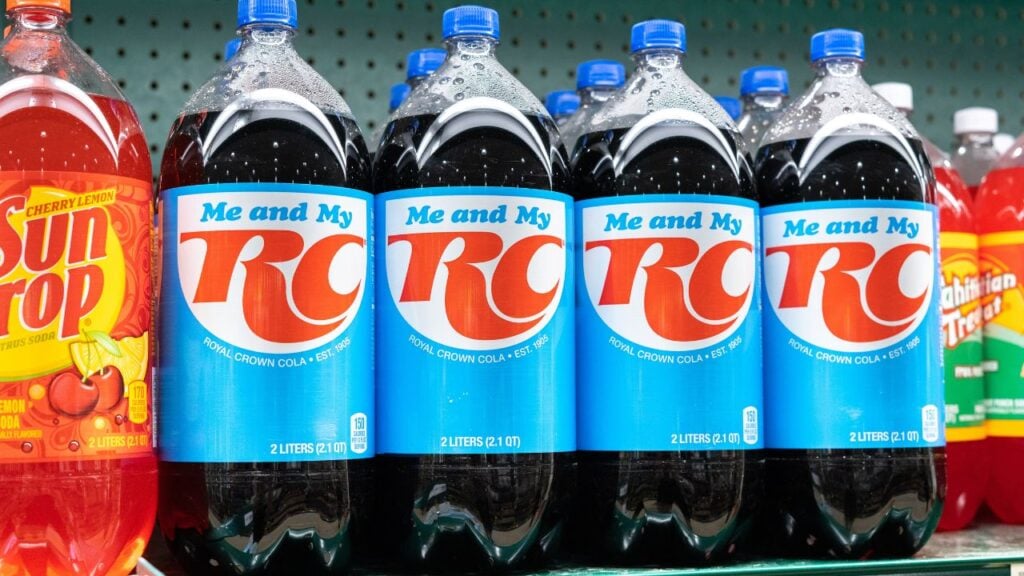
Tennessee borders eight other states, tied with Missouri for more neighbors than any state in the country.
Certain foods and drinks change at nearly every one of those lines, and a dish that's second nature in Memphis can draw a blank stare two hours up the road in Nashville.
9 Tennessee Foods and Drinks That Confuse Anyone Who Didn't Grow Up With Them
9 Tennessee Roadside Stops Locals Still Pull Over For
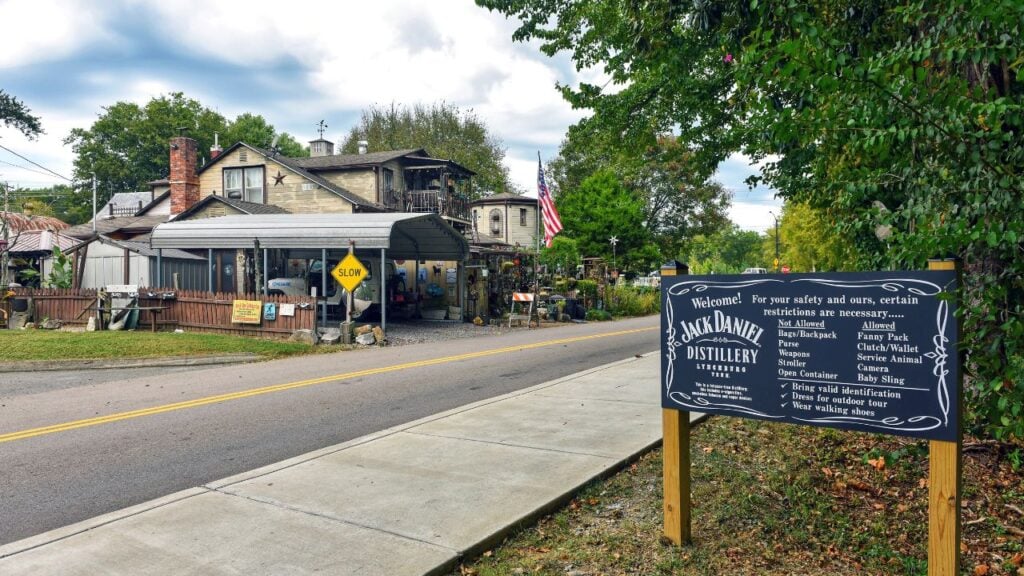
Somewhere under McMinnville, a band plays a full concert without ever needing a roof.
Cumberland Caverns hosts shows inside one of the largest cave systems in the country, and it's just one of the roadside stops locals still pull over for.
