
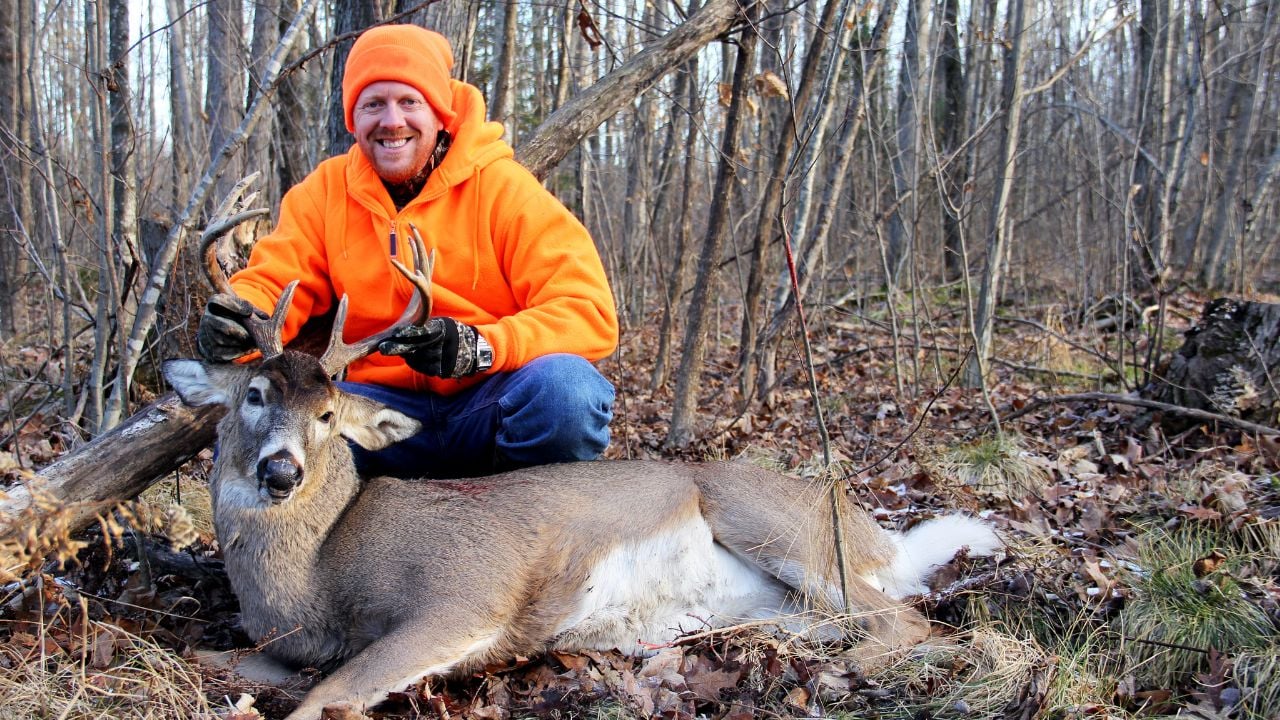
8 Things Michigan Deer Processors Wish Hunters Knew Before They Pull In

You’ve got a deer in the back of your truck and a processor waiting down the road.
For Michigan hunters, that’s when a missing tag or a skipped step can turn into a hassle at the door.
Here’s what processors would like you to have handled before you pull in.
Note: This is general information, not legal advice. Hunting rules and season dates are subject to change, so confirm the current requirements with the Michigan Department of Natural Resources.
1. Reporting Your Harvest First
The Michigan Department of Natural Resources (DNR) says you have to file a harvest report before you hand your deer to a deer processor.
You have 72 hours after recovering your deer to file, or less if the deer changes hands first.
That covers every successful deer hunter with a state license, including hunters with Deer Management Assistance Permits.
File online at Michigan.gov/DNRHarvestReport or in the DNR’s Hunt Fish app.
Skipping the report is a civil infraction with a fine of up to $150.
When Your Deer Changes Hands
Your deer changes hands when you give it to a friend or a taxidermist, not only when you drop it at a deer processor.
A family member or friend can also report for you if you give them your kill tag license number, date of birth and harvest location.
2. Keeping the Kill Tag On
Where does your kill tag go between the woods and the deer processor?
The DNR says you validate it and attach it before you field-dress or move the deer.
The whole tag goes on the antler, lower jaw or lower leg.
It stays on until the deer is processed or butchered, or until a commercial processor or taxidermist accepts your deer and records it.
So it’s still on when you pull in.
If a processor hands the head or antlers back to you, the kill tag has to go with them.
3. Digital eHarvest Tags
A deer processor can take your deer without a durable tag if you carry an eHarvest tag and bring the deer straight there.
An eHarvest tag is the digital deer tag on your smartphone.
The same exemption covers a deer stored at your primary residence.
If the deer leaves your possession any other way, a durable tag with your license number should be attached.
You can get an eHarvest tag through the DNR’s Hunt Fish app.
Paper tags are still available.
4. Leaving the Evidence of Sex
Michigan’s evidence-of-sex rule still applies when you’re bringing a deer to a processor.
The DNR says you cannot destroy the identity or evidence of the sex of any animal.
Processed or butchered deer are the exception.
Psst! How much do you know about Michigan deer season? Take our quiz and see if you can ace it.
Quiz
Deer Season Know-How
Answer nine questions on Michigan deer season rules, tags and venison. We bet you can’t get them all right. Prove us wrong?
Michigan health officials advise hunters not to eat which part of a deer taken in or near the Tittabawassee River floodplain?
5. Your Harvest Confirmation Number
When a deer processor accepts your deer, the DNR says you should give that person your harvest confirmation number.
You get that number after you successfully report your harvest.
Its civil infraction language names keeping the confirmation number, not only filing the report.
Screenshot it first.
6. Carcass Movement Limits
If you hunt Montcalm County, four Ionia County townships or six Kent County townships, the DNR's chronic wasting disease (CWD) rules change how you get a deer to a processor.
You can't possess or transport a deer from those areas outside them unless it meets an exception.
Deboned meat, quarters and other parts with no spinal column or head attached qualify.
A whole carcass qualifies when you take it directly to a registered processor.
You can take an intact head, detached from the carcass, directly to a licensed taxidermist.
7. Your Processor's State Permit
A commercial processor that takes your deer has to register with the DNR and get a free permit.
Its owner also has to keep records of the wild animals accepted for processing or storage for 90 days.
The DNR's Directory of Wild Game Meat Processors is a county-by-county list of phone numbers, but it includes only processors that wish to be public.
It doesn't endorse or recommend any processor on the list.
Call before you drive.
8. Hunters Feeding Michigan
Hunters Feeding Michigan has you drop your deer at a participating processor, and the DNR asks you to call before you pull in.
The program page lists participating processors with addresses and phone numbers.
Donating costs you nothing.
Your deer has to be legally harvested, harvest-reported and whole to be accepted.
Deer from certain counties must be tested for CWD or bovine tuberculosis before donation, and the program page lists them.
Donations of deer harvested within 3 miles of Clark's Marsh in Oscoda Township in Iosco County aren't accepted.
The DNR still advises against eating deer from there because of per- and polyfluoroalkyl substances (PFAS).
Lead Fragments in Venison
Lead from rifle bullets can leave particles in your venison, so the DNR says to remind your deer processor to trim a generous distance away from the wound channel.
Some of those particles are too small to be seen or felt.
Children under seven and pregnant women face the greatest risk from lead exposure.
The DNR recommends considering non-lead ammunition such as copper or others that have high-weight retention.
If you ask a deer processor to grind your venison, note that ground venison often contains more lead fragments than other cuts of meat.
Avoid acidic cooking ingredients such as vinegar or wine when cooking meat shot with lead ammunition.
8 Driving Mistakes That Turn Michigan's Deer Season Into an Insurance Claim
Deer season isn't just for hunters.
The trouble often starts with a habit behind the wheel.
8 Driving Mistakes That Turn Michigan's Deer Season Into an Insurance Claim
10 Things That Only Make Sense If You Grew Up in Michigan

Think you could pass as a true Michigander in under a minute?
Many transplants struggle to pull it off.
