

8 Things Michigan Law Lets an Employer Take From a Final Paycheck

Under the federal Consumer Credit Protection Act, a tax levy can take an unlimited share of a Michigan paycheck, with no percentage cap at all.
For everything else, Michigan spells out exactly how much a judge, a lender, or an employer can take from a paycheck once someone’s job ends.
These are the things Michigan law lets an employer take from a final paycheck.
Note: This is general information, not legal or financial advice. Wage deduction rules and garnishment limits are subject to change.
1. Cash Register and Drawer Shortages
State law lets a cash register or drawer shortage come out of a paycheck, even the final one, but only under one condition.
Written consent.
Michigan’s Payment of Wages and Fringe Benefits Act treats a shortage deduction as voluntary.
The employer needs the worker’s written consent before subtracting a dollar of a till that came up short.
That consent has to be given freely, not squeezed out under a threat, and the deduction still can’t push a final check under the state’s wage floor.
There’s a limit built in.
2. Cost of an Unreturned Uniform
Michigan applies that same written-consent rule to a uniform an employee never brings back.
No signed form, no deduction.
An employer can subtract the replacement cost of a uniform from a final paycheck once the worker has agreed to it in writing.
That’s the same standard the state applies to a register shortage.
Skip the paperwork, and the deduction doesn’t hold up.
3. Unreturned Tools and Equipment
A company laptop, a two-way radio, or a set of shop tools carries a replacement cost, and Michigan lets an employer recover it from a departing worker’s last check.
The rule covers any tool, safety gear, or other company equipment left behind once the job ends.
State law still ties that deduction to the same written-consent standard as a register shortage or a uniform.
The worker has to agree to it in writing before the value ever comes out of a check.
That signature is non-negotiable.
4. Payroll Overpayment Correction
The law lets an employer recover its payroll mistake without asking permission twice.
The overpayment deduction covers a mathematical mistake, a typo, or a clerical error, and it doesn’t need a new signature to go through.
The catch: The employer has to give written notice at least one pay period ahead.
The recovery has to finish within six months of the mistake, with each deduction capped at about 15% of that check’s gross wages.
Skip any piece of that.
The deduction doesn’t hold up.
Michigan’s Math on a 15% Overpayment Deduction
Say a Michigan employer overpays a worker by $600 because of a clerical mixup, and that worker earns $2,000 in gross wages each pay period.
Michigan caps the recovery at 15% of that check, or $300, so the employer needs two pay periods to collect the full $600 instead of taking it all from one.
The same rule protects the worker’s minimum-wage floor, so if 15% would cut too deep, the employer can only take enough to stay above it.
5. Court Judgment Garnishment
Employers have to send part of a paycheck straight to a creditor once a court signs off on an ordinary debt judgment.
By federal law, that creditor can only collect the lesser of two numbers.
One is 25% of the disposable earnings left after required withholding.
The other is whatever remains once pay clears 30 times the federal minimum wage.
The smaller number wins.
That’s the ceiling for an ordinary credit card or medical debt, and it holds even on the very last check a departing worker ever sees from that employer.
Psst! How much do you know about the wage laws behind every paycheck? Take our quiz and see how many you can get right.
Quiz
Paycheck Law IQ
Answer these questions on wage law history and Michigan’s minimum wage. We bet you can’t get them all right. Prove us wrong?
As of January 1, 2026, what does Michigan require restaurants and other employers to pay a tipped worker in cash wages, before tips?
6. Child Support and Alimony Garnishment
Michigan raises that final-paycheck ceiling considerably once child support or alimony is the debt on the table, though not all the way to what federal law would allow.
Federal law lets a state go as high as 50% of disposable earnings when a worker is supporting another spouse or child, and up to 60% when they aren't.
Another 5% is possible once payments run more than 12 weeks behind.
Michigan sets a ceiling well below that federal maximum.
Half, not more.
Michigan's child support program spells out the limit in a guide for employers called DHS-Pub-96.
Every income withholding notice for support, whether child support or spousal support, is capped there at 50% of disposable earnings.
That limit holds no matter how many orders are stacked against one paycheck.
That cap applies to a final paycheck exactly the way it applies to any other paycheck.
7. Federal or State Tax Levy
Michigan paychecks face one more kind of order that skips the percentage math altogether: A tax levy.
The Consumer Credit Protection Act carves federal and state tax debt out of its usual limits.
A levy from the Internal Revenue Service (IRS) or Michigan's Department of Treasury faces no percentage limit at all.
That's a one-of-a-kind exemption.
Michigan's Department of Treasury can issue that same kind of levy for unpaid state taxes, and it lands on a final paycheck the same way a federal one does.
8. Repayment of a Payroll Advance or Loan
The law lets an employer collect what it's owed when a worker leaves still holding money the company advanced.
Michigan Legal Help lists a payroll advance or loan among the debts an employer can recover straight out of wages, the same category as misappropriated funds.
The debt doesn't disappear.
That deduction still runs through the same written-consent gate as a cash shortage or a uniform.
The worker has to agree to it in writing before the employer can touch a final check over it.
The agreement has to come first.
How to Challenge an Unfamiliar Deduction
The state gives a worker who doesn't recognize a deduction on a final paycheck somewhere to turn.
A complaint about unpaid wages or a questionable deduction goes to the state's Wage and Hour Program, and it has to be filed within 12 months of the alleged violation.
The clock starts running fast.
The agency investigates the complaint and tries to work out a settlement between both sides.
A written determination follows, and either side can appeal it if they disagree with the outcome.
8 Michigan Jury Duty Rules Residents Get Wrong
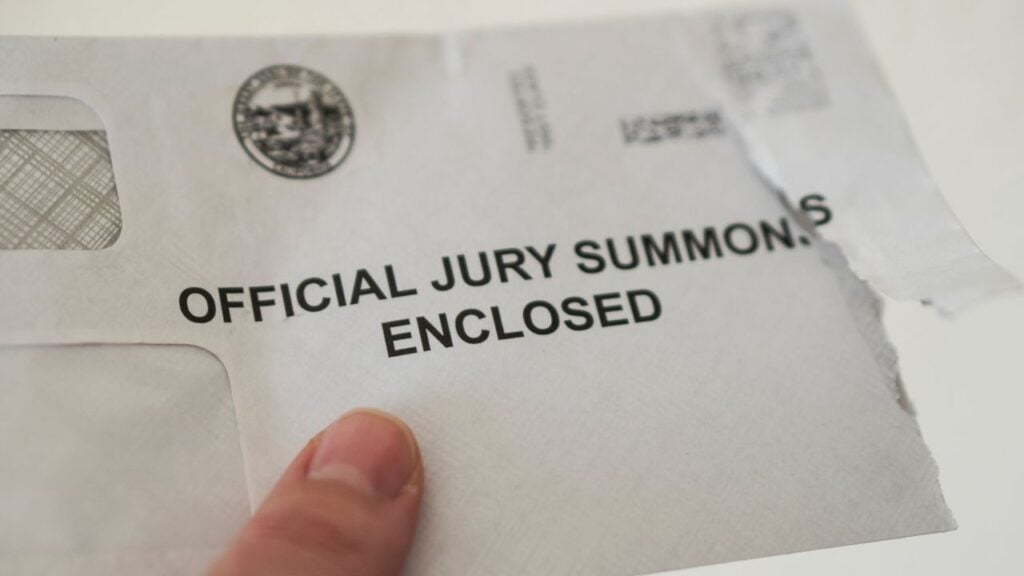
A Michigan jury summons pays as little as $25 for a full day away from work, and many residents assume the rules stop there.
They don't, and a wrong guess about postponing service, workplace protections, or what counts as a valid excuse can cost more than a missed day's pay.
8 Michigan Jury Duty Rules Residents Get Wrong
8 Home Warranty Claims Michigan Homeowners Get Denied For

A Michigan home warranty sounds like a safety net until the furnace breaks and the claim comes back denied.
One of the country's biggest providers paid millions after a state investigation found it sold contracts it never intended to honor.
