
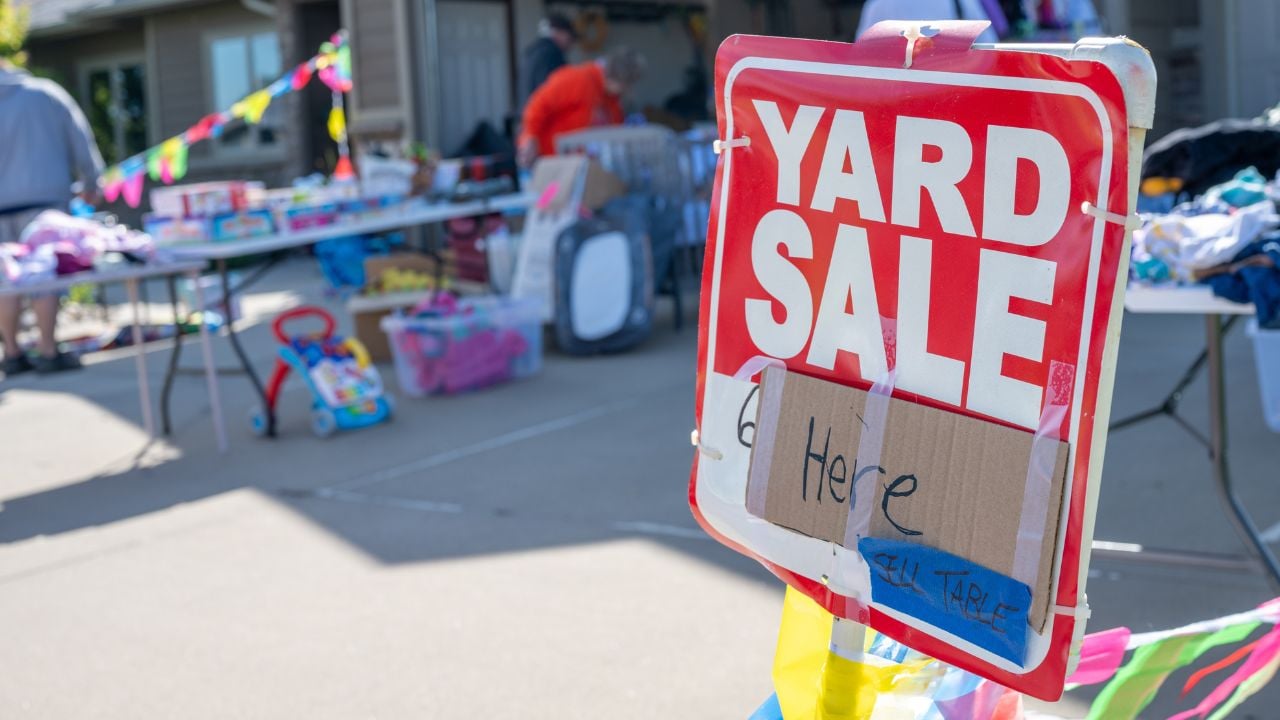
8 Things New Yorkers May Need Permission to Sell From Their Yard

Selling homemade salsa or pickles from a New York yard can require an Article 20-C food processing license, which runs $400 for two years.
A small-scale processor pays $175.
That’s before anybody gets to the folding table, the signs, or what the state does about the rest of what you list for sale.
These are the things New Yorkers may need permission to sell from their yard.
Note: This is general information, not legal advice. Permit, license, and registration rules vary by agency and municipality and are subject to change.
1. Your Weekend Yard Sale
A weekend yard sale doesn’t run free of paperwork in New York.
The Village of Hempstead, on Long Island, makes a resident file with the Village Clerk and buy a garage sale license before the folding tables go up.
The license costs $15.
There’s a catch.
A single address gets one license every 12 months, and the sale can’t run past two consecutive days.
Only two signs are allowed on the property, each capped at 24 by 12 inches.
Miss the fine print, and the next sale at that address waits until next year.
Not every town writes the rule the same way, so check with your village or town clerk before the tables come out.
2. Homemade Jams and Baked Goods
A home baker in New York can sell certain treats without a commercial kitchen, but the state still wants to know about it first.
The path is called the Home Processor Exemption, run by the state’s Department of Agriculture and Markets.
It’s free.
Registration never expires, and it covers breads, cookies, brownies, and jams made from high-acid fruit like apple or strawberry.
Cakes and cupcakes qualify too, as long as the frosting skips the butter, eggs, or cream cheese.
Sell a food that isn’t on the state’s approved list, like a cream pie or a pickled vegetable, and the exemption stops protecting you.
3. Homemade Salsa, Pickles, or Hot Sauce
Homemade salsa or hot sauce runs into a wall that New York’s cookie-and-jam exemption doesn’t have.
The state’s Home Processor Exemption, the same rule that lets a home baker sell cookies and jam, lists salsas, pickles, relishes, hot sauces, and sauerkraut as flatly prohibited.
Anything acidified for shelf stability falls under a separate license instead.
New York calls it an Article 20-C food processing establishment license.
The license requires a licensed, inspected facility, something a home kitchen can’t hold.
It runs $400 for two years, or $175 for a small-scale processor with ten or fewer full-time employees.
Scale doesn’t change the requirement.
A single jar of homemade salsa on a yard sale table needs the same license as a jar sold on a store shelf.
4. Leftover Wine, Beer, or Liquor
A bottle of leftover wine doesn’t stop being alcohol under New York law just because it’s sitting on a yard sale table.
State law bars selling any alcoholic beverage, at wholesale or retail, without the license the law requires.
There’s no carve-out for a single bottle or a one-time sale.
The law doesn’t bend.
The New York State Liquor Authority licenses everything from corner delis to wineries.
A private seller at a yard sale doesn’t fit any category it recognizes.
An unopened case from a wedding, a gift basket nobody drank, or a home bar someone is emptying out all stay off the table without one.
Donating it, or simply not selling it, is the workaround many sellers end up choosing.
5. That Gun in the Closet
New York treats a private gun sale as a two-person job, even between neighbors who trust each other completely.
State law requires the sale to run through a licensed firearms dealer, who submits the buyer to a background check before the gun changes hands.
That step isn’t optional.
Skip the dealer, and both people involved risk a criminal charge, since the law makes noncompliance a class A misdemeanor.
The one exception is immediate family: A spouse, a domestic partner, a child, or a stepchild.
The Fine Print on a Private Gun Sale
New York’s immediate-family exemption is narrower than many sellers assume.
A cousin, an in-law outside the immediate household, or a longtime friend still needs the dealer’s background check, even with years of trust behind the deal.
A dealer who agrees to handle the transfer can charge up to $10 for it.
If the national background check system doesn’t answer within 30 days, the dealer can complete the sale anyway.
6. Fireworks or Sparklers From the Garage
Leftover fireworks in New York don’t get a casual pass just because they’ve been sitting in the garage since last summer.
Most consumer fireworks stay illegal to sell anywhere in the state: Firecrackers, bottle rockets, roman candles, spinners, and aerial devices are all off-limits, yard sale or not.
Only sparkling devices, the handheld or ground-based kind that just spark, crackle, or smoke, are legal to sell at all.
Even those need a certification from the state’s Office of Fire Prevention and Control, plus an annual fee.
The sales window itself is fixed too, running from June 1 to July 5 and December 26 to January 2.
More than a dozen counties, including Nassau, Suffolk, and all five New York City boroughs, have opted out and banned the sale entirely.
There’s no way around it.
A garage sale sign doesn’t override any of it.
7. Crafts You Sell Every Weekend
A once-a-year yard sale and a standing table of handmade goods answer to different rules under New York law.
Many New York towns require a peddler’s or transient merchant registration before someone can regularly sell items, in person, from a home or yard.
The Town of Pleasant Valley, in Dutchess County, calls it a registration certificate, issued by the Town Clerk after a background check on the applicant.
Certificates expire every December 31, no matter when they were issued.
Skip it, and a violation can run a fine up to $250.
One sale is one thing.
A folding table every Saturday can count as a business under town code, whether or not you think of it that way.
8. Enough to Look Like a Business
Three days and $600 mark the line where New York stops treating a home sale as casual.
The state Department of Taxation and Finance caps a tax-free sale from a residence at $600 and three days in a calendar year.
Cross either limit, and the sale after that point becomes taxable, even if the year’s total still sits under $600.
Many sellers miss that.
Sell often enough, or bring in enough taxable merchandise, and New York expects a seller to register for a Certificate of Authority.
From there, the seller collects and remits sales tax like any other vendor.
Psst! See every rule from this list side by side, then filter it for whatever’s piled on your driveway.
What Your HOA Adds on Top
A homeowners association (HOA) can pick up right where New York’s permits and licenses leave off.
A New York HOA can add limits on top of every rule above, and none of those limits show up in state law.
That’s a private rulebook.
Some governing documents cap yard sales at one a season.
Some ban political or oversized signage outright, even the kind a village permit allows.
Some require board approval before a resident sets up a recurring craft table, regardless of what the town clerk already approved.
None of it runs through a state agency.
It runs through neighbors, a management company, or a fine written into the community’s bylaws.
Reading the governing documents before the first sale saves a homeowner from an awkward letter later.
9 Items New York Residents Can Be Fined for Leaving at the Curb
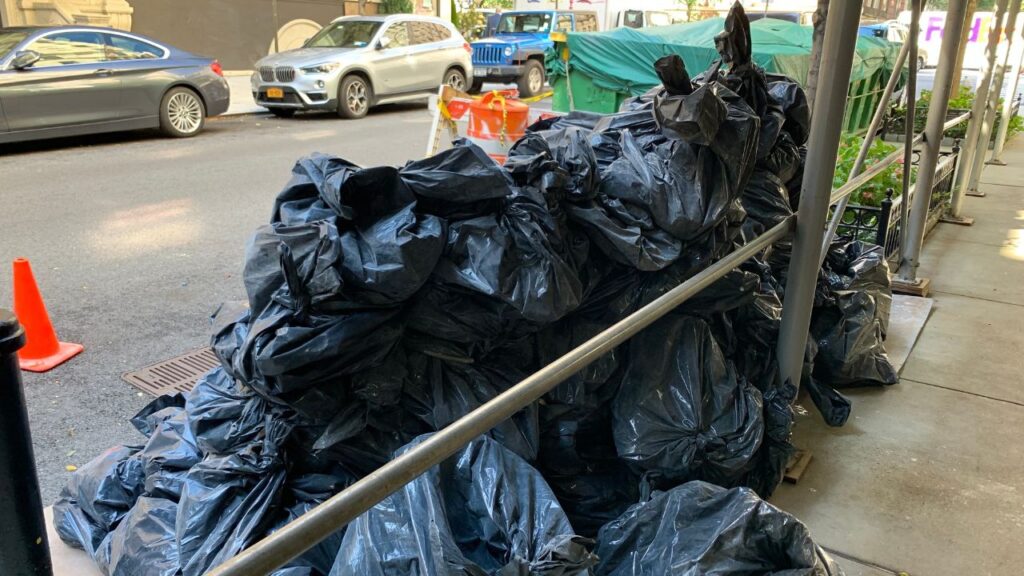
A sanitation officer doesn’t have to know a resident’s name to write up what’s sitting at the curb.
A quick photo, or a neighbor’s call to 311, is often all the evidence a citation needs.
9 Items New York Residents Can Be Fined for Leaving at the Curb
5 New York Property Tax Exemptions That Expire Without a Warning Letter
New York’s School Tax Relief (STAR) program sent $2.1 billion to nearly 3 million homeowners and seniors this year alone.
Several other property tax breaks work differently, and they can shrink or disappear with no letter in the mailbox to warn a homeowner first.
5 New York Property Tax Exemptions That Expire Without a Warning Letter
