
8 Things That Change the Second You Cross From New York Into Connecticut

Say you cross from New York into Connecticut with a trunk full of empty bottles.
What each one is worth changes at the border.
Here’s what changes the second you cross the New York-Connecticut line.
Note: This is general information, not legal or tax advice. Tax rates, fees and rules are subject to change.
1. Sales Tax Rates
Connecticut’s general sales tax rate is 6.35%.
At that rate, a $100 purchase adds $6.35 in tax, and a $1,000 purchase adds $63.50.
New York’s tax department lists 4% as the state rate.
Because that’s only the state rate, your New York total can depend on where you shop.
Connecticut’s Higher Sales Tax Rates
Meals and certain beverages are taxed at 7.35%.
A 7.75% rate covers many motor vehicles priced over $50,000.
Jewelry priced over $5,000 falls under the 7.75% rate.
So do clothing, footwear, handbags, luggage, umbrellas, wallets and watches priced above $1,000.
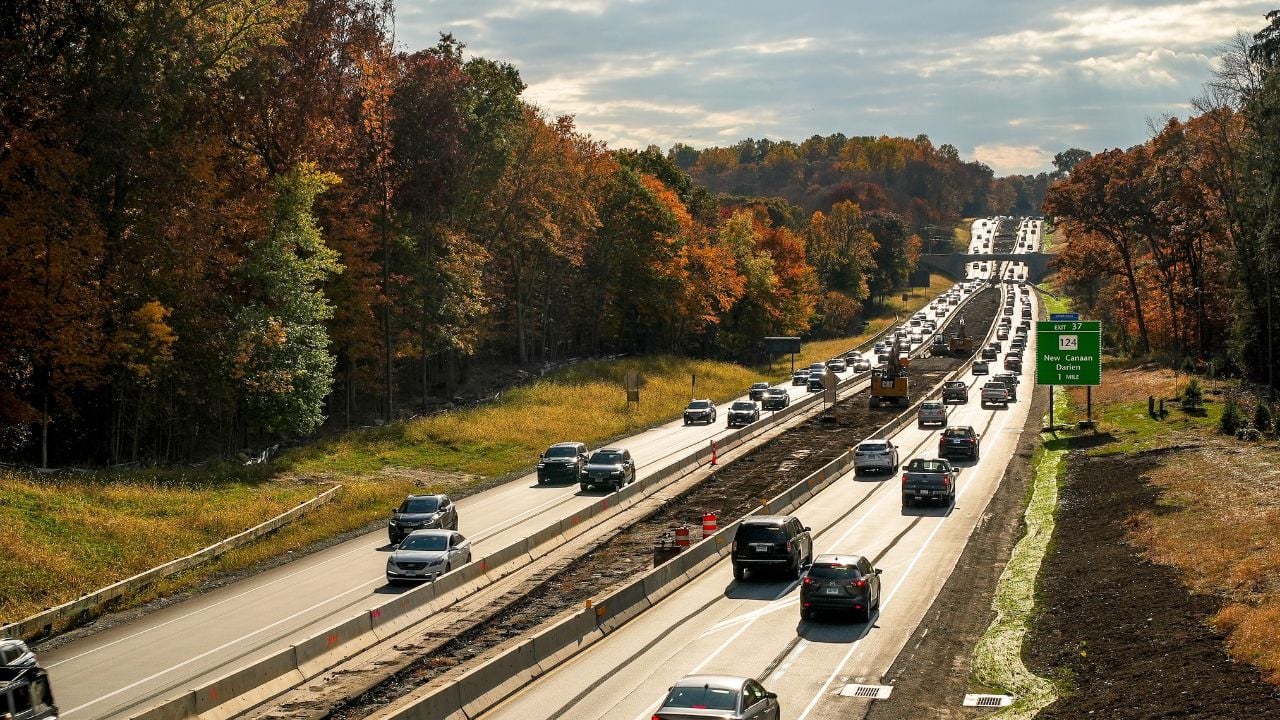
2. Highway Tolls
Connecticut collected its last highway toll on the Charter Oak Bridge in Hartford on April 28, 1989.
Today, Connecticut has no tolls.
The New York Thruway system covers 570 miles of roadway.
Its cash tolls ended in November 2020, when the system went cashless.
A toll notice that reaches you in the mail and claims to come from Connecticut’s Department of Transportation is a scam, the agency says.
3. Safety Inspections
New York’s Department of Motor Vehicles (DMV) requires many vehicles to pass a safety and emissions inspection every 12 months.
New York’s DMV also requires an inspection when the ownership of a vehicle is transferred.
Connecticut’s DMV says personal cars and trucks generally don’t need a safety inspection.
Connecticut still tests vehicles for emissions every two years, at more than 200 privately owned service facilities.
If you’re moving east, your yearly safety inspection may end, but emissions testing continues every two years.
4. Counties
County government in Connecticut was abolished effective October 1, 1960.
Since then, the state’s eight counties have existed only as geographical names.
Connecticut has no county seats.
New York, by contrast, has 62 counties.
A New York State handbook says sheriffs are elected in those counties under the County Law, so you may vote for one.
The same handbook calls social services the largest category of county spending.
If you move into Connecticut, you won’t have a county government to deal with.
5. Motorcycle Helmets
The Insurance Institute for Highway Safety (IIHS) tracks motorcycle helmet laws state by state.
If you’re 20 or younger, you must wear a helmet when you ride in Connecticut.
New York is among the many states that require all riders to wear one.
A rider who’s 21 or older may find that requirement ends at the Connecticut line.
6. Minimum Wage
If you earn minimum wage in Connecticut, you’re paid at least $16.94 an hour in 2026.
Connecticut’s rate rises to $17.48 on January 1, 2027.
New York’s 2026 minimum wage is $17.00 an hour in New York City, on Long Island and in Westchester County, and $16.00 in the rest of the state.
Cross from Westchester County into Connecticut, and the state minimum wage drops 6 cents an hour.
Over a 40-hour week, the difference comes to $2.40 before taxes.
New York’s Department of Labor says the state’s minimum wage will stay the same on January 1, 2027.
Connecticut’s rate goes up that same day, so crossing from Westchester County will then mean a state minimum 48 cents an hour higher.
Over a 40-hour week, that comes to $19.20 before taxes.
7. Bottle Refunds
Connecticut’s bottle deposit is typically 10 cents on each container.
New York’s law sets a minimum deposit of 5 cents, so you may find a deposit a nickel higher in Connecticut.
On 24 containers, a nickel more per container adds up to $1.20.
The deposit refund in New York is limited to containers purchased in New York State.
A container you buy in Connecticut wouldn’t qualify for New York’s refund.
8. License Transfer Deadline
If you move from New York to Connecticut, you have 90 days after you establish residency to transfer your out-of-state license.
New York’s DMV sets a shorter clock for people moving the other way, saying new residents must get a New York license within 30 days.
Parkway Truck Bans
Both states keep trucks off their parkways.
The Merritt Parkway bars box trucks, tractor-trailers, trailers, rental trucks and RVs.
If you’re driving a vehicle taller than 8 feet, the Merritt Parkway is off-limits.
New York’s parkways, including the Hutchinson River Parkway in Westchester County, also bar commercial vehicles.
Some New York parkway bridges have posted clearances as low as 6 feet 11 inches.
Psst! How much do you know about Connecticut and New York history? Take our quiz and see if you can ace it.
Quiz
Constitution State Trivia
Answer these questions on Connecticut and New York history and geography. We bet you can’t get them all right. Prove us wrong?
Fishers Island lies at the eastern end of Long Island Sound. Which town governs it?
Gas Price Gap
The American Automobile Association (AAA) tracks state averages.
Averages change with the day's prices, so the gap at your pump can be larger, smaller or reversed when you fill up.
As of November 17, 2026, Connecticut's regular gas average was $3.9980 a gallon.
New York's regular gas average was $4.1173 on the same day.
That made New York's average almost 12 cents higher.
On a 15-gallon fill-up, that gap comes to about $1.79.
9 Assumptions About Connecticut That Residents Are Tired of Correcting

Some assumptions about Connecticut just won't go away.
Many residents say they're tired of correcting them.
9 Assumptions About Connecticut That Residents Are Tired of Correcting
6 Things Nutmeggers Argue About That Have No Right Answer

Many Connecticut debates have no winner.
Here are some debates with no right answer.
