
8 Things Vermont Law Bans From the Trash That Many Vermonters Still Toss

You’ve just raked your front yard, and the leaves are headed for a trash bag.
Check the law before you tie that bag.
Here’s what Vermont law bans from the trash that many Vermonters still toss.
Note: This is general information, not legal advice. Disposal rules and dates are subject to change, so confirm the current requirements with the Vermont Department of Environmental Conservation.
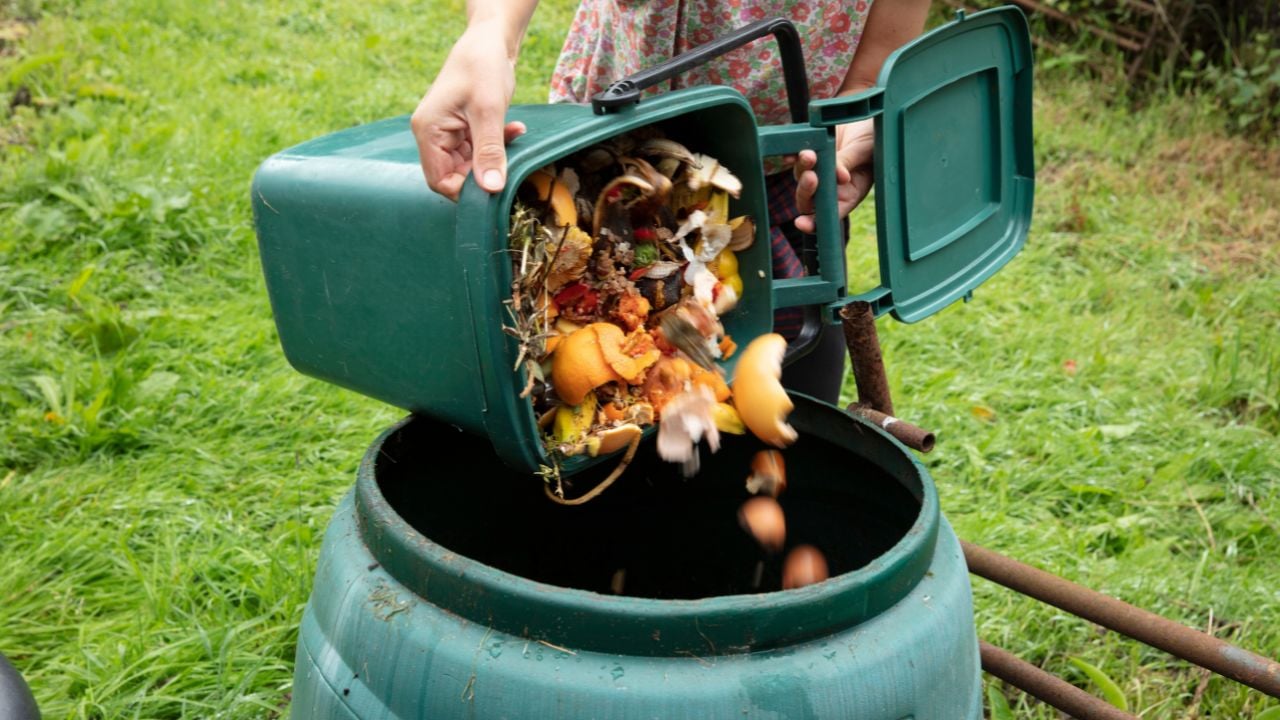
1. Food Scraps
Vermont’s Universal Recycling Law has required everyone to keep food scraps out of the trash since July 1, 2020.
That includes eggshells and the plate scrapings left after a meal.
Coffee grounds count too.
Many people still scrape the dinner plate into the trash bag.
You don’t have to compost in your backyard to follow the rule.
A drop-off site or a curbside food scrap hauler works instead.
Large businesses had to start first, and households followed.
2. Blue-Bin Recyclables
Blue-bin recyclables have been off-limits to Vermont’s trash since July 1, 2015.
That covers aluminum foil and cans, steel cans, glass bottles and jars, paper, cardboard, and plastics #1 and #2.
Drink cartons and Styrofoam don’t belong in the blue bin.
Your bottles, cans, and jars need to be empty and rinsed, but you don’t have to get them perfectly clean.
3. Grass, Leaves, and Clean Wood
Vermont’s trash is closed to grass clippings, leaves, and clean wood.
That ban has applied since July 1, 2016.
So the leaves you rake this fall can’t go into your trash bag.
Backyard compost piles, brush piles, and compost facilities take the place of the trash.
There’s one exception for plants.
Hazardous, invasive, or diseased plant matter can go in the trash as a last resort when composters won’t take it.
A pile beats a bag.
What Counts as Clean Wood
Vermont’s clean wood ban covers natural logs and branches more than 1 inch thick.
It also covers stumps and roots.
Lumber and pallets fall under the ban only if they’ve never been painted, stained, or treated.
Plywood, oriented strand board, pressure-treated wood, and any wood that’s painted, stained, or treated can go in the trash in many cases if you can’t reuse it.
4. Old Electronics
Vermont law has banned electronics from the trash since January 1, 2011.
That covers the computers, monitors, and televisions you no longer use.
E-Cycles, the state’s electronics recycling program, takes computers, monitors, TVs, printers, and computer accessories.
Your drop-off is free.
Electronics manufacturers fund the program.
Many people still set an old printer out with the household trash.
Psst! How much do you know about Vermont’s recycling rules? Take our quiz and see if you can ace it.
Quiz
Vermont Waste IQ
Answer these questions on Vermont’s recycling, composting, and trash rules. We bet you can’t get them all right. Prove us wrong?
To go in a Vermont blue recycling bin, an item must be at least how big?
5. Leftover Paint
Oil-based and latex paint both belong outside Vermont's trash.
Oil-based paint is hazardous and flammable, so you never throw it away in the trash.
The same goes for liquid latex.
The law exempts solidified water-based paint in quantities of less than one gallon.
Even then, the state says to check with your local solid waste management entity first.
PaintCare takes leftover household paint, stains, and varnishes for free at locations across Vermont, and paint manufacturers fund the program.
Local household hazardous waste events and facilities are another option.
The drain is off-limits too.
6. Batteries
The trash ban on batteries has grown over the years.
Since July 1, 2024, single-use and rechargeable batteries are on the list too.
The AAs in your junk drawer are on it now.
Take them to a designated collection site.
You can recycle single-use and rechargeable batteries there for free.
Many people still drop a dead battery in with the kitchen trash.
7. Mercury Bulbs and Thermostats
Vermont's trash is closed to any mercury-containing bulb, regardless of the amount of mercury.
That covers fluorescent and compact fluorescent bulbs, black lights, neon bulbs, and high intensity discharge bulbs.
As a resident, you can recycle certain mercury-containing bulbs for free.
To find a collection site near you, enter your zip code at lamprecycle.org.
Mercury thermostats are banned.
8. Large Appliances
Refrigerators, ranges, washers, dryers, dishwashers, and freezers have been off-limits to Vermont's trash since January 1, 1991.
Those are white goods.
That date comes 20 years before the electronics ban.
If you're replacing a fridge or a washer, your old appliance isn't trash.
Older Bans on the List
Vermont's list of trash bans reaches back to 1990.
The statute bans lead-acid batteries and waste oil after July 1, 1990, and tires after January 1, 1992.
If you change your oil at home, the used oil and the filter both stay out of the trash.
What Transfer Stations Must Take
Vermont's trash bans also put a duty on the sites that take your bags.
Trash collection sites must also collect blue-bin recycling and food scraps.
That includes all transfer stations, bag drops, and the dump.
Trash haulers must offer recycling pick-up.
If you haul trash to the dump yourself, you can drop your recycling and food scraps at the same place.
Who Enforces the Bans
Vermont's statute says no person can knowingly dispose of these materials in household trash or in landfills.
That includes you and your household trash, not just businesses.
On food scraps, the Agency of Natural Resources says it focuses on the largest food waste producers and on complaints.
Outreach has been the priority.
5 Things a Vermont HOA Can't Stop You From Doing in Your Yard
Who gets the final say over your front yard: You or your association?
A Vermont HOA can have strong opinions, but a few of your choices still belong to you.
5 Things a Vermont HOA Can't Stop You From Doing in Your Yard
7 Things That Still Happen at Vermont Town Meetings That Out-of-Staters Can't Believe Are Real

Town meeting in Vermont runs on customs that stop a first-time visitor cold.
None of them have been modernized out.
7 Things That Still Happen at Vermont Town Meetings That Out-of-Staters Can't Believe Are Real
