
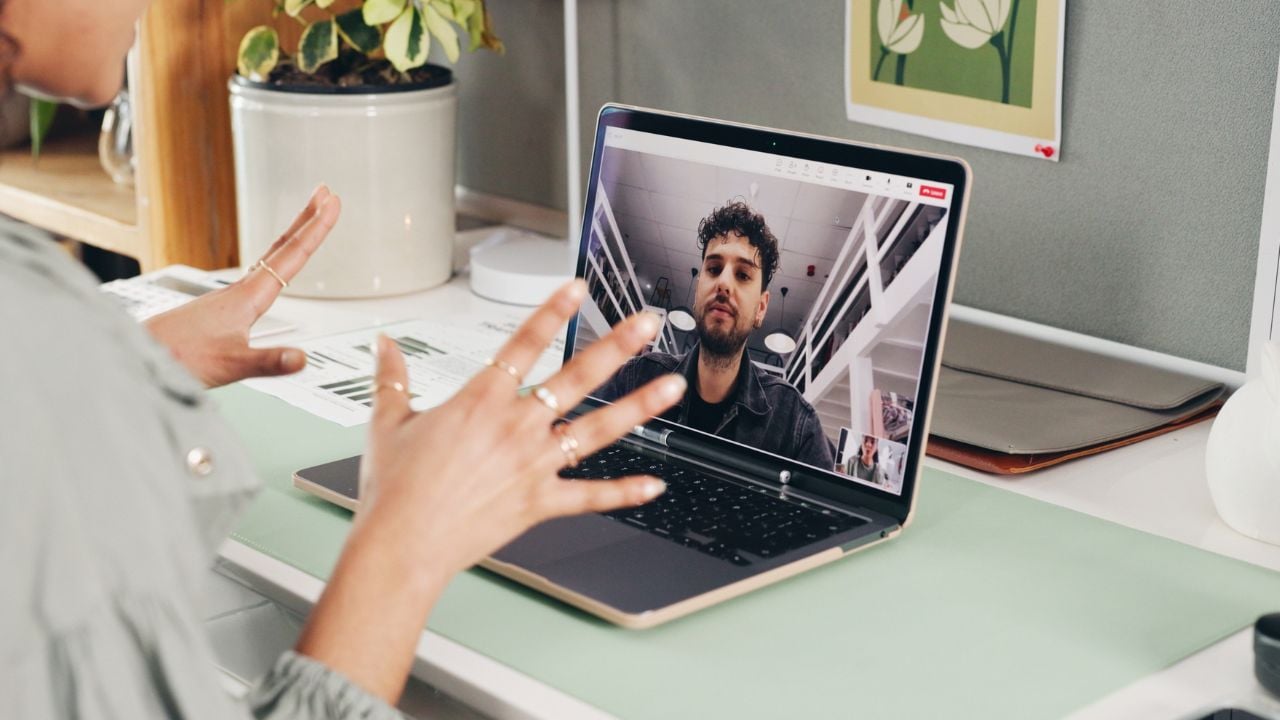
8 Things Your California Manager Notices During Video Calls

California’s Legislative Analyst’s Office found that 13% of the state’s employees worked mainly from home in 2024. That’s nearly triple the pre-pandemic share.
Your manager has been watching that Zoom rectangle for years now, and they’ve gotten good at reading it.
These are the things your California manager notices during video calls.
Note: This is general information, not legal advice. California’s recording-consent rules and penalty amounts are subject to change.
Where This List Comes From
This California manager list traces back to named workplace researchers, not office gossip.
Stanford, Cisco, and the Society for Human Resource Management each tracked meetings, interviews, or survey responses and published what they found.
Here’s what they noticed.
1. When the Camera Goes Dark
Your manager likely encounters more video calls than many: State data shows California’s employees work from home at one of the highest rates in the country.
The state’s Legislative Analyst’s Office found 13% of California employees worked mainly from home in 2024, nearly triple the pre-pandemic rate.
A Vyopta survey found 92% of executives believe employees who mute video regularly probably don’t have a long future at the company.
Executives in that same survey guessed why: 43% suspected browsing, and 40% suspected texting.
The dark square gets noticed.
2. Stanford’s Multitasking Research
Stanford University, in Palo Alto, ran the most detailed study yet on why a California manager can tell when someone is multitasking on a call.
Stanford researchers, working with Microsoft Research, analyzed meeting data in a 2021 study.
Email multitasking showed up in 31.1% of meetings in February 2020, a share that fell to 28.9% by that May.
The odds of multitasking jumped 6.21 times in meetings that ran past 80 minutes, and 2.16 times in meetings with more than 10 people.
Cameras cut the sneaking.
3. Where Your Eyes Go
More of California’s hiring and check-ins happen over video than in many states, since the state’s remote-work rate peaked at 21% in 2021 according to the Legislative Analyst’s Office.
Where a candidate’s eyes land during a video interview turns out to change how a manager scores them.
A 2024 Scientific Reports study of simulated interviews found candidates who kept their eyes on the camera scored higher across six measures.
Those measures included hireability, decisiveness, and cooperativeness, compared to candidates who looked at the screen.
The study never compared video interviews to in-person ones, so it only shows the camera-versus-screen gap holds on video calls.
Look at the lens.
4. Who Stays Silent
San Jose-based Cisco, whose meeting software runs in offices across California, has the data on who talks and who doesn’t.
Cisco’s Hybrid Work Index, published in October 2021, found 48% of participants don’t speak during video meetings, a pattern the report ties to meeting burnout.
Silence gets logged too.
Psst! Think you know the history behind your video calls? Take our quiz and see how many you can get right.
Quiz
Video Call History IQ
Answer these questions about the history behind your video calls. We bet you can’t get them all right. Prove us wrong?
In what year did Eric Yuan found Zoom, after leaving his job as a Cisco Webex vice president?
5. Who Shows up Late
California commutes rank among the country's worst.
Census data show 12.1% of California commuters travel more than 60 minutes one way, the fifth-highest share of any state.
A late login is easy to explain when the same employee spent that morning stuck in that traffic.
A cross-cultural study of meeting lateness that included US participants found frustration rises with every extra minute someone is late.
A late meeting leader provokes even more irritation than a late attendee, that same research found.
Minutes add up fast.
6. Your Tiring Virtual Background
A busy virtual background doesn't fool a California manager who has sat through hundreds of these calls.
Frontiers research found that people using an animated video background reported more fatigue and cognitive load.
That was true compared to people using a blurred or still-image background, or none at all.
Researchers measured that fatigue with the Zoom Exhaustion and Fatigue Scale, a tool Stanford built in California to quantify video-call burnout.
A manager can't see cognitive load directly.
An employee who looks worn down on camera after half an hour behind a busy background is hard to miss.
Simple backgrounds read calmer.
7. More Than You Meant to Show
San Francisco-based Airtime, a video-calling company, asked 1,000 US workers in 2021 whether they'd ever taken a call without pants on.
Ten percent admitted it.
Airtime joked in its write-up that it suspected the other 90% were lying.
Dress past the waist.
8. Who Hasn't Agreed to Be Recorded
Before your California manager can hit record, state law makes them check something many other managers never have to: Whether every person on the call has agreed to it.
California is an all-party consent state, meaning a manager who wants to record has to get a yes from everyone on the call, not just announce it and proceed.
A first offense under that law can bring a fine up to $2,500 on the criminal side alone.
Ask before you hit record.
What California's Recording Law Requires
California's all-party consent law covers video calls the same way it covers phone calls.
Every participant needs to consent before a recording starts, not just the person who hits record.
The rule can reach a call when someone dials in from a one-party-consent state because California courts have found the stricter rule applies whenever a participant is in California.
A civil case under that same law can add up to $5,000 per violation, or three times the actual damages, on top of any criminal fine.
California Stories Worth Your Time
Video calls aren't the only place California habits and rules stand out.
Two more California quirks catch people off guard just as often: The phrases that never stopped bothering longtime residents, and the fast food that vanished decades ago.
9 Everyday Phrases That Drive Californians Up the Wall

Certain phrases get repeated so often in California that longtime residents can't help reacting.
The list ranges from traffic talk to real estate jargon nobody asked for.
9 Everyday Phrases That Drive Californians Up the Wall
8 Things California's Fast-Food Restaurants Did Better in the '80s and '90s
California's fast-food scene looked different a few decades ago, and older residents still miss parts of it.
Menus, prices, and even drive-thru habits shifted more than newcomers would guess.
8 Things California's Fast-Food Restaurants Did Better in the '80s and '90s
