
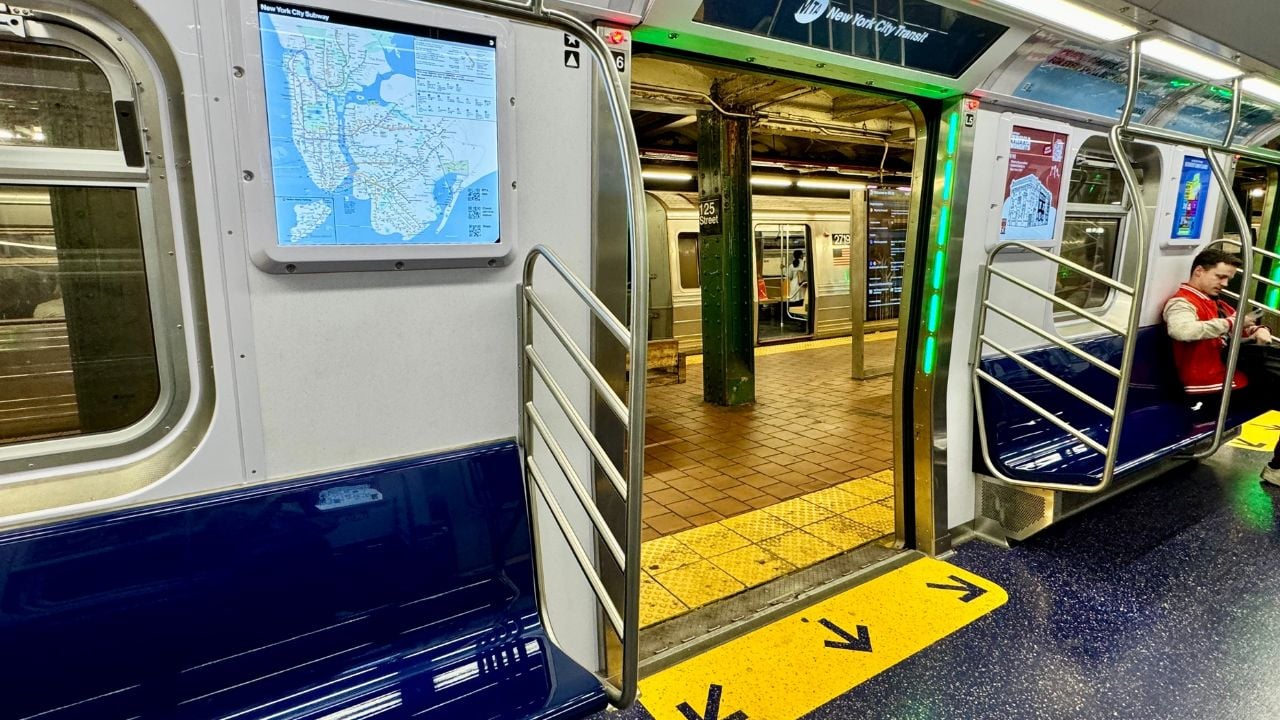
8 Unwritten New York City Subway Rules Nobody Explains to Visitors

A tourist cuts across a crowded New York City subway platform at rush hour and freezes when three people shoulder past without a word of apology.
By the third stop, that same person has been sighed at twice and shot one dirty look, with no idea what they did wrong.
These are the unwritten New York City subway rules nobody explains to visitors.
1. Sharing the Pole
Grab a full fistful of a New York City subway pole, and there’s nothing left for the next three hands that need it.
Regulars grip low, near the bottom, using two or three fingers instead of a full fist.
That leaves the top of the pole open for a taller rider, and the middle open for whoever boards at the next stop.
Nobody taught them the trick.
New York City’s subway has no code, sign, or fine covering how a rider holds a pole.
A rider who claims the whole thing anyway isn’t breaking any law.
Everyone else on the car just grabs a strap instead, and remembers the face.
2. Backpacks Off
A worn backpack turns into a battering ram on a crowded New York City subway car.
The bag doubles a rider’s footprint without them noticing, and it swings into the next person’s face on every turn.
Down at the feet, or hugged against the chest, that same bag takes up almost no room.
Problem solved.
Regulars shift it the moment a car starts filling, usually before anyone has to ask.
New York City’s subway has no fine for keeping a backpack on, and no officer checks for it.
The only penalty is a shove at the next stop, from someone who ran out of patience before the doors even opened.
3. Leaving Room to Breathe
An unspoken order governs how New York City’s subway fills its seats, though many riders never notice the pattern.
A rider takes an open row before sitting directly beside a stranger, every time there’s a choice.
That holds until the car runs out of empty rows.
New York City Transit’s own researchers confirmed it in a 2013 study, riding subway cars and logging exactly how riders chose their seats.
Riders would rather stand than take a seat sandwiched between two strangers, the study found, right up until about 70 percent of a car’s seats are already taken.
Rush hour erases the whole pattern.
Once the car is packed, elbows and shoulders do the negotiating instead, and nobody minds anymore.
4. Standing Right, Walking Left
Escalators only show up in New York City’s deepest subway stations, and the escalators that exist come with an unspoken lane system.
Stand on the right.
Walk on the left.
At the 72nd Street stop on the Second Avenue line, that lane split is the only thing moving anyone down 99 feet to the platform.
Eleven escalators carry riders down there, and a rider camped out on the left side of one escalator blocks it for everyone in a hurry behind them.
New York City’s Metropolitan Transportation Authority (MTA) has never posted a sign at any station telling riders which side to stand on.
No agency taught anyone the lane split. Riders worked it out on their own, station by station, for decades.
5. Skipping the Small Talk
Strangers stand inches apart for twenty stops on New York City’s subway without exchanging a single word.
A visitor reads that as coldness.
It isn’t.
Sociologists have a name for the way riders pull off that trick without ever staring or striking up a conversation.
The term is civil inattention.
The sociologist Erving Goffman coined it to describe how people share close public spaces without treating each other like something to examine.
A New Yorker glances up when someone new steps into the car, then looks away on purpose.
Holding that glance too long, or opening with small talk about the weather, reads as a request for something the other rider never offered to give.
6. Offering up Any Seat
Priority seats near the ends of each New York City subway car are reserved for elderly riders, pregnant riders, and riders with disabilities.
The unwritten custom goes well beyond those marked seats.
Any rider is expected to stand for someone who visibly needs to sit, no matter which seat they’re in.
Researchers tested exactly how far that custom stretches decades ago.
Students working under the psychologist Stanley Milgram boarded moving subway cars and asked seated strangers, cold, to give up the seat.
Milgram tried the ask himself once and found he couldn’t get the words out.
Sixty-eight percent of the riders his students approached either stood up or slid over to make room.
New York City’s subway has no law requiring any of it.
The habit outlasted the researchers who first measured it.
7. Clearing Space for Showtime
Performers turn New York City’s subway into an entire genre of unscheduled entertainment known as Showtime, grabbing the pole and flipping through a moving car.
New York City police started charging performers with reckless endangerment over these acrobatics during a 2014 crackdown, the same charge still on the books today.
Riders still know exactly how to behave when a routine starts anyway.
They slide back, clear the pole, and either watch or ignore it.
The expectations are simple: Don’t block a performer mid-routine, and don’t film for free.
New York City’s own arts program, now called MTA Music, places more than 150 performers in stations completely within the rules, some just yards from acts riders were told are illegal.
Many tourists never notice they’re standing between both.
8. Step-Out Shuffle
Doors open onto a wall of people at nearly every downtown New York City subway stop during rush hour.
Boarding riders don’t wait by the door for it to magically clear.
It never does.
They step fully onto the platform and let the exiting crowd pass around them, then step back on right behind the last person off.
Plant both feet in the doorway instead, and a rider blocks their own way back in.
Times Sq-42 St alone moved more than 57 million riders in 2024, more than any other station in the entire system.
A packed rush-hour car at that volume has no patience for anyone who forgets the shuffle twice.
The Only Rule It Posts
One word trips up nearly every first-time rider on New York City’s subway: Express.
Local and express are the one distinction the system spells out, in a route name on every train and a sign on every platform.
None of that explains what regular riders do about it.
They watch the countdown clock’s route letter, not just the wall sign, since the clock updates in real time and the paper sign doesn’t.
The MTA posts a new list of weekend construction work nearly every Friday, and not all of it reaches a station’s paper signage by Monday.
Regulars just assume the train might have more to say than the sign does, and they listen for it.
New York City’s Local-Express Split
New York City’s subway spells the split out right in each route’s official name. The 1 train runs as the Broadway-7 Avenue Local, while the 2 and 3 share that same tunnel as the 7 Avenue Express.
A local stops at every station along its line. An express skips a run of stops to move faster between the busiest stations.
Every platform posts a sign listing exactly which trains stop there and when.
Some routes still switch between local and express service late at night or on weekends, so the printed sign isn’t always the last word.
Psst! How much do you know about New York City’s subway? Take our quiz and see if you can ace it.
Quiz
NYC Subway IQ
Answer nine questions on the subway’s history and quirks. We bet you can’t get them all right. Prove us wrong?
New York City’s subway used to be three separate, competing companies. What happened to them in 1940?
5 Things New York City Doormen Notice About You Before You Say a Word
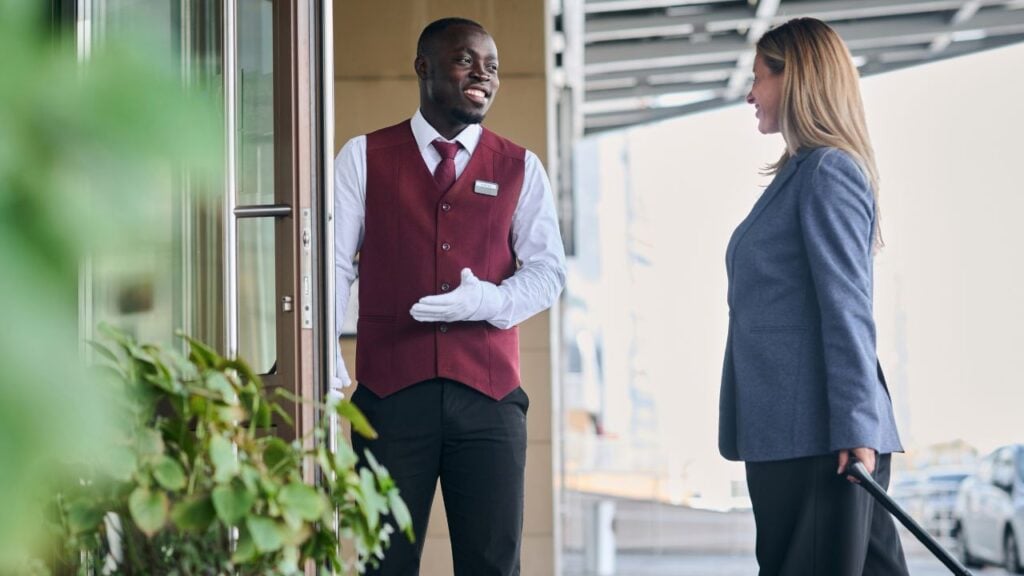
Thirty-four thousand New York City doormen almost walked off the job this spring, until a new contract saved the deal days before a strike would have hit thousands of buildings.
The doormen still working the lobby say they clock a visitor before that person ever opens their mouth.
5 Things New York City Doormen Notice About You Before You Say a Word
10 New York State Fair Foods and Drinks That People Can't Get Enough Of
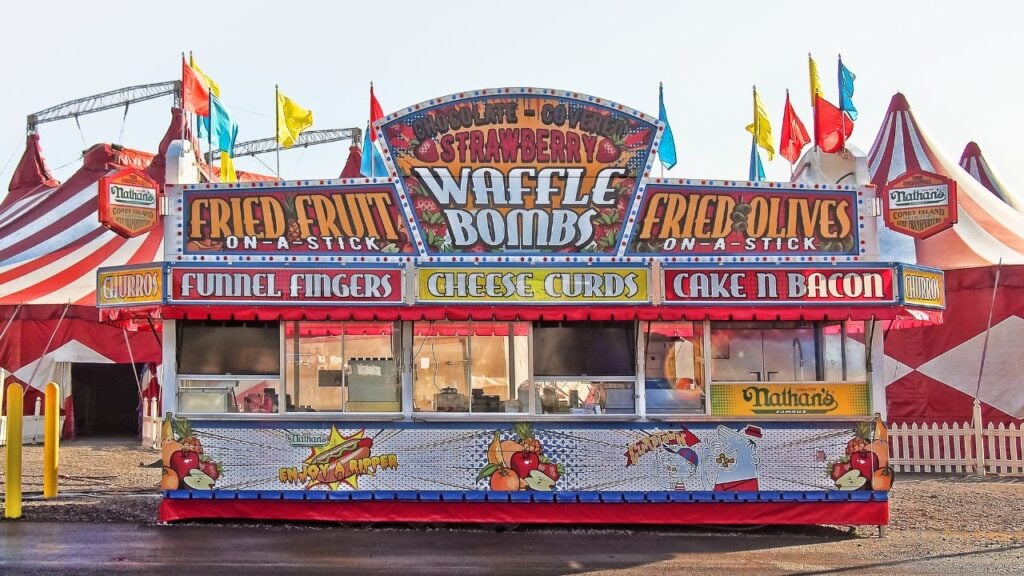
Yelp recently ranked the New York State Fair the fourth-best state fair for food anywhere in the country.
Picking the single dish that earned it that ranking turns out to be a lot harder than it sounds.
10 New York State Fair Foods and Drinks That People Can't Get Enough Of
