
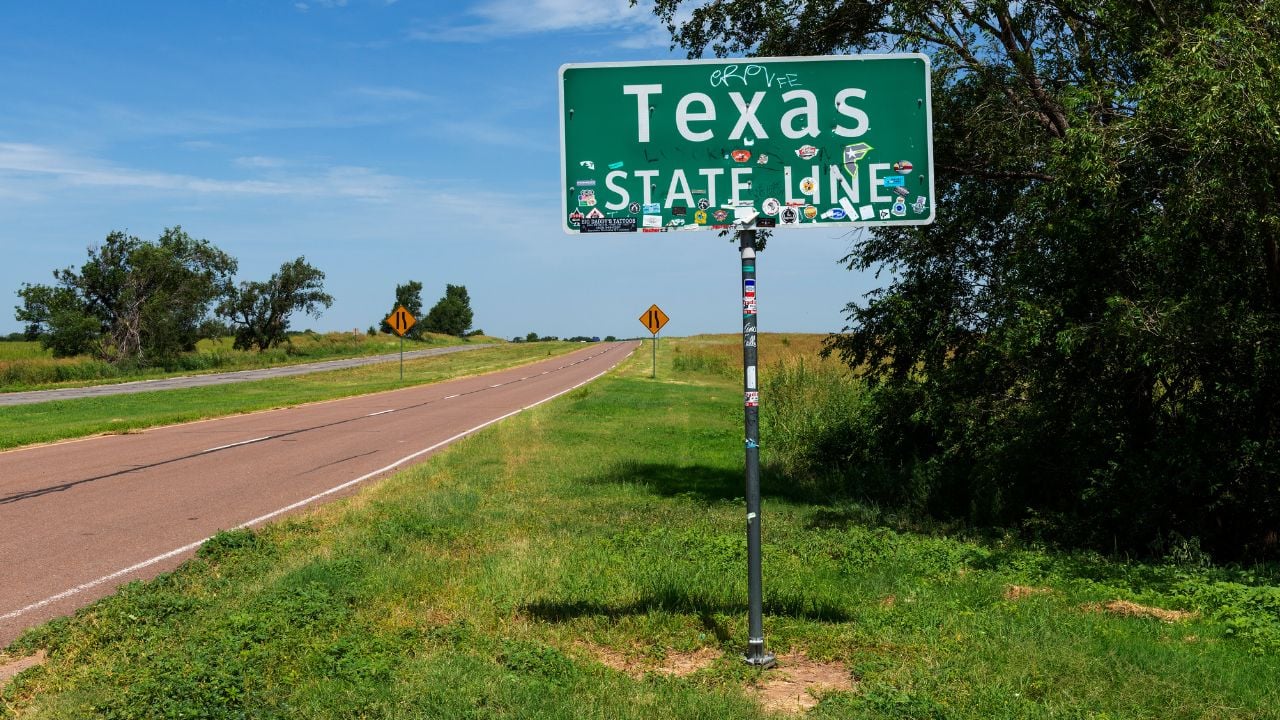
9 Arguments Texas and Oklahoma Will Never Settle

Texas leads its all-time football series against Oklahoma by fourteen games.
Ask an Oklahoman what that proves, and the answer comes back fast.
Nothing.
These are the arguments Texas and Oklahoma have never managed to settle, on the field or off it.
1. Whataburger or Sonic?
Whataburger and Sonic both claim to make the better burger, and neither side is backing down.
The chain opened its first stand in Corpus Christi, Texas, in 1950.
Sonic’s predecessor, the Top Hat Drive-In, didn’t open in Shawnee, Oklahoma, until 1953.
Texans point to that three-year head start as proof of who got it right first.
Oklahomans don’t buy it.
Sonic grew into a nationwide drive-in chain built on tater tots and cherry limeade, while Whataburger stayed a Texas-only fixture for years before it finally crossed state lines.
Order a burger in either state, and you’ll hear the argument before the ketchup runs out.
2. Who Owns the Home Field?
Texas and Oklahoma have played the Red River Rivalry in Dallas since the series moved there in 1912, and at the Cotton Bowl itself since the 1930s, and neither side gets a true home game.
That century-long series sits at 65-51-5 in Texas’s favor, a gap Oklahoma chalks up to playing extra road games without ever leaving Texas soil.
Texans call that jealousy.
How Texas and Oklahoma Split the Cotton Bowl
Texas and Oklahoma seat the Red River Rivalry crowd right down the middle of the Cotton Bowl, burnt orange on one side and crimson on the other.
Every ticket splits evenly between the two fan bases no matter who’s favored that year.
Oklahoma gets the official “home” designation in even years and Texas in odd ones.
The stadium itself never leaves Dallas, Texas, either way.
3. Cheaters or Hustlers?
Oklahoma’s Sooners wear a nickname Texans call cheating and Oklahomans call hustle.
The federal government opened Indian Territory to settlers at noon on April 22, 1889, and anyone caught entering early broke what was called the “sooner clause.”
Those early arrivals grabbed the best land before the starting bugle ever sounded.
Texans have needled Oklahoma about it for more than a century.
Cheaters, some say.
Oklahoma turned the insult into school pride instead. The University of Oklahoma adopted “Sooners” as its football nickname the year after statehood, and the whole state eventually claimed it too.
Texans have never let the head start go.
4. Whose Water Is It?
Texas and Oklahoma have fought over the Red River’s water in federal court, not just at the dinner table.
The Tarrant Regional Water District, which supplies water to more than two million North Texans, sued for the right to pull water from an Oklahoma tributary of the river.
Justices sided with Oklahoma in a unanimous 2013 ruling, closing off that tributary for good.
Legally, the fight is over.
Practically, it isn’t.
North Texas water planners project the region will need more than 3 million acre-feet of new water by 2080, and state projections expect close to a third of it to come from new river basins, the Red included.
The district hasn’t ruled anything out.
5. The Land Texas Lost
Texas once claimed a chunk of land now called Greer County.
The fight over it went all the way to the Supreme Court.
An 1819 treaty set the boundary at the Red River, but the river splits into two forks near the Texas Panhandle.
Texas pointed to the North Fork as the correct border.
Washington pointed to the South Fork instead.
The high court agreed with the South Fork in 1896, handing about 1.5 million acres to Oklahoma Territory.
Texas never got it back.
Oklahoma and Texas still don’t agree on exactly where the line falls today. The two states settled on a “vegetation line” along the river’s south bank as the permanent border in 2000, a marker that moves as the water erodes or rebuilds the bank.
Landowners on both sides are still fighting over exactly where that shifting line puts the border. Court filings from late 2025 show a Red River property dispute over acreage the river’s drift had added or erased, the same kind of boundary question that sent Texas and Oklahoma to the Supreme Court more than a century earlier.
Psst! How many Texas-Oklahoma rivalry claims can you separate from the myths? Flip each card and see how many you get right.
6. Whose Route 66 Wins?
Texas and Oklahoma both claim a piece of Route 66, but they don’t claim equal shares.
Oklahoma’s stretch covers more than 400 miles, the longest drivable piece of the whole highway.
Texas gets less than half that, all of it squeezed through the Panhandle.
Oklahoma wins on mileage, easily.
Texans counter with quality over quantity, pointing to the Panhandle’s stretch of neon-lit diners and roadside relics.
Neither side calls the argument settled.
7. Whose Oil Built America?
Oil turned both economies upside down within a few years of each other, Texas first.
Texas struck at Spindletop near Beaumont in January 1901, a gusher that helped launch the modern petroleum industry.
Oklahoma answered a few years later.
Bigger, it turned out.
The Glenn Pool field near Tulsa, discovered in 1905, ended up producing more oil overall than Spindletop ever did.
Tulsa leaned on that success to call itself the “Oil Capital of the World” for decades.
Texas built its own oil empire around Houston instead, and the state never conceded the title.
8. Whose Cowboys Run Deeper?
Texas built its identity on cattle and ranching, so it stings a little that Oklahoma houses one of the country’s largest shrines to that same history.
The National Cowboy & Western Heritage Museum opened in Oklahoma City in 1955, not in any Texas city with a working cattle-drive past.
It holds more than 28,000 Western artifacts, from saddles to rodeo trophies to one of the country’s largest collections of barbed wire.
Texans still point to their own ranching legacy, the King Ranch and generations of working cattle outfits that never needed a museum to prove themselves.
Oklahoma built it first.
9. Who Owns “Okie”?
Oklahoma got stuck with the “Okie” label during the Dust Bowl, even though Texans left the same storms by the thousands.
A California journalist named Ben Reddick popularized the term after spotting Oklahoma license plates parked in migrant camps during the 1930s.
The name stuck to every Dust Bowl migrant regardless of which state they’d left.
Many were families who’d lost their farms to the drought years and packed up whatever they could carry.
Some of the worst dust storms hit the Texas Panhandle just as hard as western Oklahoma.
Texans mostly avoided it.
Oklahomans have never fully agreed on the word themselves. Governor Dewey Bartlett tried to turn “Okie” into a point of pride in the late 1960s, and Tulsa even bottled a soft drink called “Okie Cola” to match, but the rebrand never caught on, and many longtime Oklahomans still call themselves Oklahomans, not Okies.
Webster’s dictionary didn’t rewrite the word’s definition to drop the insult until the twenty-first century.
9 Odd Texas Laws Most Americans Have Never Heard Of
Texas doesn’t just argue with Oklahoma over cowboys and burgers.
Its own law books hide nine rules many Americans have never heard of, each one proof the Lone Star State plays by a different rulebook entirely.
9 Odd Texas Laws Most Americans Have Never Heard Of
8 Texas Small Towns Locals Love (and 3 Tourists Overrun)
Not every Texas argument runs all the way to Oklahoma.
Some of the best ones happen inside the state’s own small towns, the eight locals love and the three tourists have taken over completely.
