
9 Bathroom Fixtures That Turn Dangerous in an Older Virginian’s Home

By 2030, roughly 1 in 5 Virginians will be 65 or older, according to population projections from the Weldon Cooper Center for Public Service at the University of Virginia.
Nobody designs a bathroom around that birthday.
A fixture that seems harmless when you’re 35 can end in a hip fracture or a bad burn decades later.
These are the bathroom fixtures that can turn dangerous in an older Virginian’s home.
Note: This is general safety information, not medical advice. Every home and body differ, and this guidance is subject to change.
1. Step-Over Bathtub
A standard step-over bathtub asks anyone bathing to lift a leg over a wall that can run 14 to 20 inches high, balancing on one wet foot while doing it.
Getting in rarely causes trouble.
A national study of bathroom injuries, tracked by the Centers for Disease Control and Prevention (CDC), found something worth knowing.
Climbing out of a tub or shower causes close to one in ten bathroom injuries.
Climbing in causes only about 2%.
That same study found the fracture rate tied to bathroom injuries rises sharply with age.
It runs under 6 per 100,000 people ages 25 to 34, and tops 165 per 100,000 among people 85 and older.
Coming out is the hard part.
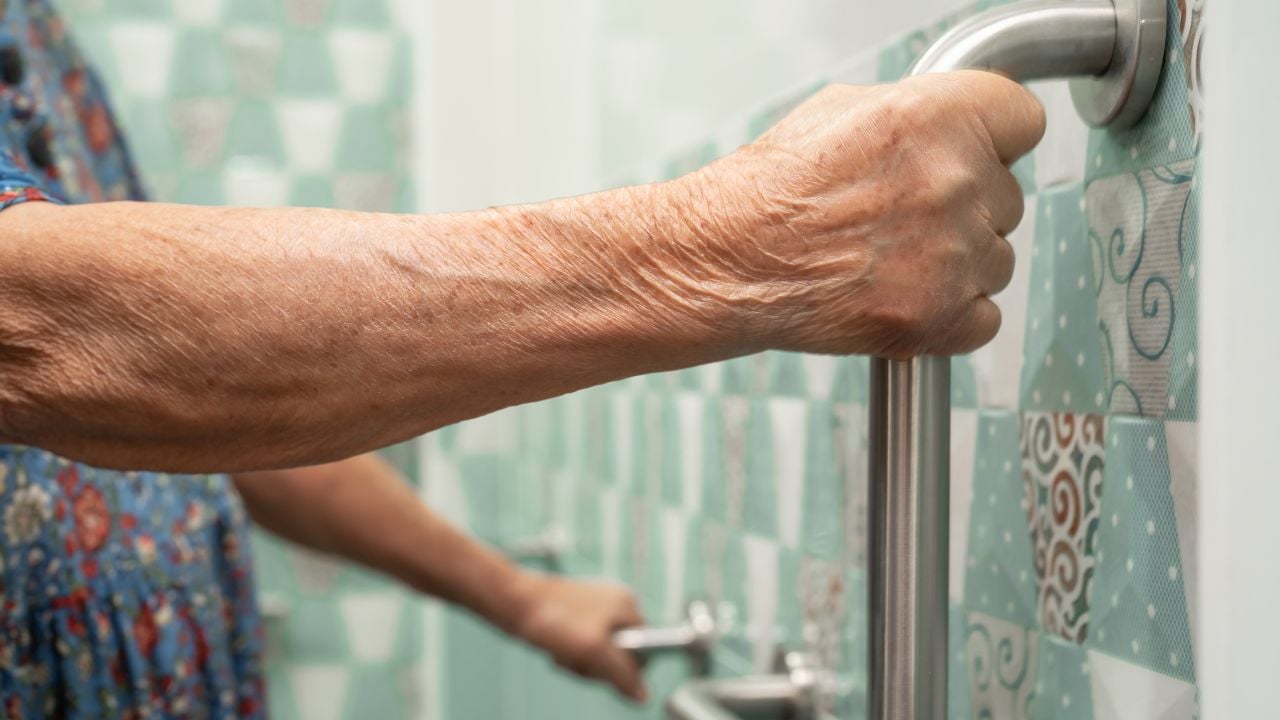
2. Missing Grab Bars
A bathroom built without a single grab bar leaves an older adult with nothing sturdy to grab except a towel bar or a soap dish.
Neither a towel bar nor a soap dish is rated to catch a falling body.
Neither was built for that.
The National Institute on Aging’s home fall-prevention guidance calls for mounting grab bars next to the toilet and on both the inside and outside of the tub or shower.
The state’s building code backs that idea, but only partway.
The state’s construction code requires wall reinforcement for a future grab bar only in bathrooms built under a voluntary universal-design certification, not one the law requires everywhere.
An ordinary Virginia bathroom built the regular way carries no such requirement.
Putting a grab bar in later usually means cutting into finished tile to find a stud, instead of screwing into blocking that was already there.
3. Standard-Height Toilet
A standard bathroom toilet sits about 14 to 15 inches off the floor.
That’s low enough that standing back up asks the knees and hips to do more work than a taller seat would.
Comfort height starts higher.
A comfort-height toilet runs 17 to 19 inches, and it demands less muscle to sit down or stand back up from.
The same CDC bathroom injury study found the injury rate tied to standing up from, sitting down on, or using the toilet rises sharply with age too.
It runs about 1.2 per 100,000 people age 15 to 24, and 190.1 per 100,000 among people 85 and older.
That’s not a small jump.
4. Glossy, Unrated Tile
Glossy porcelain or ceramic tile looks clean in a bathroom, but a wet, polished surface turns a normal step into a slide.
The tile industry’s safety standard is set by the American National Standards Institute (ANSI).
It sets a minimum wet-traction rating for any tile sold for a floor people will walk on when it’s wet.
Many glossy, high-shine tiles on the market fall short of that minimum.
A bathroom floor is exactly where that shortfall shows up.
Slipping caused about 17% of the bathroom injuries in the same CDC study, more than any single cause besides bathing.
Grip matters more than shine.
5. Round Twist Faucet Handles
A round, twist-style bathroom faucet handle asks a hand to grip tight and rotate the wrist at the same time, a motion that’s especially hard on arthritic fingers.
Federal accessibility design rules already flag that motion as a barrier.
The Americans with Disabilities Act (ADA)’s 2010 design standards require operable parts, faucet handles included, to skip tight grasping, pinching, or twisting.
The force needed to work one tops out at 5 pounds.
A lever handle meets that standard because a person can push it down with a palm, a fist, or even an elbow.
A physiatrist at Yale School of Medicine explains that twisting a knob is one of the hardest motions for an arthritic wrist.
A lever needs no grip strength at all.
The twist is the problem.
Psst! How fall-safe is your bathroom? Run through this checklist and see where you stand.
6. Scalding Faucet
A bathroom faucet turns dangerous fast when nobody has checked the water heater behind it in years.
Manufacturers have followed a voluntary safety standard since the 1980s that recommends setting a home water heater no higher than 120 degrees Fahrenheit.
A Johns Hopkins study of hundreds of homes found 4 in 10 still ran hotter than that.
Older adults take the worst of it because thinner, aging skin absorbs heat and burns faster than younger skin does.
Age changes the math.
The Math on a Scald
A bathroom faucet running water at 140 degrees Fahrenheit can cause a serious burn in about three seconds, the same Johns Hopkins researchers found.
Turn the water heater down to 120 degrees, and that same serious burn takes roughly ten minutes to happen instead.
Ten minutes is enough time to notice the water is too hot and step back. Three seconds isn’t.
7. Fixed Showerhead
A bathroom shower’s fixed, wall-mounted showerhead assumes the person underneath it can stand long enough to get clean.
That assumption stops holding up once balance becomes a daily concern.
Occupational therapists commonly pair a shower seat or bench with a handheld showerhead for exactly that reason, so a person can bathe sitting down without losing the water stream.
AARP, the nonprofit seniors’ advocacy group, names a handheld, adjustable-height showerhead as one of the simplest aging-in-place upgrades a household can make.
Sitting still beats reaching up.
8. Curbed Shower Threshold
A bathroom shower with a raised curb, even a short curb, still asks a foot to clear a lip before it lands.
That landing spot is often wet.
AARP has documented homeowners tearing out that curb and replacing it with a curbless, no-threshold shower to prepare for aging in place.
Nothing left to trip over.
9. Dim Lighting, No Night Light
A bathroom lit by a single dim overhead fixture works fine in daylight and turns into a hazard at 2 a.m.
The National Institute on Aging’s fall-prevention guidance calls for leaving a light on in the bathroom at night, or installing one that switches on by itself in the dark.
Older eyes need brighter, more even light and struggle more with glare than younger eyes do, the same agency notes.
Not worth the gamble.
Virginia’s Growing Older Population
Virginia’s 65-and-older population is one of the fastest-growing age groups in the state.
The share of Virginians 65 and older is set to rise from 16% in 2020 to about 19% by 2030.
That’s according to population projections from the Weldon Cooper Center for Public Service at the University of Virginia.
Not even growth.
The Weldon Cooper Center’s data points to the sharpest increases landing in rural counties like Lancaster and Northumberland.
Residents 65 and older could soon make up more than a third of the local population there.
6 Virginia Property Tax Breaks Some Homeowners Over 65 Never Apply For

Virginia spreads its senior property tax relief across 95 counties and 38 independent cities, and no two set the same income line or the same deadline.
A homeowner who checked one county’s rules years ago and didn’t qualify may have no idea a new county runs the numbers differently.
6 Virginia Property Tax Breaks Some Homeowners Over 65 Never Apply For
9 Roundabout Mistakes Virginia Drivers Make Every Day
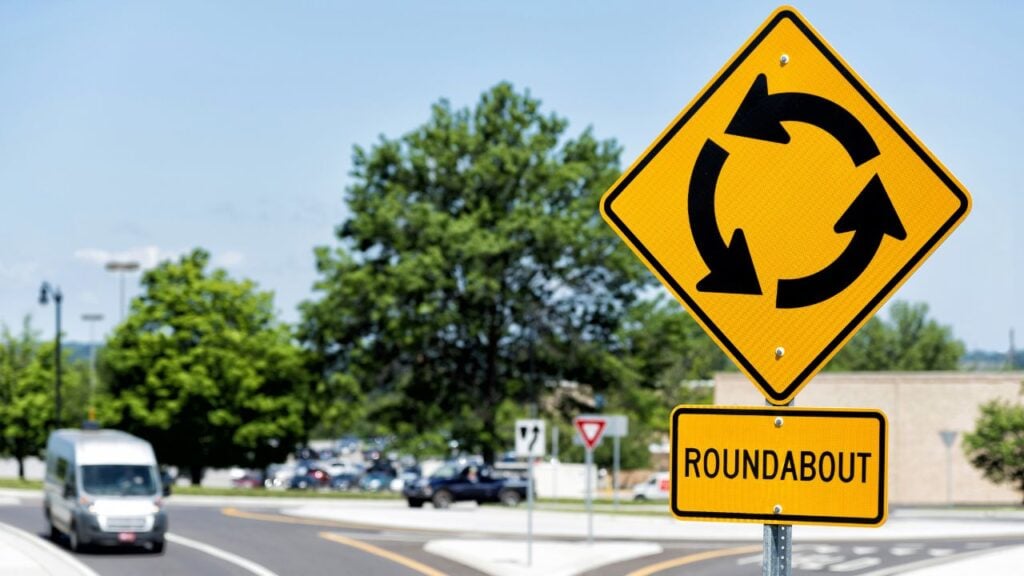
Converting a traffic signal to a roundabout drops severe crashes by 78%, according to the Federal Highway Administration, but only once drivers know what to do inside the circle.
Many drivers still don’t, and the confusion shows up in the same handful of ways at intersection after intersection.
