
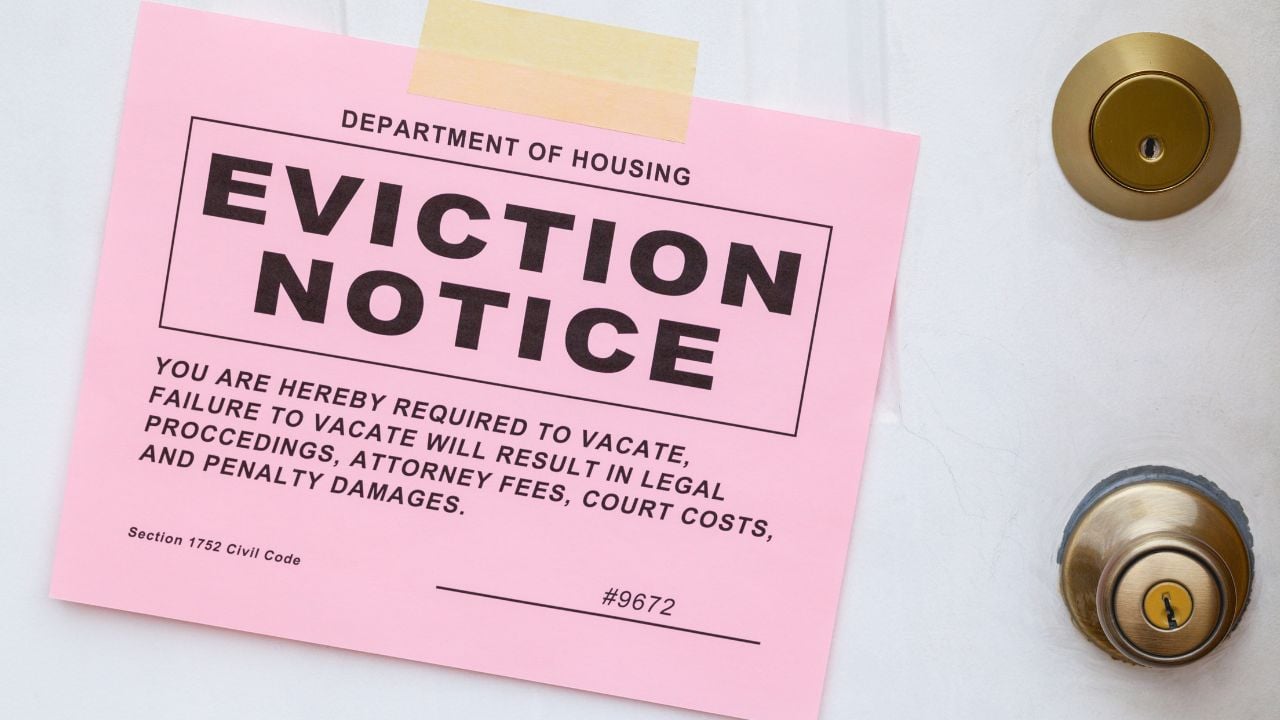
9 California Squatter Laws That Cost Homeowners Who Ignore Them

A family’s cabin above Highway 50 near Lake Tahoe sits buried under snow every winter, and nobody checks on it until spring.
This April, they finally make the drive up to open it for the season.
The padlock on the door isn’t the one they left, and someone’s boots are still drying next to the woodstove.
These are the squatter laws that catch California owners off guard the moment they stop paying attention.
Note: This is general information, not legal advice. Property laws and court procedures are subject to change, so confirm the current rules with a California attorney.
1. Five Years, Not Twenty
California recognizes adverse possession, the rule that can turn a long-term trespasser into the legal owner of someone else’s land.
Hold property openly for five years under a claim of right, and a court can eventually sign the title over.
Five years.
Most owners assume a stranger couldn’t sit on their land that long without them noticing, and most owners are wrong, since adverse possession disputes rarely start on property anyone visits often.
A desert parcel outside Barstow that a family inherited sight unseen, a half-renovated duplex in Stockton left vacant after a job transfer, a hillside lot in Riverside County a developer forgot about once a permit stalled.
A court doesn’t ask why the gap happened, only how long it lasted.
2. Taxes Are the Catch
California adds a requirement that trips up nearly every would-be claimant: The occupant has to pay the property taxes.
Not eventually.
Every single year of that five-year stretch, on time, backed by county tax collector records that a court can check.
Miss one year’s bill, even by a few months, and the whole claim resets to zero.
That single rule kills most adverse possession attempts in California before they ever reach a courtroom because most people squatting in a house have zero interest in mailing a check to the assessor.
Paying your own property taxes, on the other hand, does nothing to stop someone else’s claim.
3. No Anger Required
Meeting the five-year clock and the tax requirement still isn’t enough by itself for a California claim to hold up.
The occupation also has to check five boxes at the same time: Actual, open, exclusive, continuous, and hostile.
Hostile doesn’t mean furious.
In property law it just means the person showed up without asking anyone’s permission first.
A rancher outside Modesto who pours a gravel driveway across an unmarked property line and parks a work trailer on it for years, sure the strip belongs to him, still meets that definition.
Checking every box on this list still doesn’t hand anyone a deed automatically.
A claimant still has to file a lawsuit to clear the title and get a judge to sign off before any title company will insure the property.
4. Permission Erases the Clock
Every adverse possession claim depends on one fact: Nobody gave the occupant permission to be there.
Take that fact away, and the claim has nothing left to stand on.
A signed lease, a caretaker agreement, even a text granting someone a place to crash for a while turns a trespasser into a guest, and a guest’s time never counts toward ownership.
One signed page.
That’s the difference for a snowbird’s second home in Palm Desert, sitting empty from May through October most years.
Owners who swing by, swap out a broken lock, and confront anyone who shouldn’t be there reset the clock every time they do it.
Skip a walkthrough for a year, and that’s a year credited to somebody else’s claim instead.
5. Locks Aren’t the Answer
A homeowner in Chula Vista comes back from a business trip and finds an unfamiliar car parked in the driveway, and the instinct is obvious: Change the locks and move the stranger’s things to the curb before dinner.
Don’t.
California’s Civil Code Section 789.3 bans landlords from forcing out a tenant with a lockout or a utility shutoff, and attorneys warn owners that the same instinct backfires against a squatter too, just under different laws.
Cut the water, swap the locks, or haul someone’s belongings out yourself, and the occupant can accuse the owner of trespassing, battery, or false imprisonment on top of whatever civil case follows.
The statute’s own penalty for a covered tenant runs $100 a day the violation continues, with a $250 minimum per incident, plus attorney fees on top.
Skip the courts to save a week, and an owner can end up the one explaining their actions to a judge.
Psst! How much do you know about squatters and the strange history of claiming land in America? Take our quiz and see if you can ace it.
Quiz
American Squatter History
Answer these questions on squatters, land grabs, and American history. We bet you can’t get them all right. Prove us wrong?
A deadly 1850 showdown between armed squatters and city officials over land claims broke out in which future California capital?
6. It's a Misdemeanor Now
California treats unauthorized lodging as more than a dispute between neighbors.
Under Penal Code 647(e), moving into and sleeping in a building, vehicle, or other structure without the owner's permission is a misdemeanor.
Up to six months.
That's the maximum county jail sentence, on top of a fine, for anyone convicted of illegal lodging.
Police can arrest on the spot when the case is obvious, like a tent pitched in a driveway or a stranger asleep in a parked camper.
An occupied house with someone claiming a lease is murkier, and officers often send owners straight to civil court instead of making an arrest.
That's where the fight usually plays out.
7. Notice Isn't an Eviction
A criminal charge rarely clears a squatter out of a house by itself, so most California owners end up filing an unlawful detainer lawsuit.
It starts with a three-day notice ordering the occupant to leave, pay, or fix the lease violation.
No response.
Then the case heads to court, and the occupant is served a formal summons and complaint.
An uncontested case can wrap up in eight weeks, start to finish.
Push back with a filed answer, and it stretches to three to six months or longer, sheriff's lockout included.
That's a long stretch to share an address with a stranger.
8. Sacramento Slowed the Clock
Several states rewrote their squatter laws to move faster in the past couple of years, but California moved in the opposite direction.
Assembly Bill 2347 took effect on January 1, 2025, and it doubled how long an occupant has to answer an unlawful detainer summons.
Five court days became ten.
A separate proposal, Senate Bill 448, tried to build California a faster lane, letting owners push a squatter out through police and a sworn declaration instead of a full lawsuit.
It stalled instead.
Held in the Senate Appropriations Committee past its deadline, the bill was returned to the Senate without passing in February 2026, the standard fate for a two-year bill that runs out of time, so the slower unlawful detainer process remains California's only legal route.
9. Rise of the Squatter Hunter
Frustrated with how slowly the legal system moves, one Southern California handyman built a workaround that turned him into a minor celebrity.
Flash Shelton found squatters living in his own mother's house and studied the law before making his move.
He moved back in.
Because California law protects whoever currently occupies a home, Shelton simply became a squatter inside his own family's house, then outlasted the original occupants until they left.
He's since repeated the method multiple times for other California homeowners in the same bind.
Attorneys still tell owners to call the police and file the paperwork instead of trying it themselves.
A method that works on camera can still land an amateur in a courtroom on the wrong side of a lawsuit.
10 Habits That Embarrass Californians the Second They Leave the State

A Californian steps off a curb in Nashville mid-block, no crosswalk anywhere close, and doesn't flinch when a truck lays on the horn.
Back in Long Beach, crossing the second the street looks clear is just what people do, and it's one of several habits that give a Californian away the moment they leave.
10 Habits That Embarrass Californians the Second They Leave the State
15 Things Californians Are Tired of Hearing From the Rest of America

A Californian mentions where they're from at a wedding reception, and the questions start before the appetizers even arrive.
Is it always sunny? Have you felt an earthquake? Nobody waits for an answer before firing off the next one.
15 Things Californians Are Tired of Hearing From the Rest of America
