
9 Coastal Erosion Rules That Catch Florida Waterfront Owners Off Guard

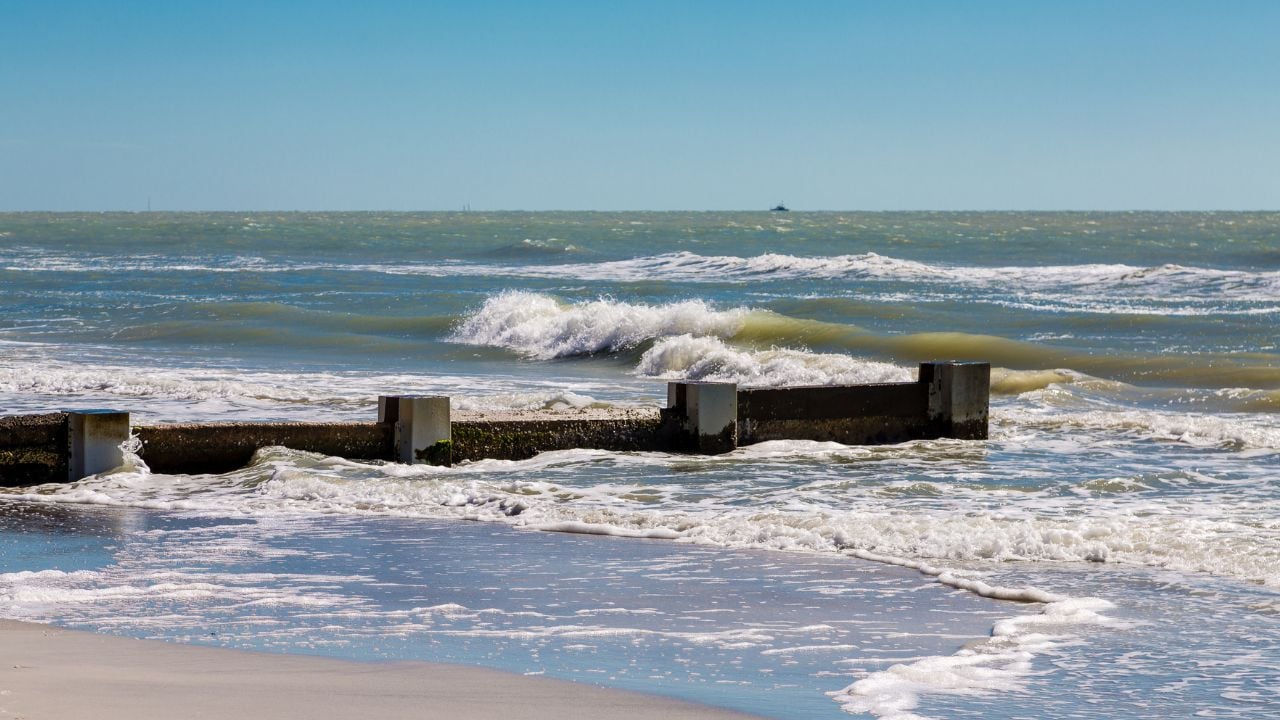
Florida’s environmental agency says 457.8 of the state’s 825 miles of sandy beach are critically eroded, according to its June 2026 report.
That’s more than half the coastline.
These are the coastal erosion rules that catch Florida waterfront owners off guard.
Note: This is general information, not legal advice. Coastal permitting rules are subject to change, so confirm the current requirements with the Florida Department of Environmental Protection.
1. Seawall Rebuilding Restrictions
Waterfront owners often assume a storm-wrecked seawall can simply be rebuilt, but Florida disagrees.
DEP counts 457.8 of the state’s 825 miles of sandy beach as critically eroded in its June 2026 report.
The department only permits new rigid armoring, like a seawall or a revetment, for an eligible structure.
Eligibility usually means the home was built without a state permit issued after March 17, 1985.
Newer usually means no.
A house built to current standards after that date counts as conforming.
Conforming homes generally don’t qualify for a brand new seawall permit, storm or no storm.
Repairing a Seawall Works Differently
Florida treats fixing an existing seawall differently than building a new one.
Minor reconstruction, like patching a crack or resetting a cap, skips both the eligibility and vulnerability tests new construction faces.
Major reconstruction is different: It always has to clear the same eligibility test as a brand new seawall.
It’s normally excused from the vulnerability test, unless the protected home was destroyed and has to be rebuilt.
2. Permits for Nearly Everything Seaward
Florida draws a hard line at the Coastal Construction Control Line (CCCL): Almost any construction or excavation seaward of it needs a DEP permit.
The only way around it is a listed exemption.
Even a pool counts.
A new pool deck, a footing dig for a room addition, or digging out a low spot in the sand can all trigger state review.
The CCCL isn’t a line that only matters for big beachfront towers.
It can sit well inland of the sand, so DEP can weigh in on a project that never gets anywhere near the water.
3. Sea Oats’ Legal Protection
Sea oats and other native dune plants are protected by Florida law, even on private land.
Cutting or damaging them without a permit breaks the rules.
Sea oats and sea grapes are the two species DEP’s guidance names directly.
Removing their root systems seaward of the CCCL needs a separate permit from anything covering the house.
Ordinary trimming, pruning and dead-heading are fine.
Clearing a wide gap for a better water view is a different matter.
That kind of yard work is exactly what a landscaping crew won’t always flag on its own.
4. The Storm Sandbag’s 60-Day Clock
Sixty days is all a storm-damaged waterfront owner gets under Florida law to decide what happens to any emergency armoring.
Sandbags, wooden retaining walls and similar temporary structures placed after a coastal storm have to come out within 60 days of installation.
The alternative is filing a complete application asking to keep permanent protection in that same spot.
The 60 days run whether the owner acts or not.
Miss the window, and the temporary structure becomes an unpermitted one that the state or the local government can order removed.
5. One Line You Can Never Uncross
Flagler Beach’s shoreline shows how permanent this Florida rule can be: Once a beach undergoes nourishment, DEP fixes an Erosion Control Line across it that never moves again.
It stays frozen, forever.
The line locks in that day’s mean high-water mark.
Any beach that builds back up beyond it belongs to the public, not the property owner, no matter how much sand piles up in the years after.
That line now runs across more than three miles of shoreline the Army Corps of Engineers rebuilt in Flagler Beach, and it will govern every future rebuild on that stretch.
6. The Signature Behind Free Sand
Publicly funded nourishment sand isn’t free for the waterfront owner receiving it.
A federally backed project needs a construction easement signed by every property owner in its path because nourishment only works as a continuous, unbroken stretch of sand.
No signature means no sand.
In Pinellas County’s Sand Key project, only 70% of owners had signed and recorded a compliant easement as of May 2026, and holdouts can delay or shrink the whole rebuild.
7. The Long-Lived Sand Bill
Waterfront owners can end up billed for the sand under their feet years after the dump trucks leave.
State law lets a Florida county set up a special taxing or assessment district to fund beach nourishment, separate from ordinary property tax.
Flagler County created one of these districts in December 2024, covering about 6,700 privately owned parcels on the unincorporated barrier island near the Hammock.
The county’s cost analysis put the average bill at $247 a year for a $407,000 property, ranging from $162 to $973 depending on value.
Flagler set the actual levy at zero for its first budget year while it works out how to divide those costs.
State law requires the district to be renewed every year it stays active, so a bill can still arrive once the county finishes that math.
Another one can follow down the line whenever the beach needs fresh sand again.
8. The Lost Right to Rebuild Bigger
A waterfront lot can lose the right to ever hold a major addition again, based on nothing but a projection.
DEP won’t permit a major structure on a parcel that its modeling shows will sit seaward of the seasonal high-water line within 30 years of the application date.
DEP’s model, not the owner’s plan, decides.
A single-family home is the main carve-out.
The home qualifies only if it sits as far landward on the lot as practical without crossing onto the frontal dune.
Psst! How much do you know about Florida’s beach and property rules? Flip these cards and find out.
9. Different Rules Past the Panhandle
Florida flips its coastal rulebook entirely once a property sits in a county with no established CCCL.
DEP has established control lines in only 25 of the state’s coastal counties, and hasn’t drawn one along the Big Bend region’s marshy shoreline or in the Florida Keys.
Along those pocket beaches, the default is a flat 50-foot construction setback from the mean high-water line under the same DEP program that requires a permit everywhere else.
The rules simply differ.
A buyer eyeing a lot in one of these pocket-beach counties should check whether a variance was ever granted before assuming the fifty-foot line tells the whole story.
The waiver process runs through the same DEP office that reviews CCCL applications everywhere else, so pocket-beach construction never skips state review.
9 Florida Springs Locals Escape to When the Beaches Get Too Crowded
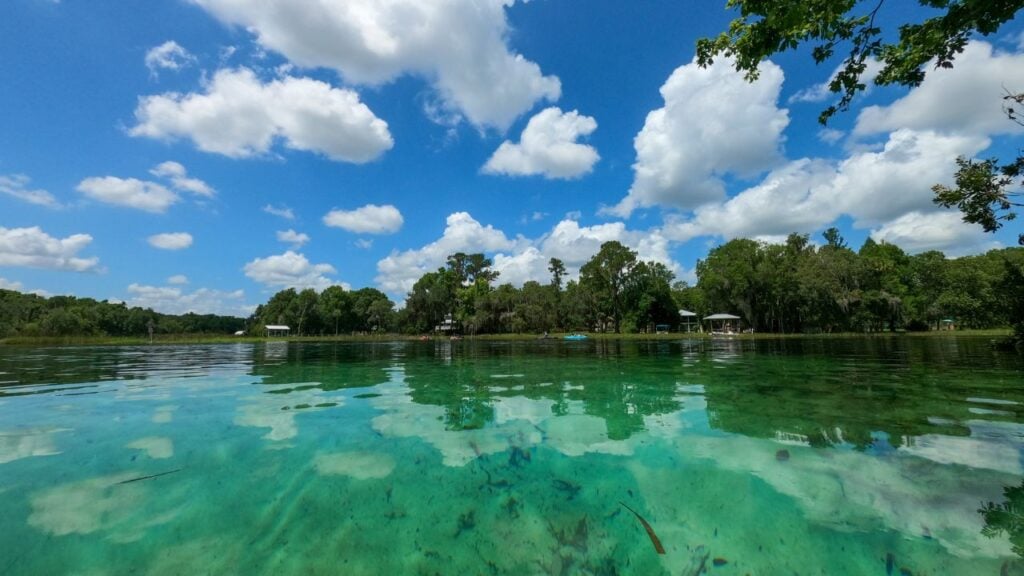
A summer Saturday at a popular Florida beach means a parking lot that closes by mid-morning and a strip of sand where the towels touch on every side.
Some Floridians skip that whole scene and drive inland instead, to water that never needs a tide chart or a lifeguard whistle to be worth the trip.
9 Florida Springs Locals Escape to When the Beaches Get Too Crowded
8 Florida Buffets Worth the Drive That Aren’t Golden Corral

Golden Corral lost about 185 locations during the pandemic, and the version of buffet dining many people picture went down with a lot of them.
That’s not the case for every buffet restaurant in Florida, and a handful of them still pull people well past their zip code.
