
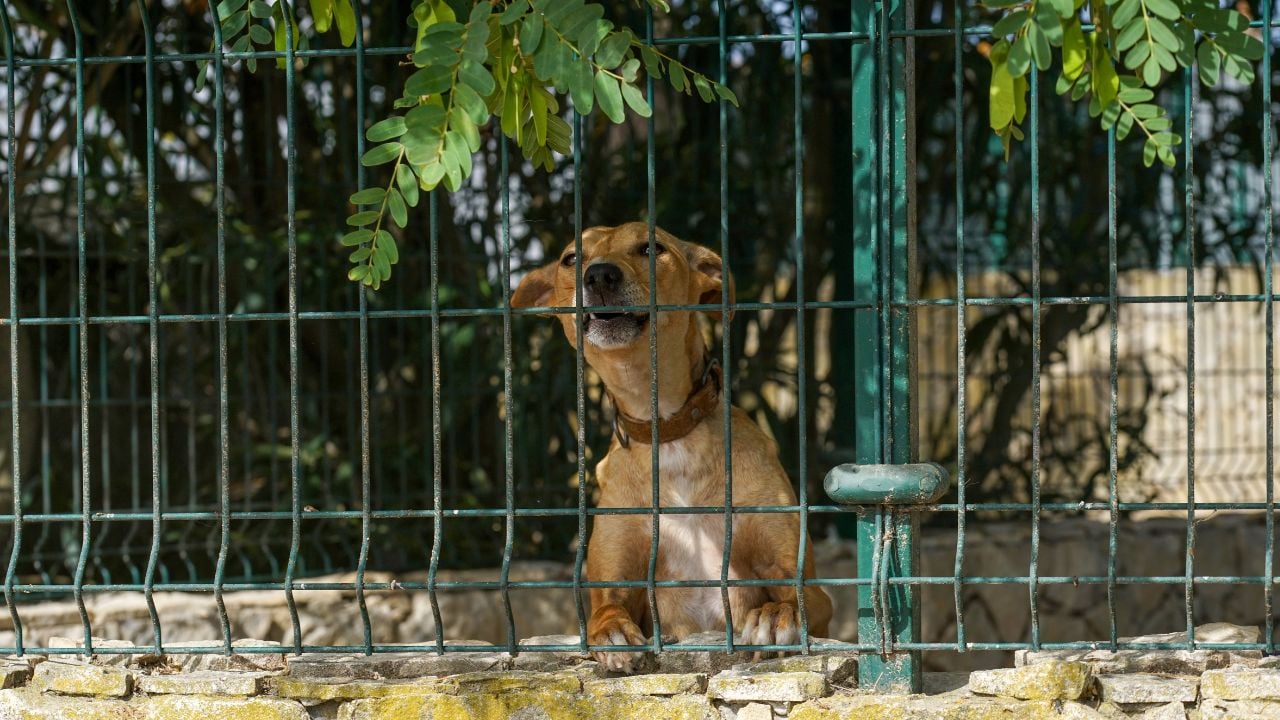
9 Dog Laws North Carolinians Break in Their Backyard

You’ve got a full house coming to Thanksgiving dinner tomorrow, and your dog’s already underfoot in the kitchen.
Clipping a lead to the back porch might feel like the simple fix. Just keep track of how long your dog stays there.
These are the dog laws many North Carolinians break in their backyard.
Note: This is general information, not legal advice. Dog laws and penalties vary by county and city and are subject to change, so confirm the current rules with your local animal control.
1. Loose in the Yard
Charlotte and Mecklenburg County’s leash law reaches your backyard.
Your dog can be loose in your yard only when an adult 18 or older is right next to it.
The dog also has to respond to that adult’s spoken commands.
Otherwise, your dog has to be on a leash, inside a fence or within a marked, working invisible fence.
So if your yard has no fence, letting your dog out alone while you stay inside breaks the leash law.
Matthews, Huntersville and Cornelius have separate animal services, and their laws don’t all match the city’s or county’s.
2. Tethering Past the Limit
Raleigh’s tethering law caps the time a dog can be tied up outside at three hours total in any 24-hour period.
A morning tether and an evening tether share those same three hours.
The line has to be at least 10 feet long.
It can weigh no more than 10% of your dog’s body weight.
A cable trolley can serve as the tether for those hours, but its cable has to be at least 10 feet long.
The tether also has to leave your dog access to food and water.
A violation is a misdemeanor, and it carries a civil penalty of $100 per day for each day of violation.
Ten days means $1,000.
3. Skimping on Outdoor Shelter
Charlotte-Mecklenburg’s dog ordinance sets care minimums for a dog kept outside.
Your dog has to have fresh water available all the time.
Food doesn’t have to stay outside, but your dog has to be fed at least once a day.
The shelter has to be an enclosed area of sufficient size and nature to give your dog reasonable protection from adverse weather.
An airline crate or wire cage doesn’t count, and neither does anything with holes other than the main opening.
You don’t have to heat, cool or insulate it.
A dog that’s outside for an extended period or lives outside also needs a shaded spot when sunlight is likely to cause overheating and discomfort.
The shelter should sit in that shade, too.
4. Barking at All Hours
Charlotte-Mecklenburg’s nuisance ordinance covers a dog’s barking, whining and howling.
It applies when the noise is excessive, continuous or untimely.
It also has to interfere with the reasonable use and enjoyment of neighboring premises.
On a first complaint, Animal Care and Control sends you a mailed notice with recommendations for fixing the problem.
If more complaints come in, an officer is dispatched to evaluate them.
That officer has to see or hear the barking before taking any civil action against you.
Psst! How much do you know about animal laws and pets? Take our quiz and see how many you can get right.
Quiz
Tar Heel Pet IQ
Answer these questions on animal laws, pets, and state symbols. We bet you can’t get them all right. Prove us wrong?
North Carolina bars selling or giving away baby chicks, ducklings, and rabbits as pets or novelties when they’re under what age?
5. Heavy Chains and Missed Meals
A dog on a chain in your yard is covered by cruelty law in two ways.
Intentionally depriving a dog of necessary sustenance is a Class 1 misdemeanor.
Intentionally means acting knowingly and without a justifiable excuse.
The second law bars restraining your dog with a chain or wire grossly in excess of the size needed to restrain it safely.
Doing it maliciously is a Class 1 misdemeanor.
Maliciously means intentionally and with malice or a bad motive.
6. Keeping a Dangerous Dog
Once a dog is classified dangerous, the dangerous-dog law puts strict conditions on your backyard.
A dog can earn that status by killing or severely injuring a person without provocation.
You can leave that dog alone on your property only if it's indoors, in a locked pen, or in another structure designed to restrain it.
Off your property, that dog has to be leashed and muzzled, or otherwise securely restrained and muzzled.
Breaking the dangerous-dog law is a Class 3 misdemeanor.
You're also strictly liable in civil damages for any injuries or property damage that dog inflicts on a person, their property, or another animal.
7. Letting a Female in Heat Roam
If you knowingly let a female dog in heat run at large, you've committed a Class 3 misdemeanor.
While she's in heat, the law can apply if you let her roam loose.
Charlotte-Mecklenburg also lists failing to confine a female dog in heat as a nuisance.
8. Dogs Out After Dark
A dog over six months old can't be allowed to run at large at night.
The law makes an exception when the dog is accompanied by you, a family member or someone else you've given permission.
Intentionally, knowingly and willfully letting your dog roam at night is a Class 3 misdemeanor.
You can also owe damages to anyone your dog injures or whose property it damages.
9. Skipping Rabies Shots
Your dog needs a rabies vaccination once it's over four months old.
A licensed veterinarian, a certified rabies vaccinator, or a registered veterinary technician under direct supervision can give the shot.
After that, your dog has to wear its rabies tag at all times.
That includes the backyard.
No Statewide Leash Law
North Carolina has no statewide leash law, so your town or county decides how your dog can run loose.
Cities get authority from the state to write leash ordinances, while counties lean on their general power to make ordinances.
Wake County Animal Control doesn't have jurisdiction to enforce animal control laws in Raleigh, Cary, Garner or Holly Springs.
Each municipality has a local ordinance.
Wake County Animal Control serves the rest of the county.
Raleigh, for one, makes it against the law for a dog to run unrestrained within the city limits.
9 Things North Carolinians Don't Realize Are Regional Until They Move Away
You ask a new coworker across the country to grab you some Nabs.
Some North Carolina words and foods may feel normal until you're somewhere else.
9 Things North Carolinians Don't Realize Are Regional Until They Move Away
12 Polite Passenger Habits Charlotte Flight Attendants Wish North Carolinians Would Drop

You were probably raised to help out and be polite, and that doesn't switch off when you board a plane.
But a few of those kind gestures can slow things down on board.
12 Polite Passenger Habits Charlotte Flight Attendants Wish North Carolinians Would Drop
