
9 Everyday Habits That Only Make Sense to Nebraskans

Nebraska’s Natural Resources Districts put an unusual race on the ballot: A seat on the local water board.
It still gets votes.
No governor is attached to that race, and no ad runs for it on the evening news, but Nebraskans keep voting it out of plain habit.
These are the everyday habits that only make sense to Nebraskans.
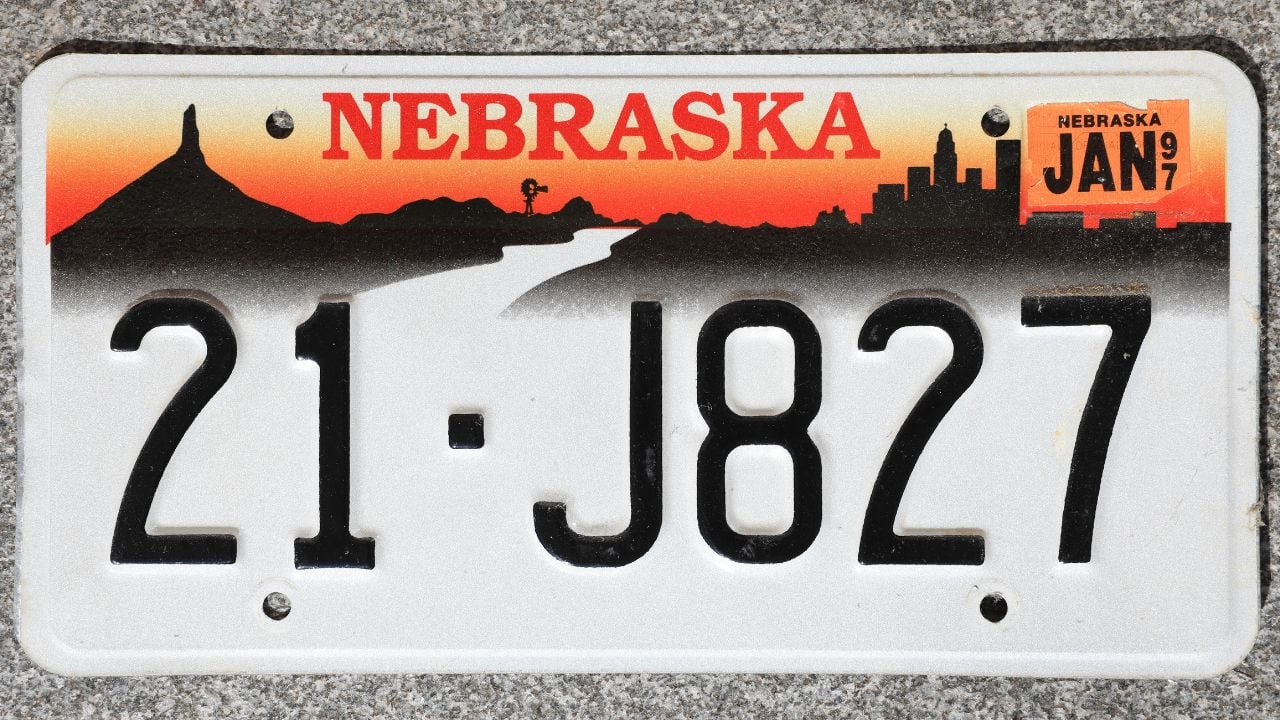
1. Reading a Stranger’s License Plate
Nebraska plates carry a number before the dash, and many locals read it like a return address.
The state assigned every county a number back in 1922, ranked by how many vehicles were registered there at the time.
Douglas County, home to Omaha, got the number 1, and Lancaster County, with Lincoln, got 2.
Ninety-three counties got a number that year.
It just stuck.
A driver who glances at a stranger’s plate in a parking lot can usually guess the county before reading the make of the car.
What the Number 59 Means
Nebraska’s Sarpy County carries plates that start with 59, a number that sounds like it belongs to a small county.
Sarpy County is anything but small today.
More than 208,000 people live there now, part of the fast-growing edge of the Omaha metro area.
The number just reflects how few vehicles Sarpy had on the road back in 1922, frozen in place ever since.
2. Skipping the Party Line
State senators in Nebraska run for office with no party printed next to their name, inside the country’s only one-house legislature.
Voters approved the switch to a single, nonpartisan chamber in 1934, and the first Unicameral session met in 1937.
Forty-nine state senators serve today, down from 133 lawmakers under the old two-house system.
No labels at all.
A Nebraskan picking a state senator has to know the candidate, not just the letter after the name because there isn’t one.
3. Voting for the Water Board
Nebraska splits itself into 23 Natural Resources Districts, and residents elect a board to run each one.
State lawmakers created the system in 1969, folding more than 150 separate conservation agencies into new districts that took effect in 1972.
Each board manages groundwater, flood control, and grazing land within its watershed, and funds the work mostly through local property taxes.
Board members typically serve four-year terms.
It still counts.
Local ballots list the district’s board seats right alongside city council and school board races, a line many first-time voters don’t expect to see.
4. Building Saturdays Around Kickoff
Saturdays in Nebraska bend around one thing every fall: Cornhuskers football.
Memorial Stadium holds more than 85,000 fans, and on game day it becomes the third-largest city in the state, according to the University of Nebraska-Lincoln.
The streak of sold-out home games goes back to November 3, 1962.
It had grown to more than 400 by the 2026 season, the longest run in major college football.
Still the record.
Nebraska Athletics had sold about 72,000 tickets for two marquee home games by mid-August 2026, roughly 10,000 short of capacity, though the athletic department expects the streak to continue.
Few Nebraskans miss a home game, even in a season testing that habit.
Many plan the whole day around kickoff, church times included, whether they’re inside the stadium or three hundred miles away in the Panhandle.
5. Ordering a Runza
Nebraskans order a Runza the way people elsewhere order a hot dog, sure everyone already knows what it is.
It’s a bread pocket stuffed with beef, cabbage, and onions, a recipe Volga German immigrants carried from Russia to the Great Plains generations ago.
Sally Everett and her brother Alex Brening opened the first Runza restaurant in Lincoln in 1949.
Local historians trace about 20,000 German-Russian residents in Lincoln by 1920, enough to keep the recipe alive long after it left home kitchens.
It stuck around.
The chain has grown to about 90 locations today.
Nearly all of them still sit inside Nebraska.
Order one anywhere else, and the counter staff will likely just look confused.
Psst! How much do you know about Nebraska outside these habits? Take our quiz and see how many you can get right.
Quiz
Nebraska IQ
Answer these questions on Nebraska history, food, and firsts. We bet you can’t get them all right. Prove us wrong?
Which now-famous powdered drink was invented in Hastings, Nebraska, in 1927?
6. Filling up on Homegrown Fuel
Nebraska drivers can pick a fuel blend much of the country never sees on the pump: High-ethanol blends grown a few counties over.
The state ranks as the second-largest ethanol producer in the country, running 24 plants that turn more than 750 million bushels of corn into fuel each year.
About one in ten Nebraska drivers owns a flex-fuel vehicle built to run on those blends.
Filling up on E85 instead of regular gas barely registers as a choice to many of them.
The same plants also produce millions of tons of distillers grain each year, and Nebraska's cattle industry buys much of it.
Little goes to waste.
7. Taking Arbor Day Off
Arbor Day got its start in Nebraska City, and the state still treats it like an actual holiday, not just a slogan on a calendar.
J. Sterling Morton pushed the idea through in Nebraska City in 1872, urging settlers on the treeless prairie to plant something.
State law still lists Arbor Day as a legal holiday, set for the last Friday in April.
Not everywhere bothers.
Schools and towns across Nebraska mark the day with tree plantings.
Some state offices close for it too, a habit almost nobody outside the state expects.
8. Carrying a Beef Passport
Nebraska runs one of the only loyalty programs in the country built around eating beef: The Beef Passport.
The Nebraska Beef Council opens it every year from May through September, and anyone can sign up for a free digital pass by text.
No cost, either.
Order a beef item at a participating restaurant, show the pass on a phone, and the visit earns a check-in worth toward prizes.
The state counted more than 6.1 million cattle as of January 2026, and it's one of the top two states in the country for cattle on feed.
By the end of summer, many Nebraskans have stamps from restaurants three counties apart.
9. Working Cattle Across the Dunes
Many visitors drive past Nebraska's biggest ranching country without noticing it, the Sandhills.
The Sandhills cover close to 20,000 square miles, about a quarter of the state.
The National Aeronautics and Space Administration (NASA) calls it the largest system of sand dunes in the Western Hemisphere.
The 1904 Kinkaid Act opened the region to 640-acre homesteads, and ranchers there still graze the grass instead of plowing it.
Grass is the only thing holding the dunes in place.
Nothing else does.
Cattle still outnumber people across nearly all of it.
Many outfits still check pastures on horseback or by pickup, since fences and paved roads both stay scarce across land that was never meant for a plow.
The Kinkaid Act's original 640-acre claims splinter today into ranches that can run thousands of acres in every direction, with the nearest neighbor sometimes a genuine drive away.
8 Ways Out-of-Staters Break Buc-ee's Etiquette Before They Reach the Brisket
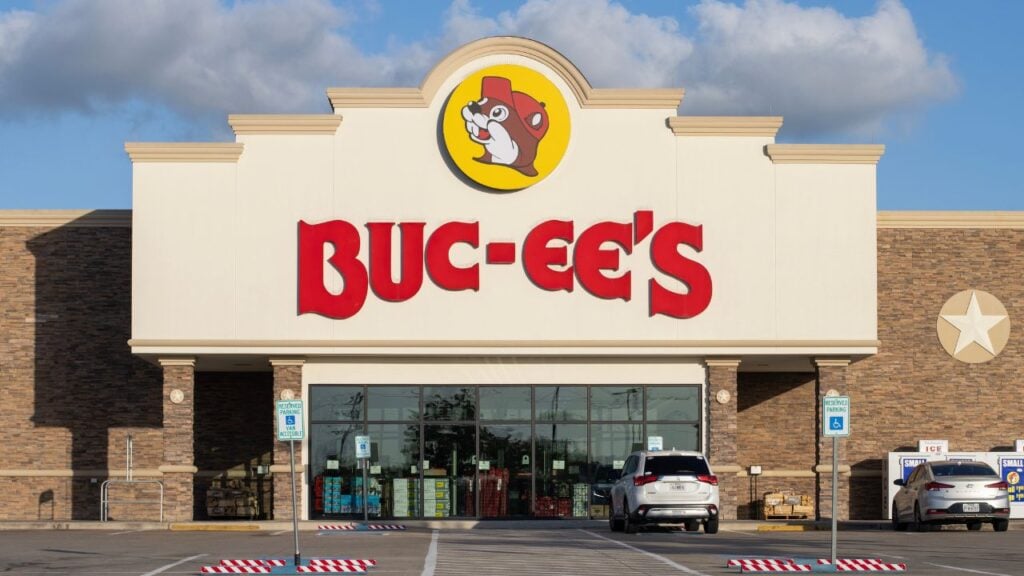
The loudspeaker calls out fresh brisket, and half the store turns toward the counter at once.
Regulars know the drill without thinking about it, and out-of-staters usually learn the unwritten rules the hard way.
8 Ways Out-of-Staters Break Buc-ee's Etiquette Before They Reach the Brisket
