
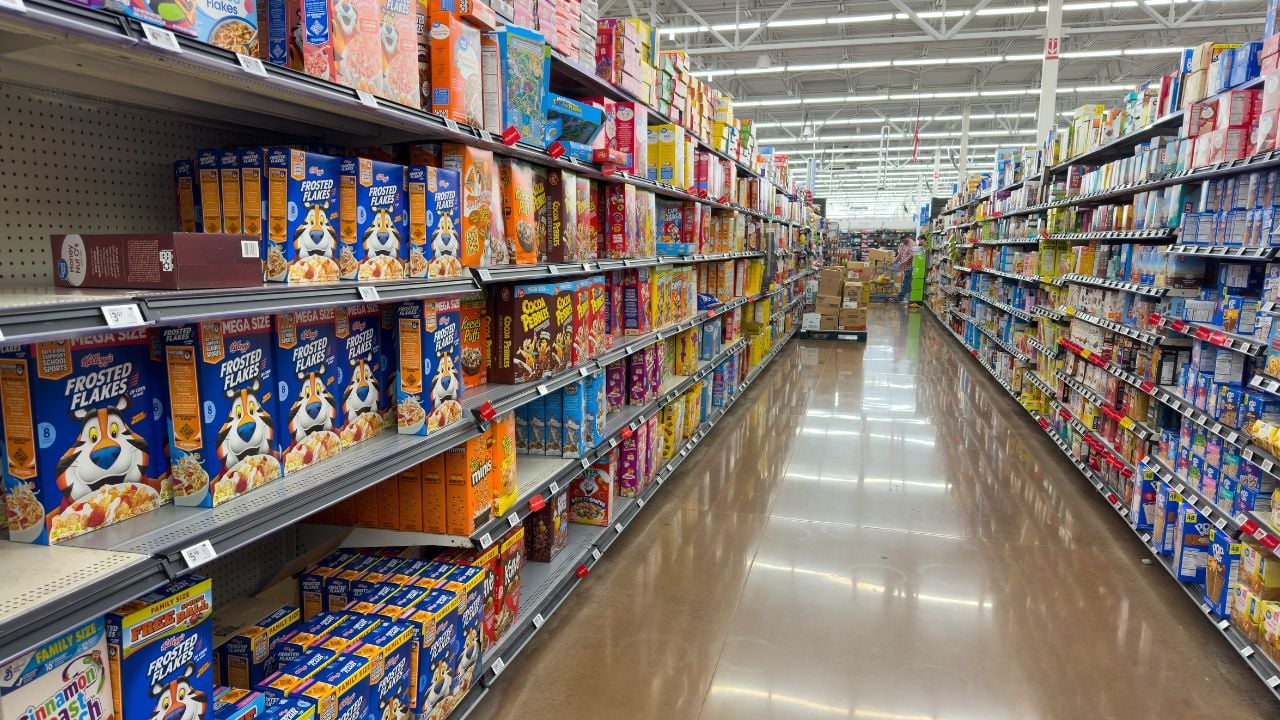
9 Grocery Aisles That Look Completely Different in Ohio Than They Did 20 Years Ago

A shopper pushes a cart past a dark window inside a southwest Ohio Kroger, glass empty, counter gone.
That window used to be a full bank branch, tucked into the store like a second business.
Now it’s just another end cap.
These are the grocery aisles that look completely different than they did in 2006.
1. Curbside Pickup Corner
Kroger tested its first online order pickup service, called ClickList, at a store in Liberty Township, Ohio, in late 2014.
Twenty years ago, that patch of parking by the front doors was just extra parking.
Now it’s a marked pickup lane with numbered spots and an employee wheeling a loaded cart out to the trunk.
Kroger later renamed the service Kroger Pickup once delivery and shipping options crowded the original name.
Giant Eagle and Meijer built their own marked pickup zones outside Ohio stores soon after, but the parking-lot ritual itself is what’s new.
The whole marked zone sits on a strip of asphalt that used to be nothing more than regular parking.
2. Digital Coupons
The rack by the entrance that used to hold a stack of coupon booklets and a pair of scissors taped to the wall is gone from many Ohio Kroger stores now, cleared out once Kroger opened its first digital coupon center in 2010.
Digital deals load straight onto a Kroger Plus Card or the app, and a shopper who skips downloading anything can miss half the week’s savings without ever knowing it.
But things reversed course at some stores.
Several Kroger divisions started printing paper coupon scan sheets again in 2025, after shoppers without smartphones said the app-only deals shut them out.
It’s a physical fixture the store had already removed, rebuilt because the digital-only version left people behind.
3. Self-Checkout Lanes
Self-checkout lanes at Ohio Kroger stores used to mean one small bank of machines wedged beside a wall of staffed registers.
Not anymore.
Kroger tested a wider, belted version of self-checkout at 13 named Ohio stores starting in 2022, plus Dayton and Troy locations soon after, built to fix the cramped bagging carousel that frustrated shoppers with a full cart.
A checkout lane nobody trusted in 2006 now needs its own state bill: Senate Bill 415, introduced this year, would require every store running self-checkout to keep at least one staffed lane open and cap self-checkout purchases at 15 items.
4. Self-Serve Salad Bars
The self-serve salad bar that used to anchor the deli end of an Ohio Kroger, tongs and sneeze guard included, is largely gone.
Kroger pulled self-serve salad bars from many stores because keeping one fresh and staffed cost more than shelving packaged food ever did.
A Kroger spokesperson told reporters: “You’re constantly working it. It’s not like grocery, where you put it on the shelves.”
Grab-and-go containers and a bigger produce case took over the space instead.
The space didn’t stay empty.
A Cincinnati Kroger on Beechmont Avenue swapped in a made-to-order Saladworks counter on November 24, 2020, replacing self-serve tongs with a staffed line building salads to order, and more Cincinnati-area Kroger stores got their own Saladworks counter soon after.
5. Craft Beer Aisle
Ohio’s beer aisle couldn’t legally carry anything stronger than 12 percent alcohol by volume until state lawmakers eliminated the cap on August 31, 2016.
That cap had already risen once, from 6 percent up to 12 percent, back in 2006.
In 2006, the whole aisle still sat under that 6 percent ceiling.
Big difference.
Imperial stouts, barleywines, and other high-gravity styles that would have broken Ohio law to shelve now sit next to the light beer without a second thought.
What Ohio’s Beer Aisle Rule Covers
Ohio’s grocery aisles can stock beer of any strength since the state dropped its alcohol cap in 2016.
That change touches beer only.
Ohio still keeps hard liquor locked inside separate, state-contracted agency stores, not on a regular grocery shelf.
A shopper can grab a 14 percent stout next to the pale ale, but a bottle of bourbon still means a stop at a dedicated liquor agency.
Psst! How much do you know about Ohio’s grocery history? Take our quiz and see how many you can get right.
Quiz
Ohio Grocery History IQ
Answer these questions on Ohio grocery history and the chains that built it. We bet you can’t get them all right. Prove us wrong?
The first item in history scanned with a Universal Product Code (UPC) barcode rang up at a supermarket in which Ohio town in 1974?
6. Organic and Natural Foods Aisle
Kroger, headquartered in Cincinnati, put its own organic and natural brand, Simple Truth, on Ohio grocery shelves in 2013, and it has grown into more than 1,500 products and over $3 billion in yearly sales.
That shelf space barely existed in many Ohio stores back in 2006.
National organic food sales sat around $16.7 billion in 2006 and rose to $76.6 billion by 2025, and Ohio's grocery shelves show every bit of that growth.
More than 73 percent of Kroger households bought a natural or organic item in the past year.
Now it's a full aisle.
7. Video Rental Corner
Kroger's own Cincinnati-area stores were already pulling video rental sections by the late 1990s, converting many of those spots into banks, play areas, and expanded health and beauty aisles.
Redbox filled part of that gap outside the doors instead, with its red kiosks showing up at Kroger and Meijer entrances through the 2000s.
Rentals from those kiosks peaked at nearly 773 million discs nationwide in 2013.
Then streaming caught up.
Redbox's parent company filed for bankruptcy in 2024, and every kiosk came down soon after, closing out a rental habit that once had its own spot by the shopping carts.
8. In-Store Bank Branch
Fifth Third Bank branches used to sit built into many Ohio Kroger stores, a walk-up teller window a few aisles past the registers.
That window is closing at store after store.
A Fifth Third branch inside a Mason, Ohio Kroger on State Route 741 closed for good on October 26, 2023, one of several in-store branches the bank has consolidated as more banking moves onto a phone.
Fewer trips to a teller.
The empty space usually turns into more shelving or an expanded pharmacy waiting area instead of a bank counter.
9. Pharmacy Counter
Grocery store pharmacy counters mostly just filled prescriptions twenty years ago, behind a locked half door with a short line.
The 2009 H1N1 pandemic changed that fast, pushing retail pharmacies into the vaccination business at a scale nobody had tried before.
Roughly a third of adult flu shots nationwide now happen at a pharmacy counter instead of a doctor's office.
Many Ohio Kroger, Giant Eagle, and Meijer pharmacies now run walk-in clinics for shingles, respiratory syncytial virus (RSV), and travel vaccines on top of the annual flu shot, all handled at the same counter that once just filled a bottle of pills.
Same counter, different job.
One More Stop the Pharmacy Counter Picked Up
A pharmacist behind that same Ohio pharmacy counter can also run a basic blood pressure check at many locations now, a service that used to send a shopper across town to a clinic.
No appointment needed.
None of that was on the price list in 2006.
9 Kroger Traps That Cost Ohio Shoppers Every Week
Kroger hands Ohio shoppers many genuine deals every week, and many trips pay off just fine.
A few tricks in the aisles still catch shoppers off guard, worth knowing before the next cart fills up.
9 Kroger Traps That Cost Ohio Shoppers Every Week
15 Things People Who Grew up in Ohio Understand
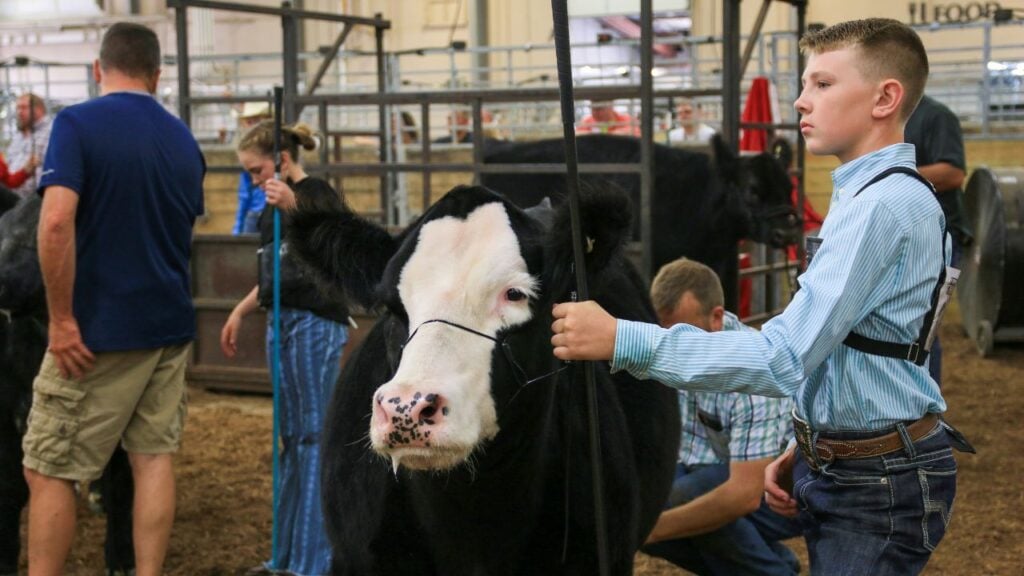
Nobody hands an Ohio kid a rulebook growing up, but they learn every unwritten rule anyway.
These are the habits and small-town truths only people who grew up in Ohio still carry with them.
